
Antipater the Idumaean had been a high …
Years: 43BCE - 43BCE
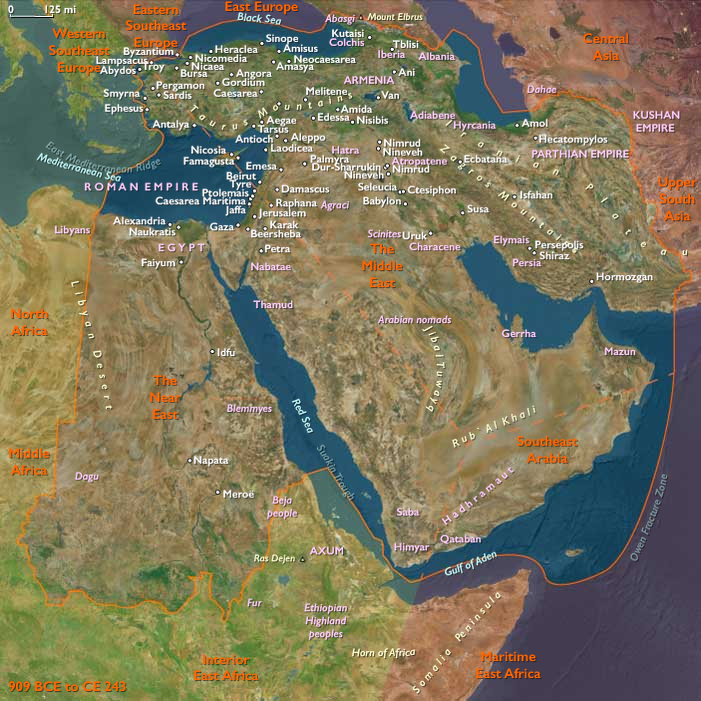
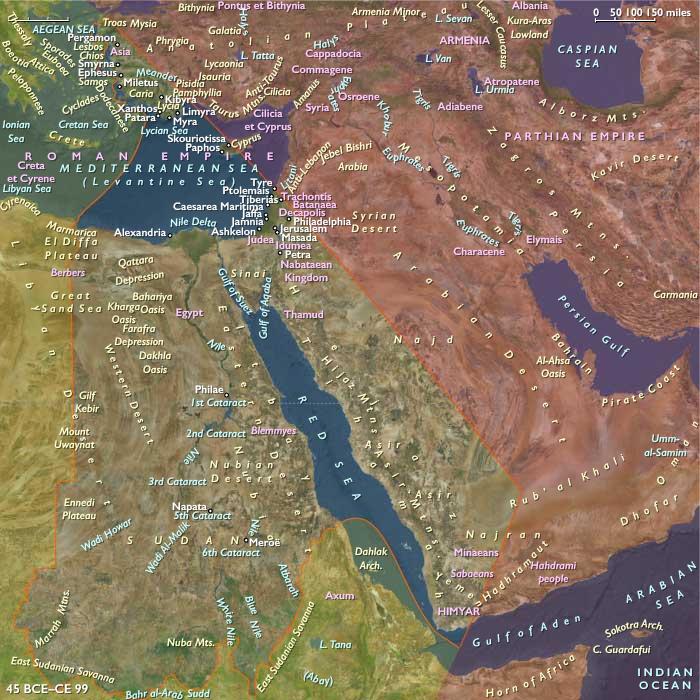
Antipater the Idumaean had been a high ranked official of Judea under the later Hasmonean kings and subsequently became a client of Pompey the Great when the Roman general conquered Judea in the name of Roman Republic.
The power of Antipater and his family had greatly increased after the death of Pompey.
Hyrcanus II had become a figurehead of no importance, and Antipater himself, in return for services to Julius Caesar, had received Roman citizenship and been awarded the title of “procurator of Judaea.” Hyrcanus, who is to be the last of the Hasmonean kings, had been restored to his position as High Priest but not to the Kingship.
Political authority rests with the Romans whose interests are represented by Antipater, who primarily promoted the interests of his own house.
Julius Caesar in 47 BCE had restored some political authority to Hyrcanus by appointing him ethnarch.
This however has had little practical effect, since Hyrcanus yields to Antipater in everything.
Antipater had appointed Phasael and Herod, his two sons by Cypros, a Nabatean princess, as governors, respectively, of Jerusalem and Galilee.
Herod has enjoyed the backing of Rome but his excessive brutality has been condemned by the Sanhedrin, the assembly of Jewish judges who constitute the supreme court and legislative body.
When summoned to be tried by the Sanhedrin, Herod meant to come to Jerusalem with an army and make war; however, Antipater and Phasael had managed to persuade him to be satisfied with making threats of force.
Antipater after the assassination of Caesar had been forced to side with Gaius Cassius Longinus against Mark Antony.
Antipater's pro-Roman politics lead to his increasing unpopularity among the devout, non-Hellenized Jews, and he is poisoned.
Herod, backed by the Roman Army, executes his father's murderer.
Locations
People
Groups
Topics
Commodoties
Subjects
Regions
Subregions
Related Events
Showing 10 events out of 62343 total
Years: 43BCE - 43BCE
Locations
People
Groups
Topics
Commodoties
Subjects
Regions
Subregions