
Antiochus III the Great had had to …
Years: 133BCE - 133BCE
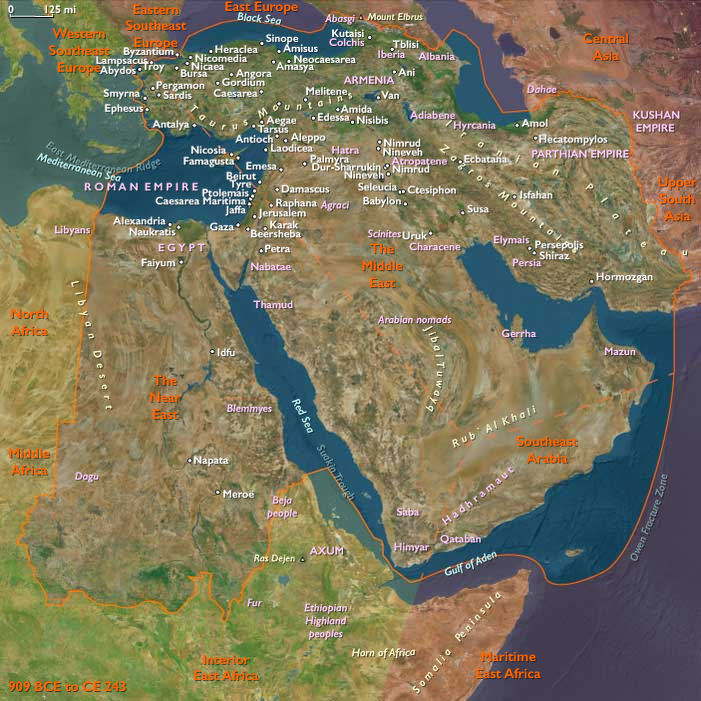
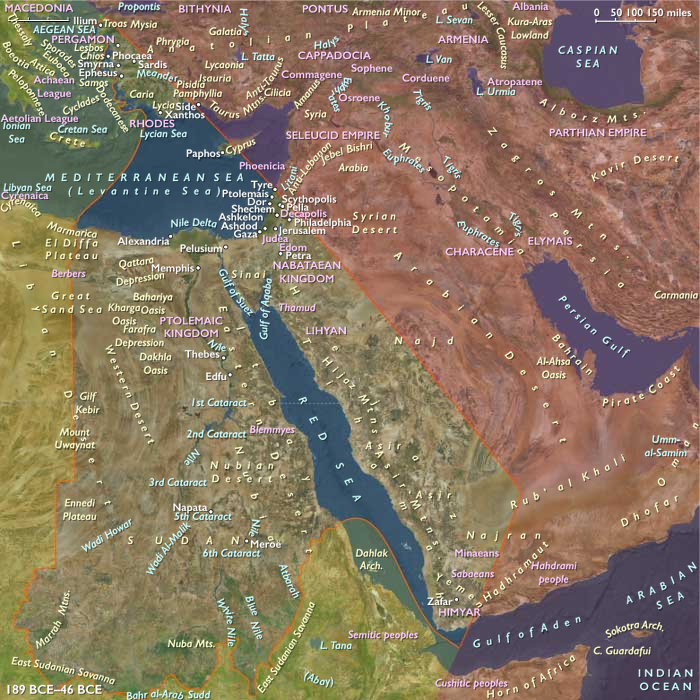
Antiochus III the Great had had to give up Asia (today’s Asia Minor, or Anatolia) when the Romans crushed his army at the historic battle of Magnesia, in 190 BCE.
After the Treaty of Apamea (188 BCE), the entire territory had been surrendered to Rome and placed under the control of a client king at Pergamon.
Attalus III, of whose reign little is known, is he son of Eumenes II and nephew of Attalus II Philadelphus, who he had succeeded in 138.
Attalus III is said to have behaved tyrannically at first, but evidently settled down to a quiet and studious life, devoting his time the study of medicine, botany, gardening, and other pursuits.
He dies in 133 without male issue, bequeathing Pergamon to the Roman people.
Rome has always been very reluctant to involve itself in matters to the east, typically relying on allies to arbitrate in the case of a conflict.
Very rarely does Rome send delegations to the east, much less have a strong governmental presence.
This apathy does not change much even after the gift from Attalus, whose motives for this odd, though perhaps realistic bequest, are obscure.
It arouses opposition, led by a pretender named Aristonicus, who is driven by a combination of personal ambition, nationalist resentment, and utopian idealism.
Because the Romans are slow in securing their claim, Aristonicus, who claims to be the illegitimate son of the earlier Pergamene King Eumenes II, fills the power vacuum, claiming the throne and taking the dynastic name Eumenes III.
Locations
People
Groups
Topics
Commodoties
Subjects
Regions
Subregions
Related Events
Showing 10 events out of 63038 total
Years: 133BCE - 133BCE
Locations
People
Groups
Topics
Commodoties
Subjects
Regions
Subregions