
Antarctica (4,365 – 2,638 BCE): Late Holocene …
Years: 4365BCE - 2638BCE
Antarctica (4,365 – 2,638 BCE): Late Holocene — Retreating Ice and Life at the Margins
Geographic & Environmental Context
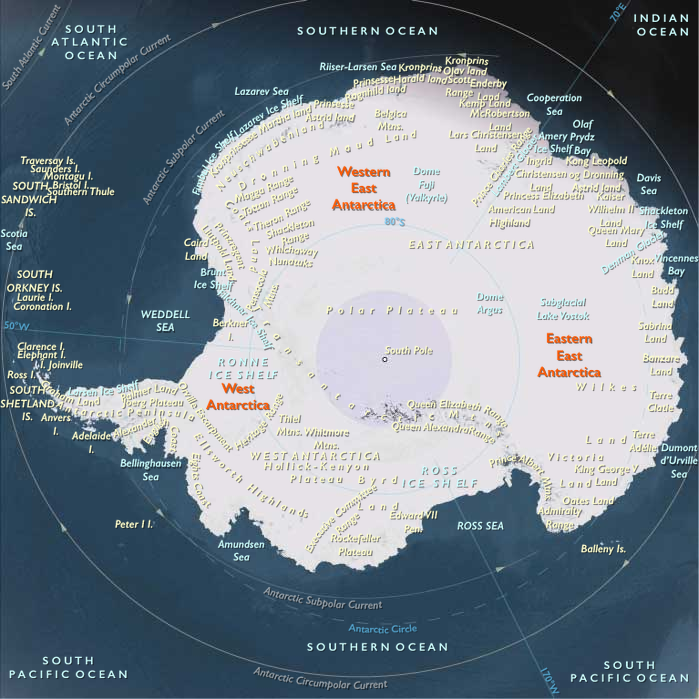
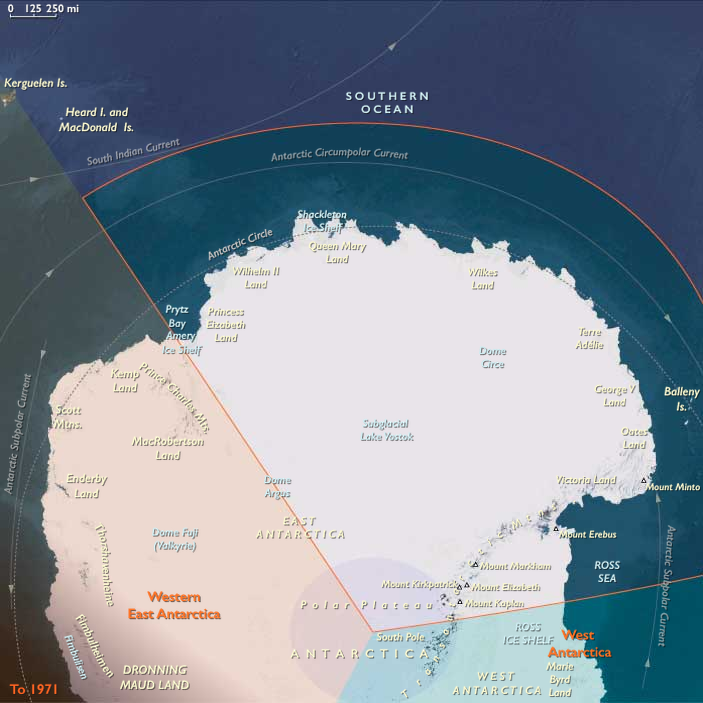
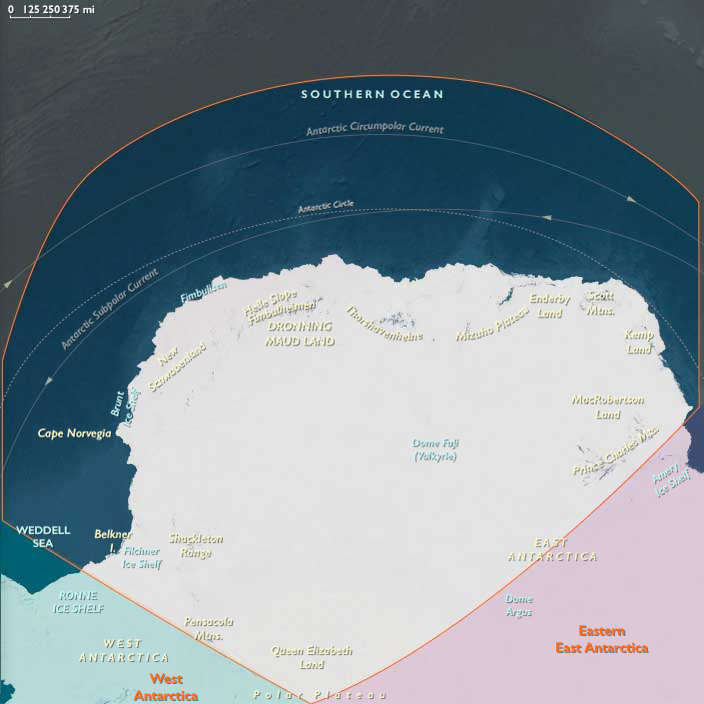
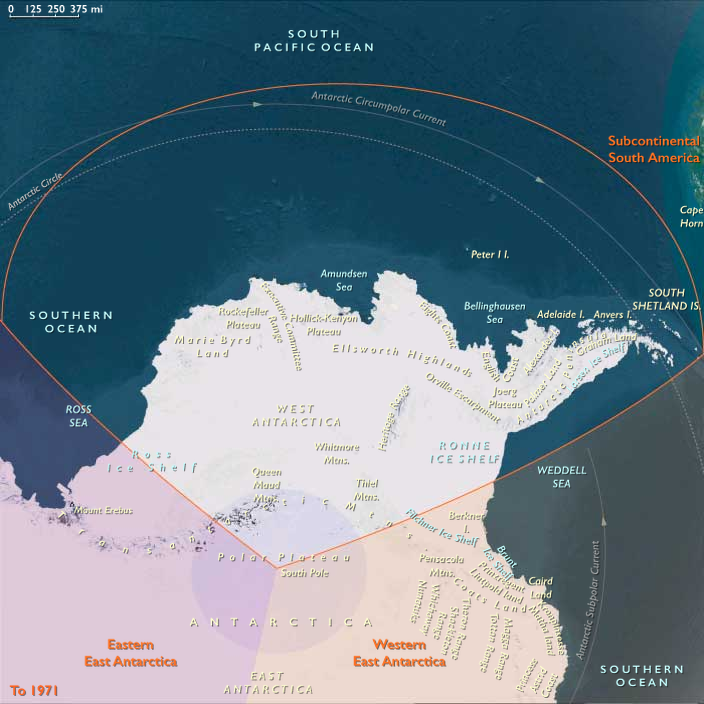
During this epoch, Antarctica remained a vast ice-bound continent surrounded by dynamic seas and drifting pack ice. The East Antarctic Ice Sheet—thick and stable—still crowned the polar plateau, while the West Antarctic sector had largely stabilized following mid-Holocene deglaciation pulses.
Major ice shelves—the Ross, Filchner-Ronne, and Amery—stood near their modern outlines. Ice-free enclaves such as the Dry Valleys of Victoria Land, Larsemann Hills, and Bunger Oasis broadened slightly, exposing glacial till and saline lakes. Along the Antarctic Peninsula, retreating glaciers opened narrow coastal plains and nunatak ridges that hosted emerging tundra and moss communities.
Surrounding seas—Weddell, Ross, Amundsen, and Bellingshausen—remained vital engines of global climate regulation, circulating cold, nutrient-rich waters through the Antarctic Circumpolar Current (ACC).
Climate & Environmental Shifts
The mid-Holocene warmth reached its southern expression during this interval. Mean temperatures were 1–2 °C warmer than late-Holocene averages, driving minor ice-margin retreat but leaving the continental interior near thermal equilibrium.
Sea ice extent contracted seasonally, generating large summer polynyas rich in plankton. Moisture transport from lower latitudes increased snowfall on coastal slopes even as katabatic winds kept the polar plateau hyper-arid.
By the later third millennium BCE, the regional climate began a slow transition toward cooler, more variable conditions, setting the stage for the Neoglacial advance of later millennia.
Biotic Communities and Ecosystems
No humans had yet reached the Antarctic realm. Life was concentrated in maritime and ice-free margins:
-
Coastal tundra patches supported mosses, liverworts, algae, and microbial mats.
-
Seabird rookeries (petrels, skuas) and seal colonies established on exposed capes and beaches of the Peninsula and offshore islands.
-
Krill blooms thrived in nutrient-rich upwellings, feeding baleen whales, penguins, and fish.
-
Inland oases hosted cyanobacterial mats and extremophile microorganisms within hypersaline lakes, forming self-contained ecosystems.
These biological networks expanded during warm centuries, retreating when snow accumulation or ice advance encroached.
Technology & Material Culture
Elsewhere on the planet, Neolithic societies were inventing metallurgy and long-distance trade; none of this touched Antarctica. The continent remained beyond human reach, its story told only through geological and biological processes.
Movement & Interaction Corridors
The ACC and coastal polynyas created seasonal belts of productivity encircling the continent. Migratory whales, seals, and seabirds linked Antarctica to the South Atlantic, Indian, and Pacific Oceans, transporting nutrients across hemispheres. Drifting icebergs carried sediments and microorganisms far north, seeding marine ecosystems and influencing ocean chemistry on a planetary scale.
Cultural & Symbolic Expressions
There were no human symbols or rituals in Antarctica at this time. Its enduring cycles—the annual expansion and retreat of sea ice, the rhythmic calls of penguin colonies, the calving of glaciers into the Southern Ocean—formed the planet’s natural symphony of recurrence and renewal.
Environmental Adaptation & Resilience
Antarctic ecosystems demonstrated resilience through flexibility:
-
Species synchronized breeding and molting to short summer productivity windows.
-
Krill populations adapted to fluctuations in sea-ice algae cover.
-
Microbial mats regenerated rapidly after freeze–thaw disturbance.
Physical systems—ice shelves, polynyas, katabatic wind zones—maintained a dynamic equilibrium balancing accumulation and ablation.
Long-Term Significance
By 2,638 BCE, Antarctica had achieved a mature Holocene stability. Ice volumes approximated modern levels; tundra and marine ecosystems were fully established within their climatic niches. Though unvisited by humankind, the continent already acted as a regulator of global oceanic and atmospheric circulation—its winds, ice, and currents shaping climates across the southern hemisphere. In this deep prehistory, Antarctica stood as a pristine mirror of Earth’s environmental balance: frozen, living, and profoundly interconnected.
Subjects
Regions
Subregions
Related Events
Showing 10 events out of 68950 total
Years: 4365BCE - 2638BCE
Subjects
Regions
Subregions