
Austronesian people, who had spread down from …
Years: 1516 - 1527
Austronesian people, who had spread down from Taiwan, through the Southeast Asian archipelago, colonizing many of the islands on the way, are another wave of people who had arrived on the shores of New Guinea in more recent millennia.
The Austronesian people had technology and skills extremely well adapted to ocean voyaging and Austronesian language speaking people are present along much of the coastal areas and islands of New Guinea.
These Austronesian migrants are considered the ancestors of most people in insular Southeast Asia, from Sumatra and Java to Borneo and Sulawesi, as well as coastal new Guinea.
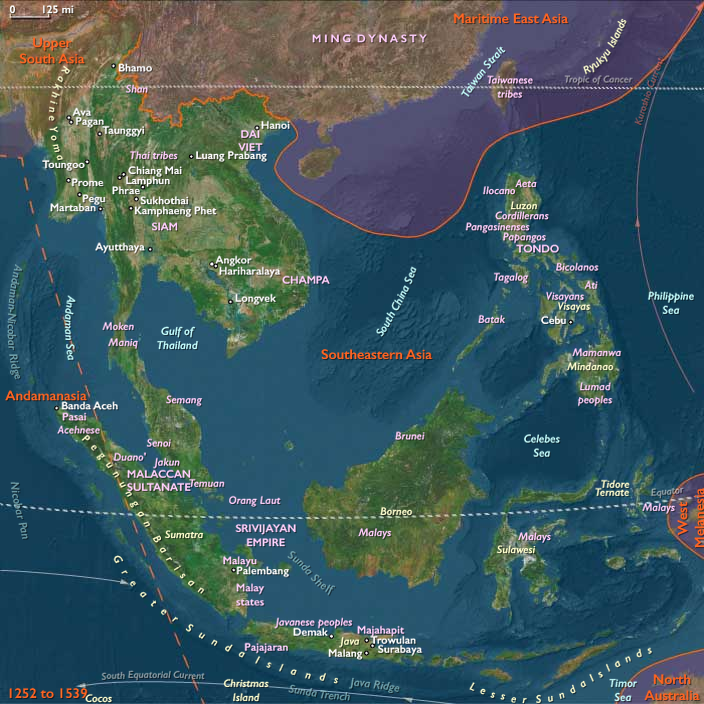
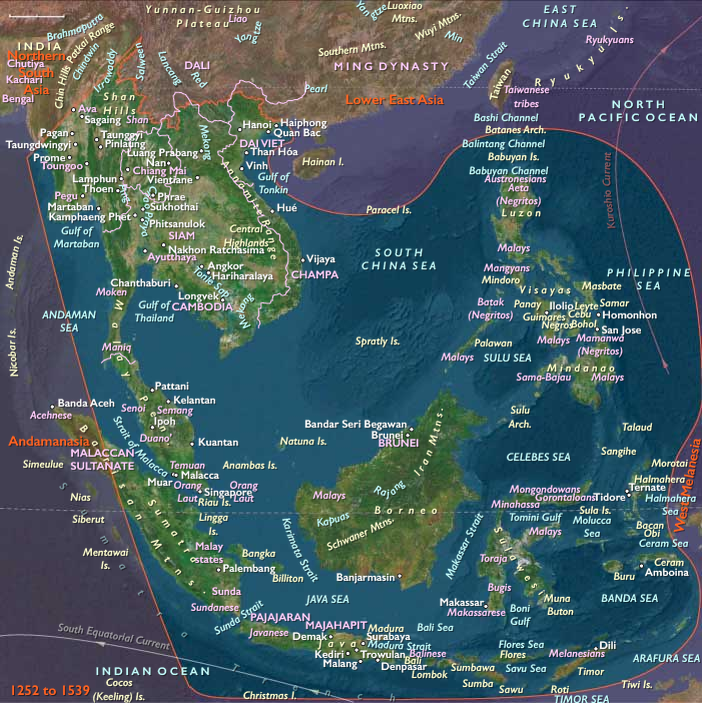
The western part of the island is in contact with kingdoms in other parts of modern-day Indonesia.
Negarakertagama mentions he region of Wanin in eastern Nusantara as part of Majapahit's tributary.
This has been identified with the Onin Peninsula, part of the Bomberai Peninsula near the city of Fakfak.
The sultans of Tidore, in the Maluku Islands, claim sovereignty over various coastal parts of the island.
During Tidore's rule, the main exports of the island during this period are resins, spices, slaves and the highly priced feathers of the bird-of-paradise.
The first European contact with New Guinea is by Portuguese and Spanish sailors in 1526-27, when the Portuguese explorer Jorge de Meneses sees the western tip of New Guinea and names it ilhas dos Papuas.
He lands on the northern coasts of the Bird's Head Peninsula and on the islands of Biak (Cenderawasih Bay), and Waigeo Island while he awaits the passing of the monsoon season.
Locations
Groups
- Tidore, Sultanate of
- Ternate, Sultanate of
- Portugal, Avizan (Joannine) Kingdom of
- Portuguese Malacca
- Spain, Habsburg Kingdom of
Commodoties
Subjects
Regions
Subregions
Years: 1516 - 1527
Locations
Groups
- Tidore, Sultanate of
- Ternate, Sultanate of
- Portugal, Avizan (Joannine) Kingdom of
- Portuguese Malacca
- Spain, Habsburg Kingdom of
Commodoties
Subjects
Regions
Subregions