
The shogunate, in another part of its …
Years: 1639 - 1639
The shogunate, in another part of its actions after the rebellion, had excused the clans that had aided its efforts militarily from the building contributions that it routinely requires from various domains.
Matsukura Katsuie commits suicide, and his domain is given to another lord, Kōriki Tadafusa.
The Terazawa clan survives, but will die out almost ten years later, due to Katataka's lack of a successor.
On the Shimabara peninsula, most towns experience a severe to total loss of population as a result of the rebellion.
In order to maintain the rice fields and other crops, immigrants are brought from other areas across Japan to resettle the land.
All inhabitants are registered with local temples, whose priests are required to vouch for their members' religious affiliation.
Following the rebellion, Buddhism is strongly promoted in the area.
Certain customs are introduced which remain unique to the area today.
Towns on the Shimabara peninsula also continue to have a varied mix of dialects due to the mass immigration from other parts of Japan.
With the exception of periodic, localized peasant uprisings, the Shimabara Rebellion, Catholicism's last gasp as an open religion, is to be the last large-scale armed clash in Japan until the Meiji Restoration.
Locations
Groups
- Buddhists, Zen or Chán
- Christians, Roman Catholic
- Netherlands, United Provinces of the (Dutch Republic)
- Japan, Tokugawa, or Edo, Period
Topics
Commodoties
Subjects
Regions
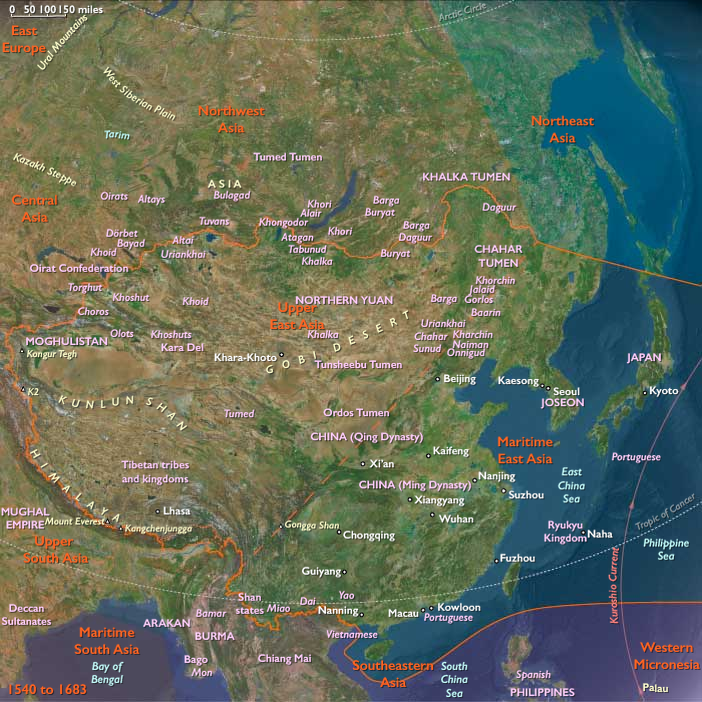
Subregions
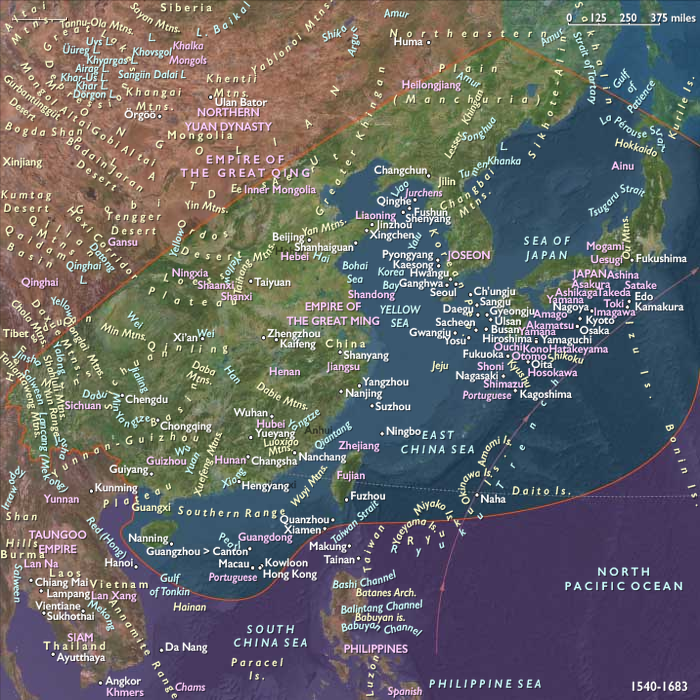
Years: 1639 - 1639
Locations
Groups
- Buddhists, Zen or Chán
- Christians, Roman Catholic
- Netherlands, United Provinces of the (Dutch Republic)
- Japan, Tokugawa, or Edo, Period
Topics
Commodoties
Subjects
Regions
Subregions