
Anne of Brittany’s Marriage to Charles VIII …
Years: 1492 - 1492
February
Anne of Brittany’s Marriage to Charles VIII and the Breton Succession Crisis (1491–1492)
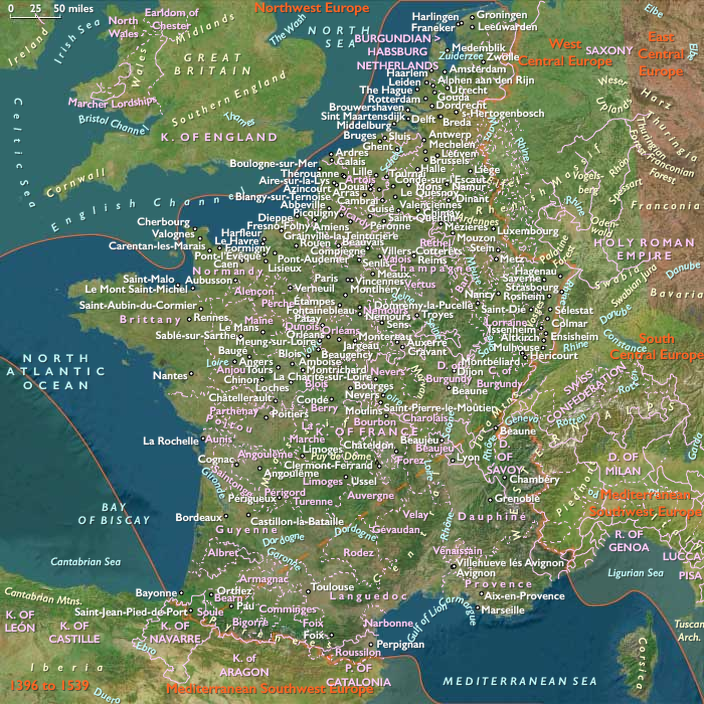
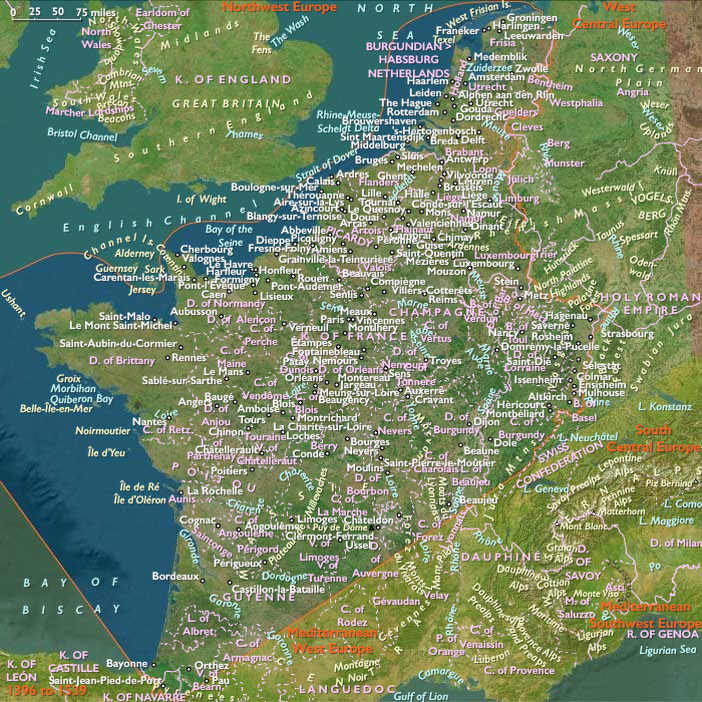
In 1491, Anne of Brittany, the last independent ruler of the Duchy of Brittany, married King Charles VIII of France, marking a decisive turning point in the history of the duchy and significantly influencing the political landscape of late medieval Atlantic West Europe. Anne’s union with Charles, though negotiated under duress, was central to the eventual absorption of Brittany into the French royal domain and the conclusion of longstanding Anglo-French tensions regarding Breton sovereignty.
Strategic Marriage and Coronation at St. Denis (1492)
Anne married Charles VIII officially in December 1491, through the Treaty of Laval, under intense diplomatic and military pressure, effectively abandoning an earlier proxy marriage with Maximilian of Austria. Recognizing the immense political importance of this union, Anne was crowned Queen of France on February 8, 1492, in the revered royal basilica of St. Denis near Paris. She was the first queen crowned there and the first explicitly consecrated by anointing on both "head and chest," a ceremonial innovation marking the unique significance of her union to the French monarchy. Her coronation was officiated by André d'Espinay, Archbishop of Bordeaux, underscoring the event’s national importance.
Conflict over Breton Title and Identity
Although Anne’s marriage contract with Charles stipulated that the surviving spouse would retain control of Brittany, Charles explicitly forbade Anne from using her title of Duchess of Brittany, a symbolic but contentious demand reflecting the French crown’s determination to assert supremacy over the duchy. This prohibition soon emerged as a persistent source of tension in their marriage, emblematic of broader tensions surrounding Brittany’s status—independent duchy or mere French province.
Anne’s persistence in maintaining Breton identity and autonomy, even symbolically, heightened conflict between her and Charles, reflecting the underlying political struggle over Brittany’s place within the French kingdom.
Diplomatic Complications and Papal Intervention (1492)
Anne’s marriage had occurred under precarious legal circumstances. She had previously entered into a proxy marriage with the Habsburg Archduke Maximilian, an arrangement that Charles VIII nullified through aggressive diplomacy backed by military force. To legitimize the union, Pope Innocent VIII intervened, issuing a dispensation in early 1492, formally annulling Anne’s proxy marriage to Maximilian and sanctioning the new royal marriage despite Anne and Charles being related within the prohibited fourth degree of consanguinity.
This papal intervention was a critical diplomatic victory for France, neutralizing potential Habsburg claims to Brittany and enabling Charles VIII to integrate the strategically valuable duchy into his kingdom formally.
Marital Agreement and Breton Succession
The marriage treaty stipulated that whoever outlived the other would retain possession of Brittany, with implications clearly favoring the French crown's ambitions. Anne, despite resenting Charles’s insistence on limiting her use of the Breton title, accepted this provision, albeit reluctantly. This clause positioned Brittany’s eventual incorporation into France as practically inevitable, underscoring how royal marriage diplomacy reshaped territorial and political identities.
Anne’s Role as Queen Consort
Despite tensions over the title and identity of Brittany, Anne fulfilled her dynastic role, bearing multiple pregnancies, on average every fourteen months, during her marriage to Charles. Although most of these children did not survive infancy, Anne’s frequent pregnancies underscored her critical role as a vessel for dynastic continuity—further emphasizing the intense pressures and personal sacrifices that defined late medieval royal marriages.
Long-Term Consequences and Historical Significance
Anne’s marriage and the ensuing events represented a defining moment in French political and territorial consolidation. Brittany’s eventual absorption into the French kingdom (formally concluded by Anne’s subsequent marriage to Charles VIII’s successor, Louis XII) fundamentally reshaped political boundaries and heralded a new era of centralized royal authority within France.
Moreover, Anne’s forced marriage highlighted the intersection between personal dynastic ambition, geopolitical rivalry, and regional autonomy. Her efforts to maintain Breton autonomy, at least symbolically, remain influential in shaping historical memory and cultural identity in Brittany. The complex diplomatic arrangements, marital politics, and territorial ambitions surrounding Anne’s marriage reflect broader patterns of late medieval state formation, territorial centralization, and the rising power of nation-states within Atlantic West Europe at the dawn of the early modern period.
Locations
People
Groups
- Papal States (Republic of St. Peter)
- Brittanny, Duchy of
- Christians, Roman Catholic
- France, (Valois) Kingdom of
- Holy Roman Empire
Topics
Commodoties
Subjects
Regions
Subregions
Related Events
Showing 10 events out of 40412 total
Years: 1492 - 1492
February
Locations
People
Groups
- Papal States (Republic of St. Peter)
- Brittanny, Duchy of
- Christians, Roman Catholic
- France, (Valois) Kingdom of
- Holy Roman Empire
Topics
Commodoties
Subjects
Regions
Subregions