
Filters:
Hastein’s Seizure of Angers and the Carolingian …
Years: 873 - 873
Hastein’s Seizure of Angers and the Carolingian Response (870–873)
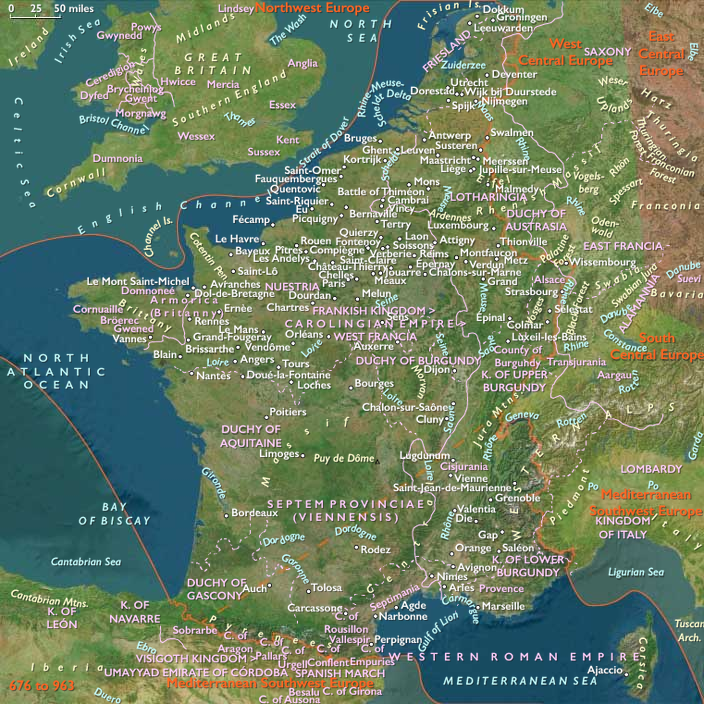
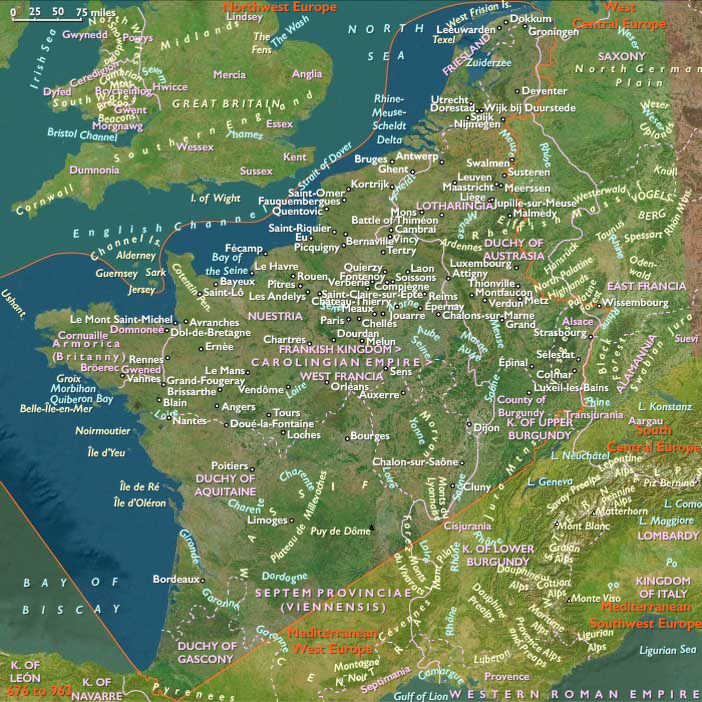
The city of Angers, originally a Gallic settlement and later the Roman city of Juliomagus, is an important Carolingian stronghold located on the Maine River, about 160 miles (257 km) southwest of Paris. Its strategic location makes it a key target during the Viking incursions into West Francia in the 9th century.
Hastein Captures Angers (870)
- Hastein, a prominent Viking chieftain, seizes Angers in 870, likely using the Maine River as an entry route into the Frankish heartland.
- This occupation is part of wider Norse incursions into the Loire Valley, where Vikings had established winter bases at Noirmoutier and along the Loire River.
- However, after a Frankish counteroffensive, Hastein is quickly surrounded and besieged, forcing him to abandon the city.
Hastein Retakes Angers (873)
- Despite his earlier expulsion, Hastein launches another attack in 873, reoccupying Angers.
- His second conquest suggests that Carolingian defenses remain weak, with the kingdom still vulnerable to Viking raids.
- Angers, like many Frankish river towns, is difficult to defend, as Viking longships easily navigate inland waterways, striking before the Franks can respond.
Carolingian Retaliation and the Expulsion of Hastein
- In 873, the Carolingian Emperor (likely Charles the Bald) launches a military campaign to reclaim Angers.
- Hastein is ousted once again, though it is unclear whether he is killed in battle, forced into retreat, or negotiates terms for his withdrawal.
- The successful recapture of Angers marks a temporary Frankish victory, but Viking threats to the Loire Valley continue, forcing the Carolingians to constantly defend the region.
The Significance of the Viking Sieges of Angers (870–873)
- Strategic Importance → The repeated Viking assaults on Angers and the Loire Valley highlight the region’s vulnerability as an access point to deeper Frankish territory.
- Frankish Struggles → The Carolingian response is slow and reactive, showing the difficulty of defending riverine settlements against mobile Viking forces.
- Hastein’s Role → Hastein emerges as one of the most formidable Viking leaders of the 9th century, engaging in raids from Francia to the Mediterranean.
- Foreshadowing Future Invasions → The repeated attacks on Angers are part of a larger pattern of Viking expansion, setting the stage for further raids into Brittany, Neustria, and deeper into Frankish lands.
Though Angers is eventually reclaimed, the Viking incursions of 870–873 further demonstrate the inability of the Carolingians to permanently drive out Norse raiders, who continue to exploit weak river defenses in West Francia.
Locations
People
Groups
- Franks
- Vikings
- Frankish, or Carolingian (Roman) Empire
- Francia Occidentalis (West Francia, or France), Kingdom of
Topics
Commodoties
Subjects
Regions
Subregions
Years: 873 - 873
Locations
People
Groups
- Franks
- Vikings
- Frankish, or Carolingian (Roman) Empire
- Francia Occidentalis (West Francia, or France), Kingdom of
Topics
Commodoties
Subjects
Regions
Subregions