
Andronikos II Palaiologos makes his son coemperor, …
Years: 1295 - 1295
Andronikos II Palaiologos makes his son coemperor, as Michael IX, in 1295.
In reaction against his father's policy, Andronikos has pursued a line of almost total isolation from the papacy and the West.
The union of Lyon had been solemnly repudiated and Orthodoxy restored, to the deep satisfaction of most Greeks, but there are still divisive conflicts in society.
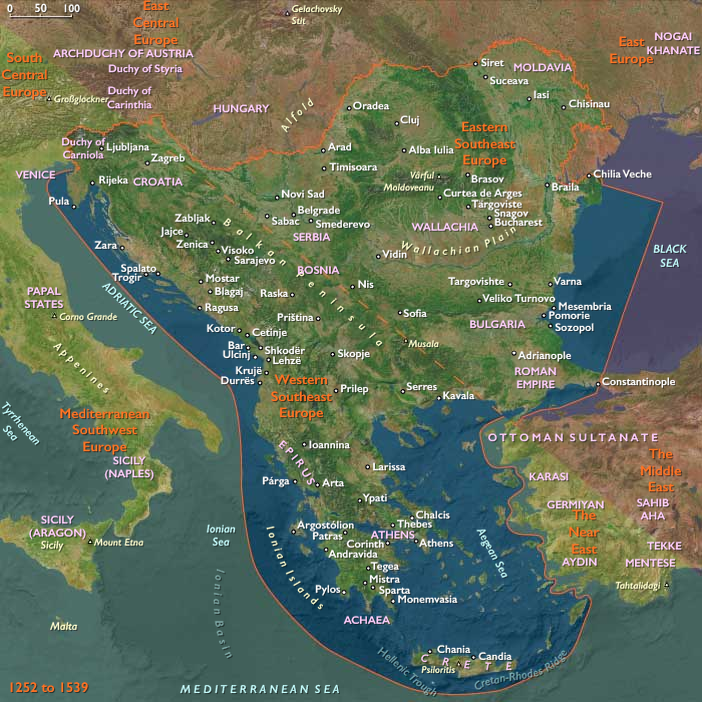
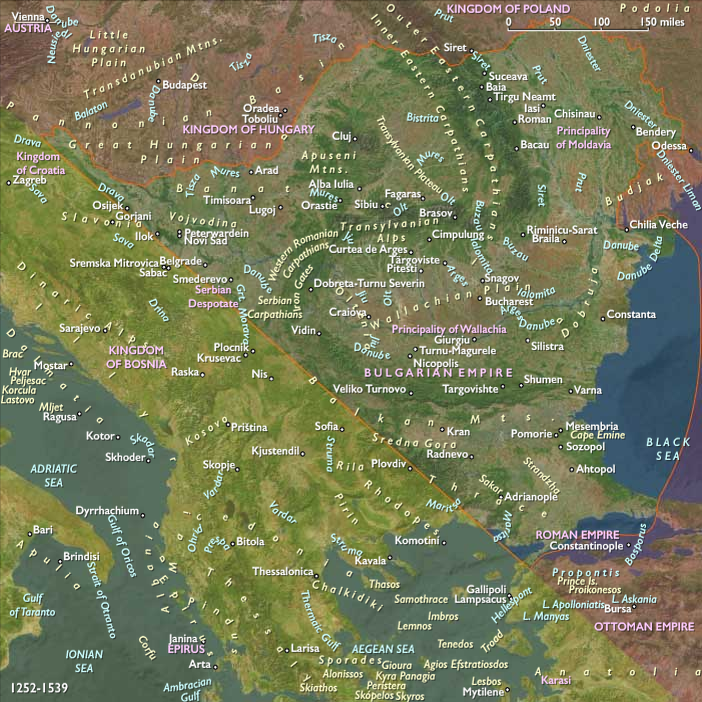
The Arsenite schism in the church is unhealed; the rulers of Epirus and Thessaly remain defiant and have kept contact with the successors of Charles I in Italy; and the people of Anatolia air their grievances in rebellion.
It is no longer possible for Constantinople to raise armies to fight in Europe and Asia simultaneously.
The native recruitment fostered by the Komnenian emperors has fallen off since 1261.
Estates held in pronoia have become hereditary possessions of their landlords, who ignore or are relieved of the obligation to render military service to the government.
The knights of the Fourth Crusade had found many familiar elements of feudalism in the social structure of the imperial provinces.
By the end of the thirteenth century, the development has gone much further.
The officers of the imperial army are still mostly drawn from the native aristocracy, but the troops are hired, and the cost of maintaining a large army in Europe, added to the lavish subsidies that Michael VIII had paid to his friends and allies, has crippled the economy.
His son Andronikos, an intellectual and a theologian rather than a statesman or soldier, has unwisely attempted to economize by reducing Constantinople’s land forces to a few thousand cavalry and infantry and eliminating the navy altogether, relying solely on a Genoese mercenary fleet.
Unemployed Greek sailors sell their services to the new Turkish emirs, who are already raiding the Aegean islands.
Locations
People
Groups
- Greeks, Medieval (Byzantines)
- Pisa, (first) Republic of
- Genoa, (Most Serene) Republic of
- Christians, Roman Catholic
- Christians, Eastern Orthodox
- Venice, (Most Serene) Republic of
- Roman Empire, Eastern: Palaiologan dynasty
Topics
Commodoties
Subjects
Regions
Subregions
Years: 1295 - 1295
Locations
People
Groups
- Greeks, Medieval (Byzantines)
- Pisa, (first) Republic of
- Genoa, (Most Serene) Republic of
- Christians, Roman Catholic
- Christians, Eastern Orthodox
- Venice, (Most Serene) Republic of
- Roman Empire, Eastern: Palaiologan dynasty
Topics
Commodoties
Subjects
Regions
Subregions