
Anawrahta is followed by a line of …
Years: 1091 - 1091
Anawrahta is followed by a line of able kings who will cement Pagan's place in history.
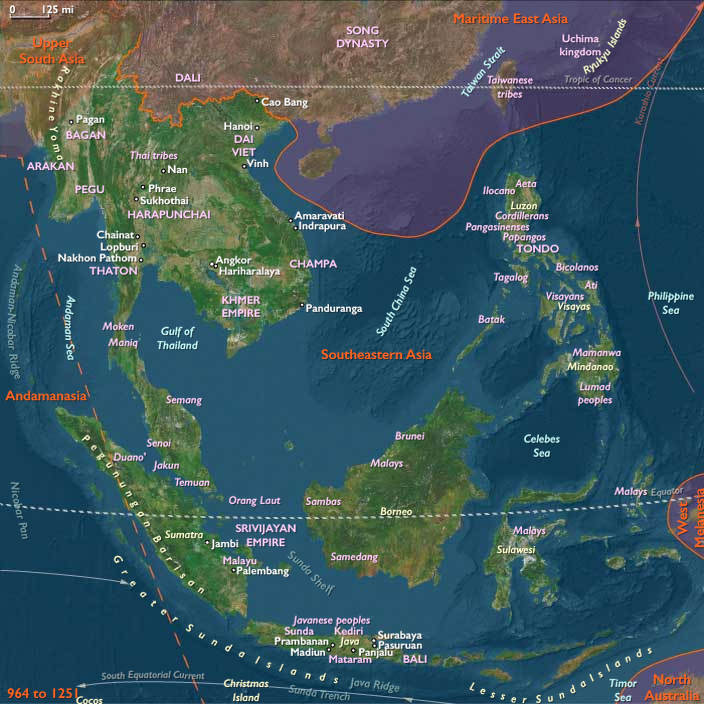
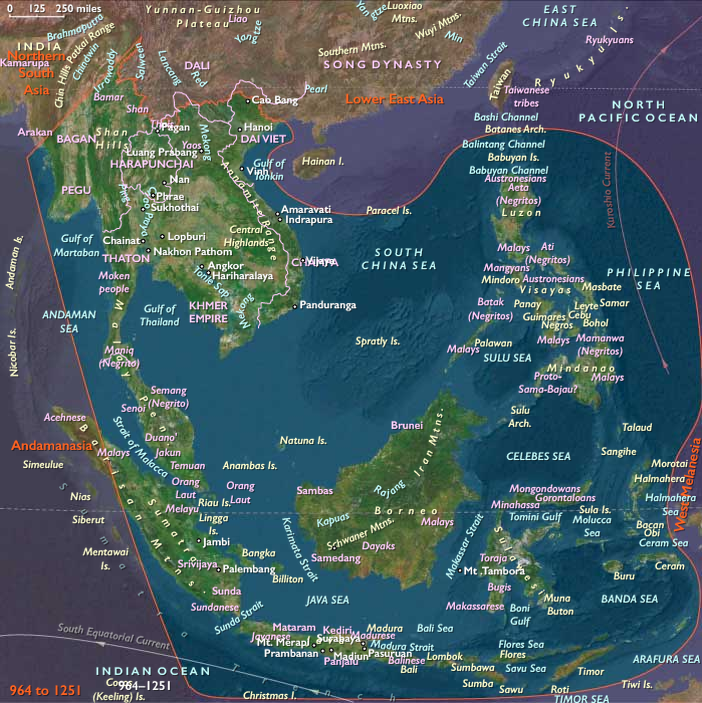
The Pagan Kingdom has entered a golden age that will last for the next two centuries.
Aside from a few occasional rebellions, the kingdom will be largely peaceful during the period.
Kyansittha, who succeeded to the throne of Pagan in 1084, continues to strengthen the foundations of the Pagan Empire that Anawrahta had built.
Although he suppresses a Mon rebellion, he pursues a conciliatory policy towards the Mon.
Having spent seven years in the Mon country in exile, the king has a genuine respect for Mon culture, and maintains Mon scholars at his court.
The language of most of his epigraphs is Mon, likely because the Burmese script is still coming into its own.
The Mon language is widely used among the ruling elite, and the Pyu language continues to be a cultural force as well.
Kyansittha, guided by Shin Arahan, continues Anawrahta's policies of reforming the Buddhism of Pagan, which is a mix of Ari Buddhism, Mahayana Buddhism, Theravada Buddhism and Hinduism.
He gives sanctuary to Buddhists fleeing India (which has just come under Muslim rule).
His policy proves effective.
His reign will see no more rebellions in the south.
Elsewhere will remain largely peaceful.
(He does at some point send an expedition to northern Arakan when the tributary kingdom in the west comes under attack by the lord of southern Arakan.
His troops repel the attack but cannot catch the lord.
Locations
People
Groups
- Hinduism
- Mon people
- Buddhism
- Buddhists, Theravada
- Buddhism, Mahayana
- Tibetan people
- Buddhism, Ari
- Bamar or Burmans
- Pagan (Bagan), Kingdom of
Topics
Commodoties
Subjects
Regions
Subregions
Years: 1091 - 1091
Locations
People
Groups
- Hinduism
- Mon people
- Buddhism
- Buddhists, Theravada
- Buddhism, Mahayana
- Tibetan people
- Buddhism, Ari
- Bamar or Burmans
- Pagan (Bagan), Kingdom of
Topics
Commodoties
Subjects
Regions
Subregions