
Southeastern Asia (909 BCE – 819 CE): …
Years: 909BCE - 819
Southeastern Asia (909 BCE – 819 CE): Iron Age Chiefdoms and Proto-States
Geographic and Environmental Context
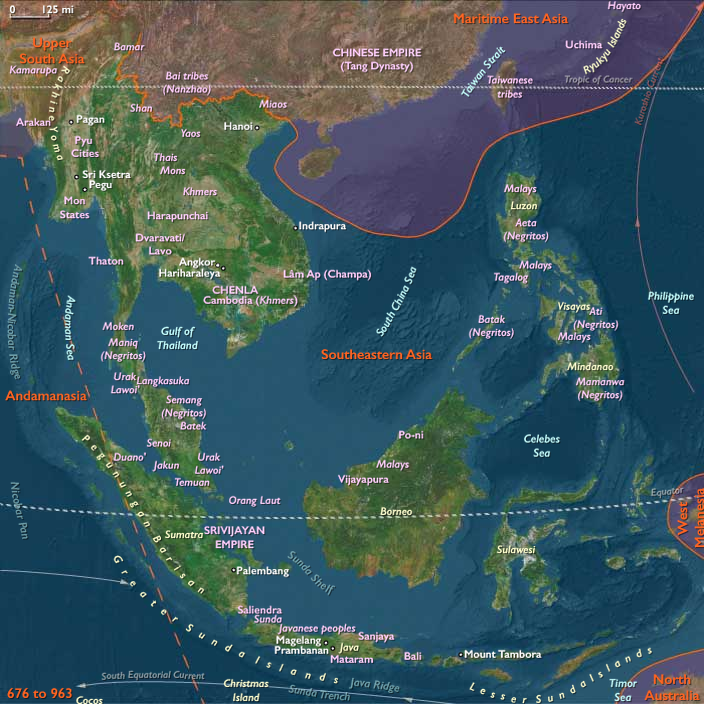
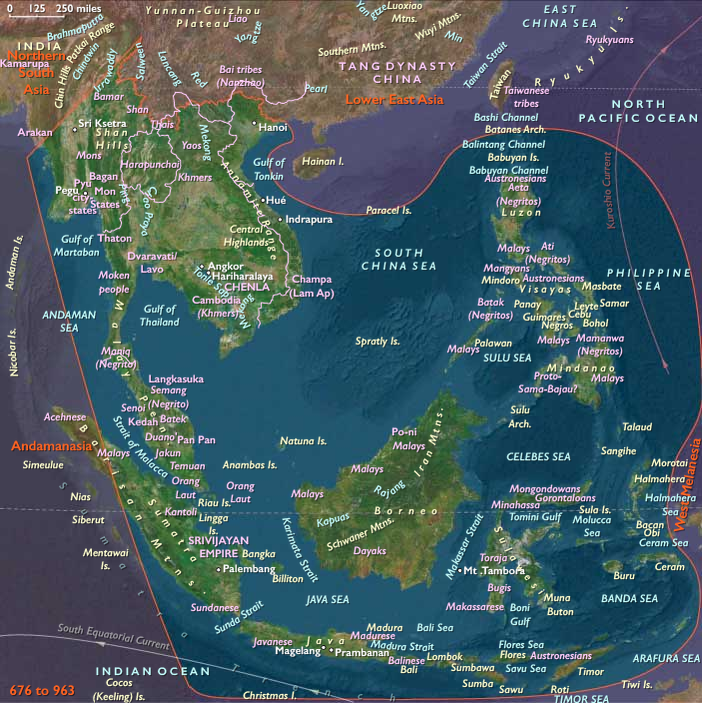
Southeastern Asia includes southern and eastern Myanmar, Thailand, Cambodia, Laos, Vietnam, the Malay Peninsula, Sumatra (excluding Aceh and its western islands), Java, Borneo, Sulawesi, the Philippines, and surrounding archipelagos (Banda, Molucca, Ceram, Halmahera, Sulu seas).
-
Anchors: Mekong (Funan precursor states), Chao Phraya (Dvaravati), Red River (Dong Son chiefdoms), Java–Sumatra, Borneo–Philippines, Sulawesi–Moluccas.
Climate & Environmental Shifts
-
First-millennium monsoons variable but overall stable for agriculture.
Subsistence & Settlement
-
Large-scale rice irrigation; surplus agriculture supported towns.
-
Coastal polities emerged with complex harbors.
-
Trade and tribute economies expanded.
Technology & Material Culture
-
Iron tools; bronze ritual drums and ornaments.
-
Canoes evolved into seagoing vessels.
-
Pottery refined; weaving expanded.
Movement & Interaction Corridors
-
Maritime exchange tied Vietnam–Malay Peninsula–Java–Philippines.
-
Overland links to China and India intensified.
Cultural & Symbolic Expressions
-
Early Hindu-Buddhist influences from India; animist traditions persisted.
-
Bronze drums used in rituals and diplomacy.
Environmental Adaptation & Resilience
-
Irrigated agriculture and diversified economies buffered climate shocks.
Transition
By 819 CE, Southeastern Asia was a landscape of Iron Age chiefdoms and proto-states, soon to evolve into the classical states we describe in 820–963 CE (Khmer, Srivijaya, Dvaravati, early Vietnam).
Groups
- Mon people
- Hinduism
- Dong Son culture
- Sa Huynh culture
- Vietnamese people
- Tai peoples, or Thais
- Buddhism
- Buddhists, Theravada
- Pyu city-states
- Malays, Ethnic
- Cham people
- Funan, Kingdom of
- Buddhism, Mahayana
- Tarumanagara, or Taruma Kingdom
- Dvaravati, Mon Kingdom of
- Sri Ksetra, Kingdom of
- Chenla Kingdom
- Lavo, Mon Kingdom of
- Srivijaya, Malay kingdom of
- Champa, Kingdom of
Topics
Commodoties
- Weapons
- Gem materials
- Oils, gums, resins, and waxes
- Grains and produce
- Strategic metals
- Salt
- Lumber
- Aroma compounds
- Spices
Subjects
- Commerce
- Architecture
- Watercraft
- Painting and Drawing
- Environment
- Government
- Custom and Law
- Metallurgy
Regions
Subregions
Related Events
Showing 10 events out of 47 total
Years: 909BCE - 819
Groups
- Mon people
- Hinduism
- Dong Son culture
- Sa Huynh culture
- Vietnamese people
- Tai peoples, or Thais
- Buddhism
- Buddhists, Theravada
- Pyu city-states
- Malays, Ethnic
- Cham people
- Funan, Kingdom of
- Buddhism, Mahayana
- Tarumanagara, or Taruma Kingdom
- Dvaravati, Mon Kingdom of
- Sri Ksetra, Kingdom of
- Chenla Kingdom
- Lavo, Mon Kingdom of
- Srivijaya, Malay kingdom of
- Champa, Kingdom of
Topics
Commodoties
- Weapons
- Gem materials
- Oils, gums, resins, and waxes
- Grains and produce
- Strategic metals
- Salt
- Lumber
- Aroma compounds
- Spices
Subjects
- Commerce
- Architecture
- Watercraft
- Painting and Drawing
- Environment
- Government
- Custom and Law
- Metallurgy
Regions
Subregions