
Filters:
The Cathedral of Tournai and the City’s …
Years: 1188 - 1188
The Cathedral of Tournai and the City’s Transition to Royal Authority (1187–1188 CE)
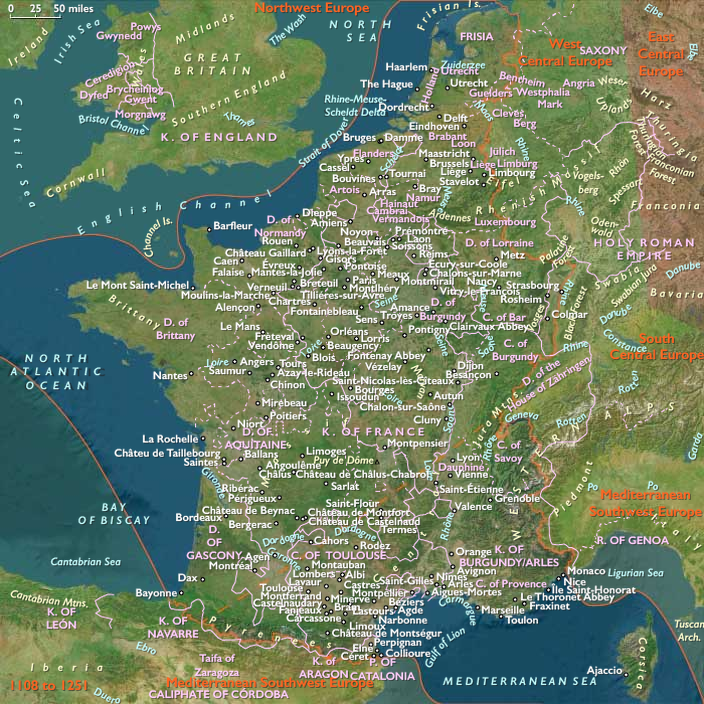
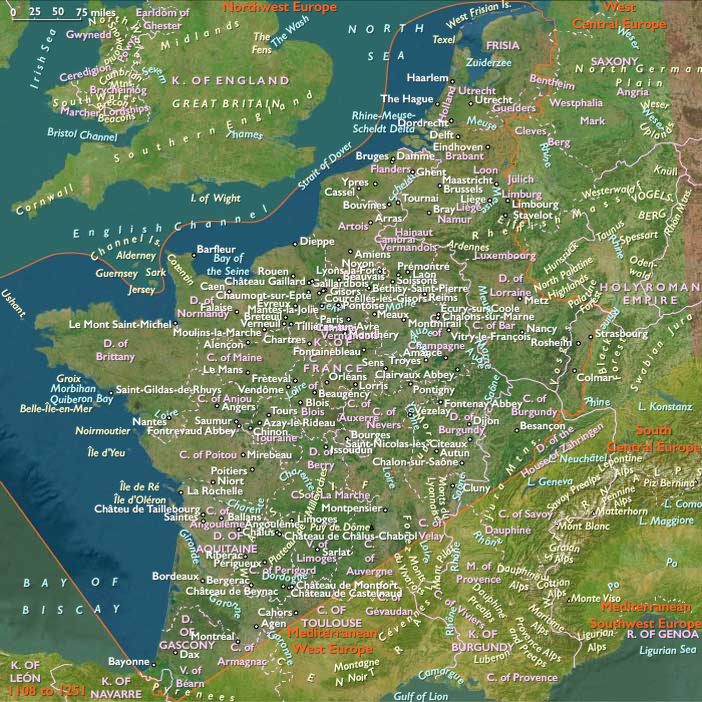
By 1187, the city of Tournai had successfully asserted its independence from its former feudal overlords, becoming directly subordinated to the French Crown as the Seigneurie de Tournaisis. This transition strengthened Capetian control in the region, making Tournai a key royal stronghold in Flanders.
At the same time, the city's ambitious architectural projects—including the ongoing construction of the Cathedral of Our Lady and the beginning of the belfry in 1188—reflected its growing autonomy and civic identity.
The Cathedral of Our Lady of Tournai
- Construction on Tournai’s cathedral began in the 12th century, built on the foundations of earlier religious structures.
- It occupies rising ground near the south bank of the Scheldt, a river that divides Tournai into two equal parts, reinforcing its central presence in the city.
- The nave, constructed primarily in the first third of the 12th century, features a heavy Romanesque style using local blue-gray stone, giving it a severe, fortress-like appearance.
- It incorporates a second-tier gallery between the ground-floor arcade and the triforium, prefiguring Early Gothic architecture.
The Transept and Towers
- The transept arms, built around the mid-12th century, end in apses, a design likely influenced by Rhenish (German) churches.
- This feature later influenced northeast French cathedrals, such as Noyon and Soissons.
- The massive square towers that flank the transept arms rise 83 meters (272 feet) high.
- Architectural details blend round-arched Romanesque and early pointed Gothic elements, showing stylistic transition during construction.
Construction of the Belfry (1188)
- In 1188, King Philip II Augustus granted Tournai its town charter, recognizing the city’s newly won independence.
- Among the privileges granted was the right to mount a communal bell, marking the beginning of the belfry’s construction.
- The belfry’s original form resembled a feudal keep, featuring:
- A square cross-section.
- A crenelated parapet.
- Use as a watchtower for spotting fires and enemy movements.
Significance of These Developments
- Tournai’s transition to direct Capetian rule (1187) strengthened French influence in northern Flanders, an area historically contested with the Counts of Flanders and the Holy Roman Empire.
- The Cathedral of Our Lady and the belfry’s construction reinforced Tournai’s status as a major religious and civic center in medieval France.
- The evolution of Tournai’s cathedral mirrored broader architectural shifts from Romanesque to Gothic, marking it as a pioneering structure in northern France.
Through these political and architectural transformations, Tournai emerged as a key royal and religious stronghold, bridging the artistic, cultural, and military dynamics of 12th-century France and Flanders.
Locations
Groups
Topics
Subjects
Regions
Subregions
Years: 1188 - 1188
Locations
Groups
Topics
Subjects
Regions
Subregions