
Filters:
The Qing dynasty is confronted in the …
Years: 1756 - 1767
The Qing dynasty is confronted in the eighteenth century with newly developing concepts of the international system and state to state relations.
The European empires are gradual expanding across the world, as European states develop economies built on maritime trade.
European trading posts have expanded into territorial control in nearby India and on the islands that are now Indonesia.
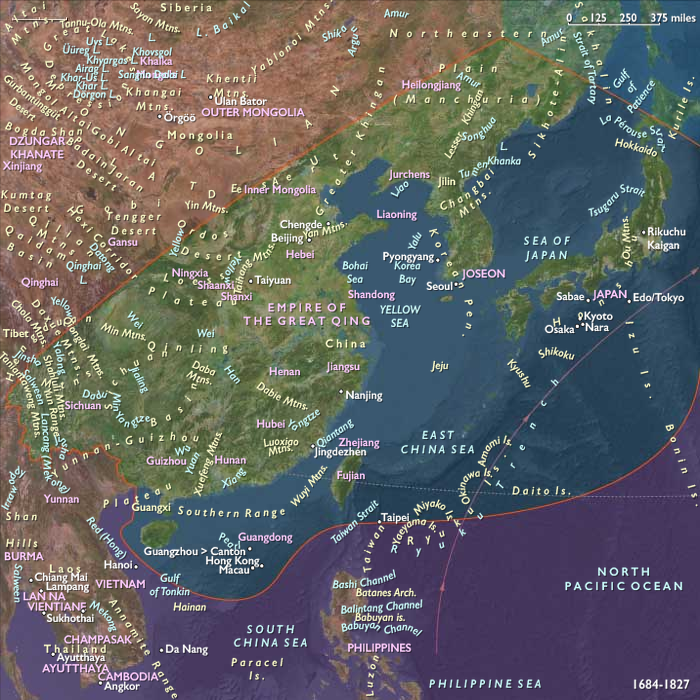
The Qing response, successful for a time, is in 1756 to establish the Canton System, which restricts maritime trade to this city and gives monopoly trading rights to private Chinese merchants.
The British East India Company and the Dutch East India Company had long before been granted similar monopoly rights by their governments.
The European empires are gradual expanding across the world, as European states develop economies built on maritime trade.
European trading posts have expanded into territorial control in nearby India and on the islands that are now Indonesia.
The Qing response, successful for a time, is in 1756 to establish the Canton System, which restricts maritime trade to this city and gives monopoly trading rights to private Chinese merchants.
The British East India Company and the Dutch East India Company had long before been granted similar monopoly rights by their governments.
Locations
People
Groups
- Chinese (Han) people
- Oirats
- Dzungars
- Dutch East India Company in Indonesia
- Dutch East India Company (Vereenigde Oostindische Compagnie or VOC in Dutch, literally "United East Indies Company")
- Manchus
- Chinese Empire, Qing (Manchu) Dynasty
- East India Company, British (United Company of Merchants of England Trading to the East Indies)
- India, East India Company rule in
Topics
Subjects
Regions

Subregions
Related Events
Showing 6 events out of 6 total
Years: 1756 - 1767
Locations
People
Groups
- Chinese (Han) people
- Oirats
- Dzungars
- Dutch East India Company in Indonesia
- Dutch East India Company (Vereenigde Oostindische Compagnie or VOC in Dutch, literally "United East Indies Company")
- Manchus
- Chinese Empire, Qing (Manchu) Dynasty
- East India Company, British (United Company of Merchants of England Trading to the East Indies)
- India, East India Company rule in
Topics
Subjects
Regions
Subregions