
Filters:
Archbishop Amulo’s Anti-Jewish Advocacy and the Diet …
Years: 841 - 841
September
Archbishop Amulo’s Anti-Jewish Advocacy and the Diet of Epernay (841–842)
In 841, Amulo, the newly appointed Archbishop of Lyon, succeeds Agobard, a longtime advocate of anti-Jewish policies in the Carolingian realm. Upon taking office, Amulo continues his predecessor’s hostility toward Jewish communities, pushing for harsher restrictions and state-sanctioned persecution.
The Letter to King Charles of Aquitaine
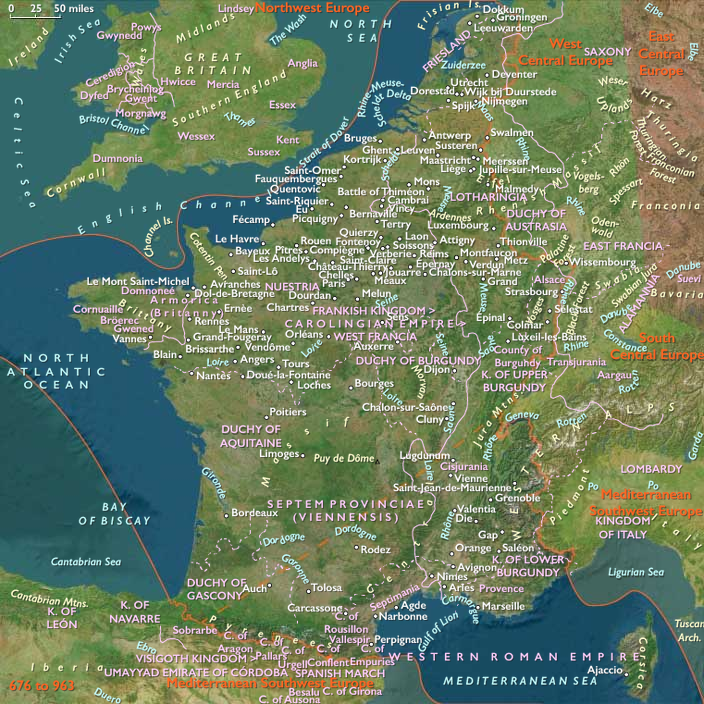
- Amulo writes to Charles of Aquitaine, urging him to ratify anti-Jewish measures at the Diet of Epernay (841–842), a Frankish assembly addressing political and ecclesiastical concerns.
- His arguments draw on traditional Christian supersessionist theology, portraying Jews as enemies of Christianity who hold too much economic and social influence.
- He calls for restrictions on Jewish rights, particularly in trade, finance, and public office, reinforcing earlier Carolingian Church policies.
Impact and Consequences
- King Charles does not immediately enforce Amulo’s demands, likely due to pragmatic concerns about disrupting commerce and royal revenues.
- However, Amulo’s letter becomes highly influential, as his justifications for Jewish persecution are widely circulated and adopted by Church authorities.
- His arguments contribute to the long-term institutionalization of anti-Jewish policies in medieval Christendom, influencing Church doctrine, later councils, and local restrictions.
Legacy
Though Amulo does not achieve direct success at the Diet of Epernay, his writings play a pivotal role in shaping medieval Christian attitudes toward Jews. His advocacy helps solidify ecclesiastical opposition to Jewish communities, paving the way for future restrictions and expulsions across medieval Europe.
Locations
People
Groups
- Jews
- Franks
- Christianity, Chalcedonian
- Aquitaine, (Carolingian) Kingdom of
- Frankish, or Carolingian (Roman) Empire
Topics
Subjects
Regions
Subregions
Related Events
Showing 7 events out of 7 total
Years: 841 - 841
September
Locations
People
Groups
- Jews
- Franks
- Christianity, Chalcedonian
- Aquitaine, (Carolingian) Kingdom of
- Frankish, or Carolingian (Roman) Empire
Topics
Subjects
Regions
Subregions