
Amsterdam’s Growth and Entry into the Hanseatic …
Years: 1369 - 1369
Amsterdam’s Growth and Entry into the Hanseatic League (1369)
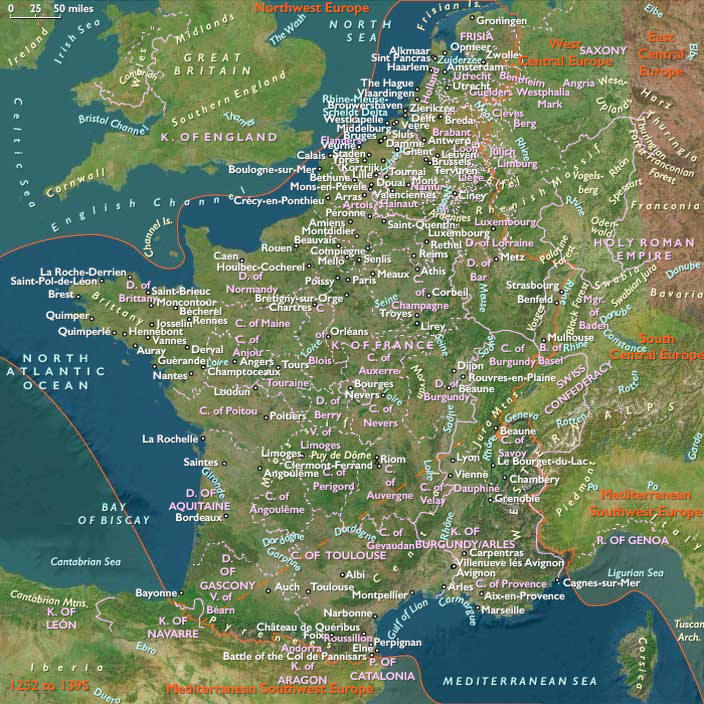
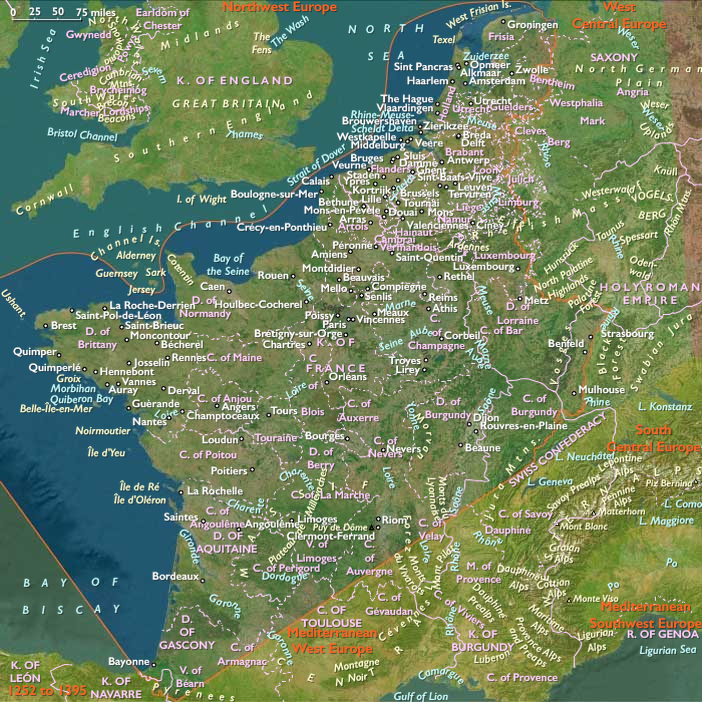
Amsterdam, situated where the IJ River flows into the Zuiderzee (now the IJsselmeer), derives its name from a dam built on the Amstel River, which flows into the IJ at this point. By the 14th century, the city had expanded significantly under the Counts of Holland, transforming into an important regional trade hub.
Expansion Under the Counts of Holland
- During the 14th century, Amsterdam grew rapidly, benefiting from its strategic location at the intersection of river and sea trade routes.
- The Counts of Holland encouraged its development, investing in infrastructure and trade connections to strengthen their influence in the region.
Amsterdam Joins the Hanseatic League (1369)
- In 1369, Amsterdam formally joined the Hanseatic League, an influential commercial alliance of northern European cities.
- As a result, Amsterdam’s merchants gained access to the lucrative Baltic trade, dealing in:
- Grain from Poland and Prussia
- Timber and tar from Scandinavia
- Salted fish from the North Sea
- Furs and textiles from northern Germany
- The city’s Hanseatic membership increased its wealth and economic connections, setting the stage for its future dominance as a commercial power.
Impact and Legacy
- Amsterdam’s entry into the Hanseatic League marked a turning point, integrating the city into the major trade networks of medieval Europe.
- This boosted its economy, accelerating its rise as a key port city in the Low Countries.
- The city’s foundation as a trading hub in the 14th century laid the groundwork for its golden age in the 17th century, when it became the center of global commerce.
By 1369, Amsterdam had firmly established itself as a major trading city, benefiting from Hanseatic connections that would drive its future growth and economic dominance in the centuries to come.
Locations
Groups
Commodoties
- Fish and game
- Hides and feathers
- Grains and produce
- Textiles
- Salt
- Fuels, lubricants and sealants
- Lumber
Subjects
Regions
Subregions
Related Events
Showing 10 events out of 43887 total
Years: 1369 - 1369
Locations
Groups
Commodoties
- Fish and game
- Hides and feathers
- Grains and produce
- Textiles
- Salt
- Fuels, lubricants and sealants
- Lumber
Subjects
Regions
Subregions