
Egypt, for two centuries after the Muslim …
Years: 676 - 819
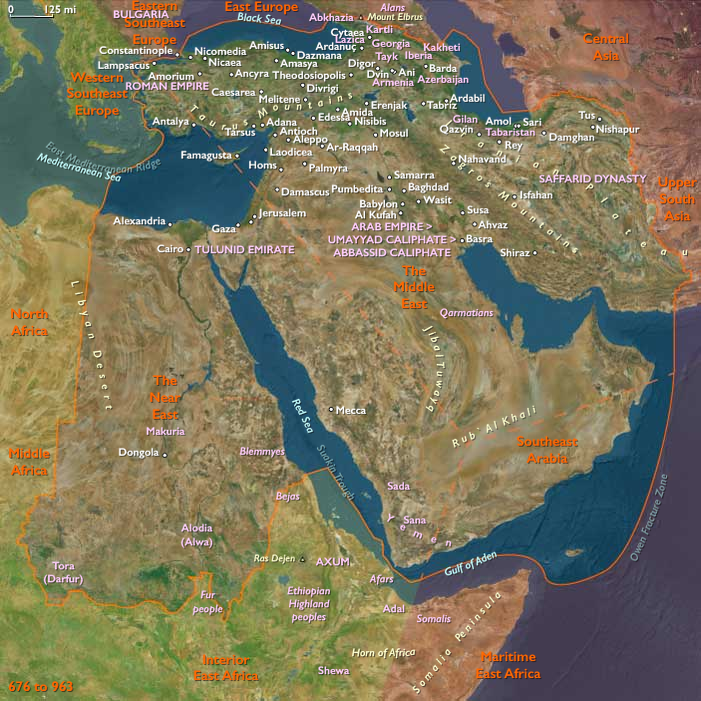
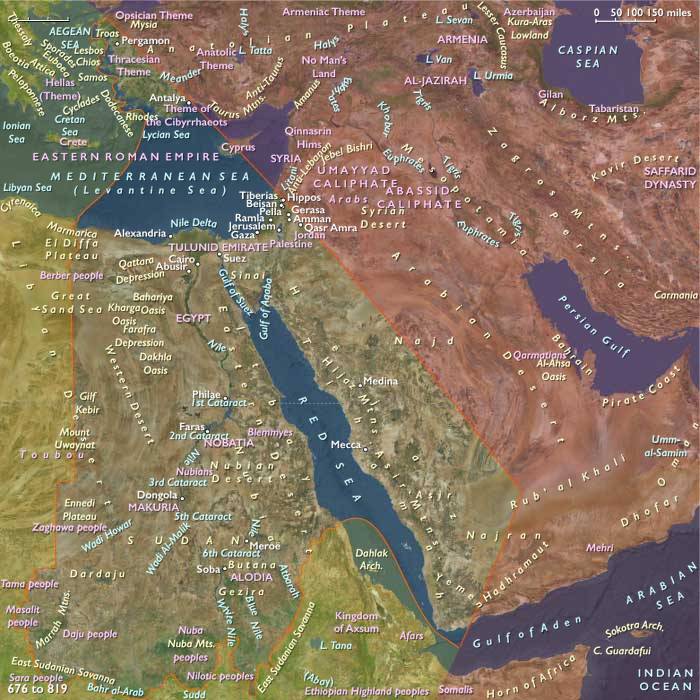
Egypt, for two centuries after the Muslim conquest, is a province ruled by a line of governors appointed by the caliphs in the east.
Egypt provides abundant grain and tax revenue.
In time, most of the people had accepted the Muslim faith, and the Arabic language becomes the language of government, culture, and commerce.
The Arabization of the country is aided by the continued settlement of Arab tribes in Egypt.
From the time of the conquest onward, Egypt's history is intertwined with the history of the Arab world.
Thus, in the eighth century, Egypt feels the effects of the Arab civil war that results in the defeat of the Umayyad Dynasty, the establishment of the Abbasid caliphate, and the transfer of the capital of the empire from Damascus to Baghdad.
For Egypt, the transfer of the capital farther east means a weakening of control by the central government.
When the Abbasid caliphate begins to decline in the ninth century, local autonomous dynasties arise to control the political, eco nomic, social, and cultural life of the country.
Locations
Groups
- Egyptians
- Arab people
- Jews
- Egypt (Roman province)
- Christians, Monophysite
- Christianity, Chalcedonian
- Coptic Orthodox Church of Alexandria
- Greeks, Medieval (Byzantines)
- Islam
- Egypt in the Middle Ages
- Umayyad Caliphate (Damascus)
- Umayyad Caliphate (Harran)
- Abbasid Caliphate (Kufa)
- Abbasid Caliphate (Baghdad)
Topics
Commodoties
Subjects
Regions
Subregions
Related Events
Showing 2 events out of 2 total
Years: 676 - 819
Locations
Groups
- Egyptians
- Arab people
- Jews
- Egypt (Roman province)
- Christians, Monophysite
- Christianity, Chalcedonian
- Coptic Orthodox Church of Alexandria
- Greeks, Medieval (Byzantines)
- Islam
- Egypt in the Middle Ages
- Umayyad Caliphate (Damascus)
- Umayyad Caliphate (Harran)
- Abbasid Caliphate (Kufa)
- Abbasid Caliphate (Baghdad)
Topics
Commodoties
Subjects
Regions
Subregions