
The deteriorating state of affairs in the …
Years: 371 - 371
The deteriorating state of affairs in the East had been among Valens' reasons for contracting a hasty and not entirely favorable peace with the Goths in 369.
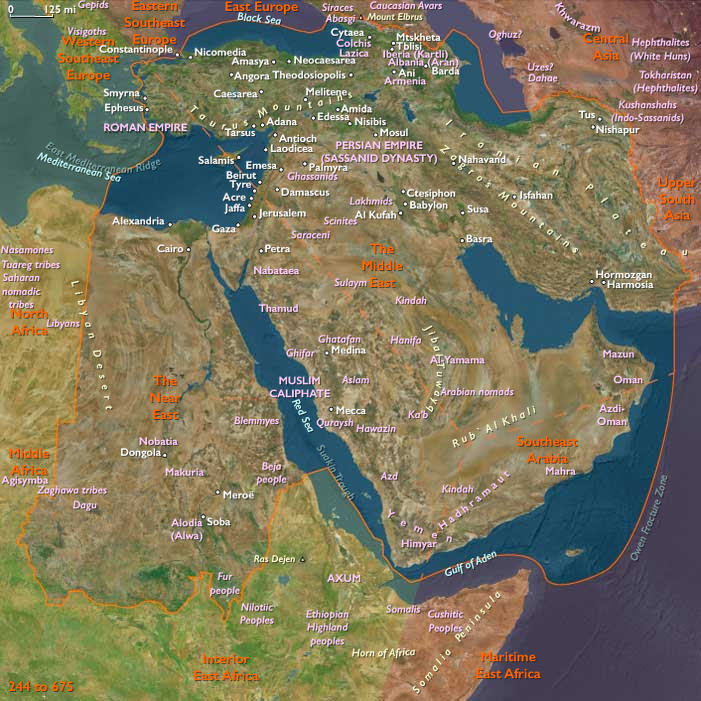
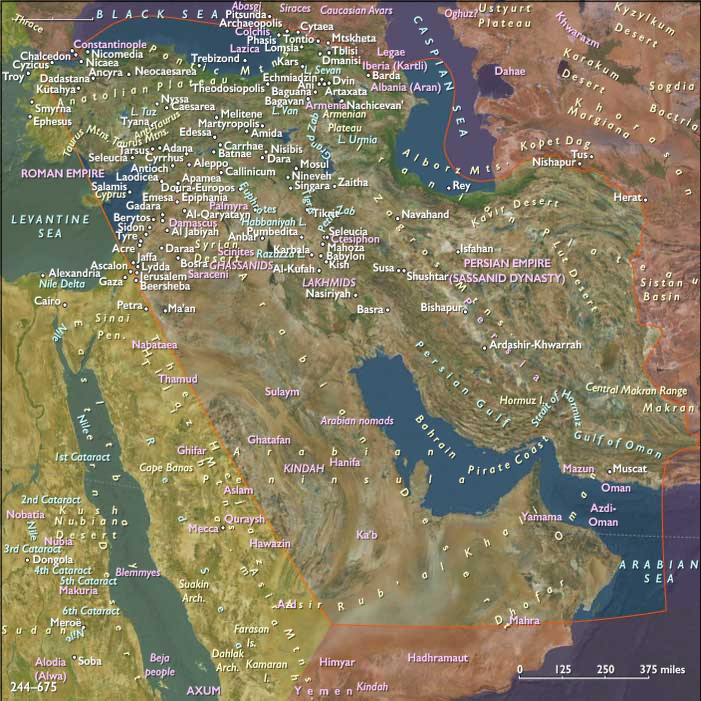
Already in the summer following his Gothic settlement, Valens had sent his general Arinthaeus to re-impose Pap on the Armenian throne.
This had provoked Shapur himself to invade and lay waste to Armenia.
Pap, however, had once again escaped and been restored a second time under escort of a much larger force in 370.
The following spring, larger forces are sent under Terentius to regain Iberia and to garrison Armenia near Mount Npat.
When Shapur counterattacks into Armenia in 371, his forces are bested by Valens' generals Traianus and Vadomarius at Bagavan.
Faustus of Byzantium gives considerable credit for the victory to sparapet Mushegh Mamikonian.
(Sparapet, an Arrmenian military title, was traditionally held by the House of Mamikonian during the first centuries of the rule of the Arsacid kings.)
During the ensuing battles, more Armenian territories are reclaimed from the Persians, including Arzanene and Corduene which had been ceded to Persians by Jovian in 363.
By the end of the summer, Shapur retreats to his capital at Ctesiphon and Valens goes back to Antioch.
Valens has overstepped the 363 treaty and successfully defended his transgression.
A truce settled after the 371 victory is to hold as a quasi-peace for the next five years.
Shapur will be unable to confront the massive Roman buildup in Armenia as a result of his preoccupation with attacks in the eastern realm of his empire.
While peace prevails with Persia, the situation inside Armenia begins to crumble.
Locations
People
Groups
- Persian people
- Armenian people
- Iberia, Caucasian (Kartli, Kingdom of)
- Goths (East Germanic tribe)
- Armenia, Kingdom of
- Persian Empire, Sassanid, or Sasanid
- Roman Empire: Valentinian dynasty (Rome)
Topics
Commodoties
Subjects
Regions
Subregions
Years: 371 - 371
Locations
People
Groups
- Persian people
- Armenian people
- Iberia, Caucasian (Kartli, Kingdom of)
- Goths (East Germanic tribe)
- Armenia, Kingdom of
- Persian Empire, Sassanid, or Sasanid
- Roman Empire: Valentinian dynasty (Rome)
Topics
Commodoties
Subjects
Regions
Subregions