
George Stephenson is said to have produced …
Years: 1821 - 1821
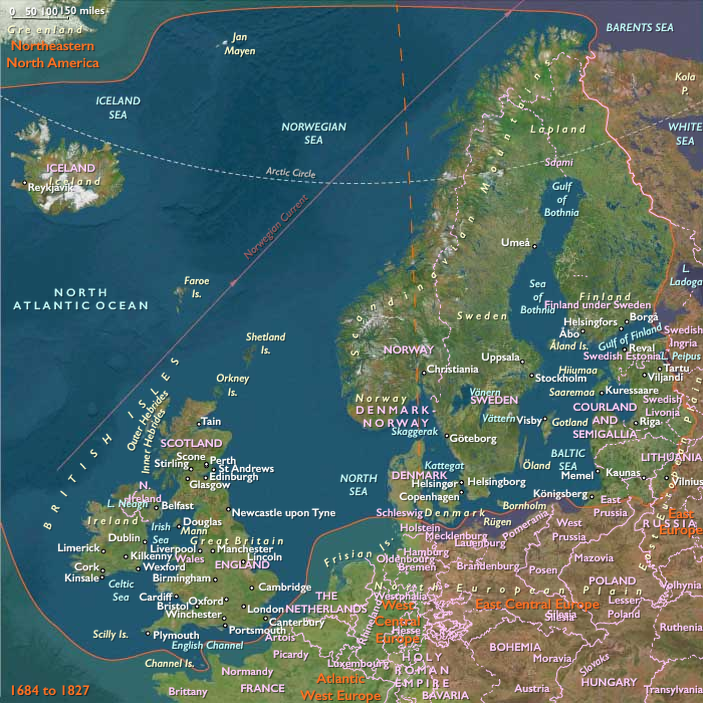
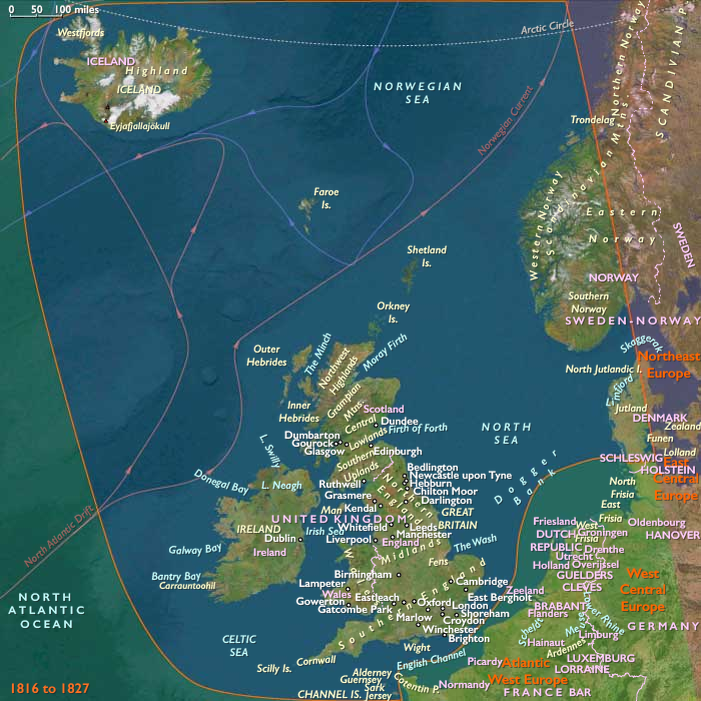
George Stephenson is said to have produced sixteen locomotives altogether at Killingworth, although it has never proved possible to produce a convincing list of all sixteen.
Of those that have been identified most were built for use at Killingworth itself or for the Hetton colliery railway.
A six-wheeled locomotive had been built for the Kilmarnock and Troon Railway in 1817 but it was soon withdrawn from service because of damage to the cast iron rails.
A further locomotive had been supplied to Scott's Pit railroad at Llansamlet, near Swansea in 1819 but it too was soon withdrawn, apparently because it was under-boilered and also because of damage to the track.
The new engines are too heavy to be run on wooden rails, and iron rails are in their infancy, with cast iron exhibiting excessive brittleness.
Together with William Losh, Stephenson has improved the design of cast iron rails to reduce breakage; these are briefly made by Losh, Wilson and Bell at their Walker ironworks.
According to Rolt, Stephenson had also managed to solve the problem caused by the weight of the engine upon these primitive rails.
He had experimented with a 'steam spring' (to 'cushion' the weight using steam pressure), but soon followed the new practice of 'distributing' weight by utilizing a number of wheels.
For the Stockton and Darlington Railway, however, Stephenson will use only wrought iron rails, notwithstanding the financial loss he will suffer from not using his own, patented design. (Nock, Oswald (1955). "Building the first main lines". The Railway Engineers. London: Batsford. p. 62.)
Stephenson had been hired to build an eight-mile (thirteen kilometer) railway from Hetton colliery to Sunderland in 1820.
The finished result uses a combination of gravity on downward inclines and locomotives for level and upward stretches.
It is the first railway using no animal power.
Locations
People
Groups
Topics
Subjects
Regions
Subregions
Related Events
Showing 10 events out of 20353 total
Years: 1821 - 1821
Locations
People
Groups
Topics
Subjects
Regions
Subregions