Although Zulfiqar Ali Bhutto had tried to …
Years: 1978 - 1978
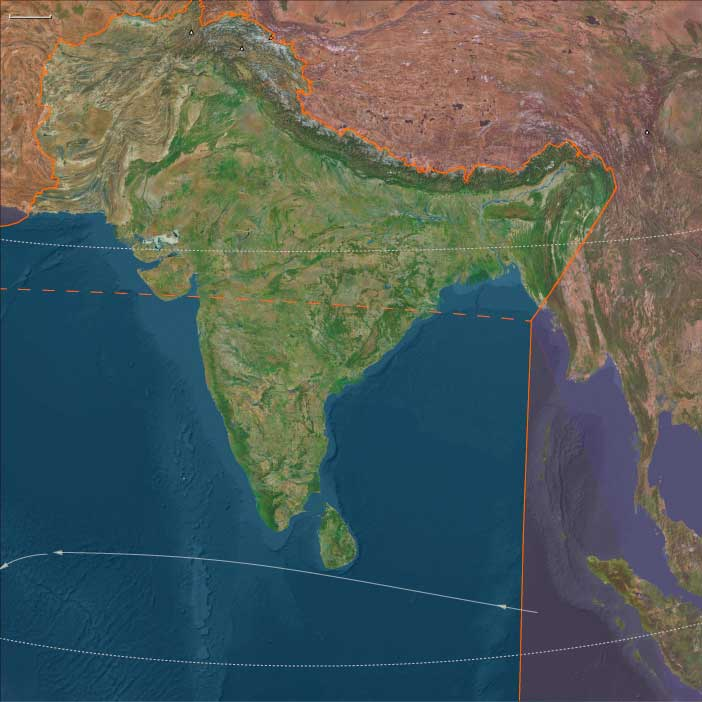
Although Zulfiqar Ali Bhutto had tried to redirect Pakistan's regional orientation toward West Asia, and Zia continues this trend, the nation's geostrategic interests dictate a concentration on South Asia.
Pakistan's foreign policy is very much centered on India.
Less than two years after Zia's assumption of power, Congress, led by Indira Gandhi, is voted out of office and replaced by the Janata Party, whose foreign minister is Atal Behari Vajpayee of the Jana Sangh, long seen as anti-Pakistan.
Nonetheless, Vajpayee visits Pakistan in February 1978.
There are exchanges on many issues, and agreements are signed on trade, cultural exchanges, and communications-but not on such essential issues as Kashmir and nuclear development.
After elections are canceled by decree on March 1, 1978, Zia bans all political activity, although political parties are not banned.
The same month, some 200 journalists are arrested, and a number of newspapers were shut down.
Zia, however, maintains that there will be elections sometime in 1979.
The attacks on the Bhutto administration increase as time passes and culminate in Bhutto's trial and death sentence on March 18, 1978, for complicity in the murder of a political opponent.
Zia's efforts to create an acceptable political alternative have only limited success.
Thirteen months after taking over the martial-law administration, he announces the formation of a civilian Cabinet of administrators, technocrats, and some political leaders drawn from the Muslim League and the religious parties.
Members of some of the PNA parties, including the Jamaat-i-Islami and the Pakistan Muslim League, join Zia's cabinet as he attempts to give a civilian cast to his government.
The PNA is now split, with most elements forming an opposition that demands early elections, withdrawal of the army from Balochistan, and the introduction of a full Islamic code of laws.
A zealous Muslim, Zia has already imposed Islamic criminal punishments such as flogging and maiming, but he declines to meet the full opposition demand.
He announces, however, that Pakistani law will be based on Nizam-i-Mustafa, one of the demands of the PNA in the 1977 election.
The requirement means that any laws passed by legislative bodies have to conform to Islamic law; any passed previously will be nullified if they are repugnant to Islamic law.
Nizam-i-Mustafa raises several problems.
Most Pakistanis are Sunni, but there is a substantial minority of Shia whose interpretation of Islamic law differs in some important aspects from that of the Sunnis.
There are also major differences in the views held by the ulama in the interpretation of what constitutes nonconformity and repugnance in Islam.
President Fazal Elahi Chaudhry remains in office until his term expires on September 16, 1978, when Zia assumes that office in addition to his role as chief martial law administrator.