
Great Britain had made no mention of …
Years: 1786 - 1786
September
Great Britain had made no mention of their native allies in the Treaty of Paris (1783), although many of the native peoples had fought in the war on the British side.
According to Joseph Brant, a Mohawk chief who is one of the early architects of the Western Confederacy, the British had "sold the Indians to Congress."
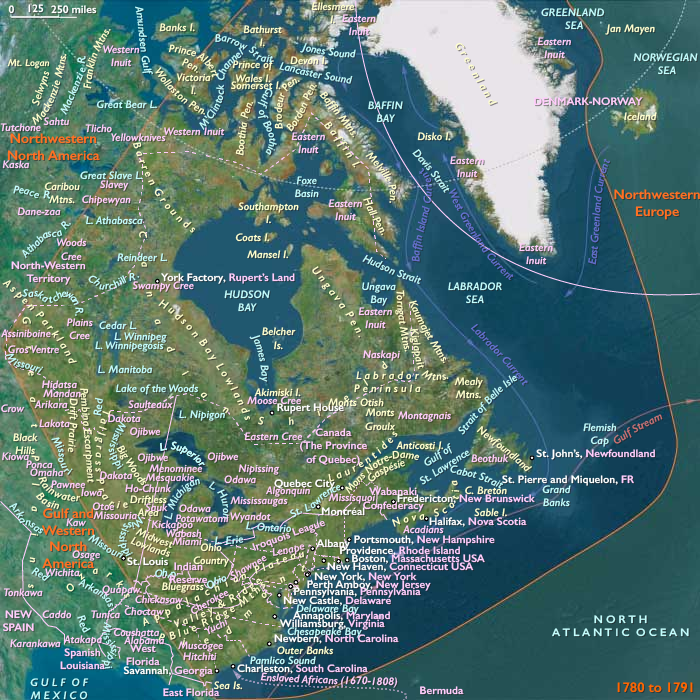
The confederacy first comes together in 1786 at a conference at the Wyandot town of Upper Sandusky, with the intention of forming a common front in dealing with the Americans.
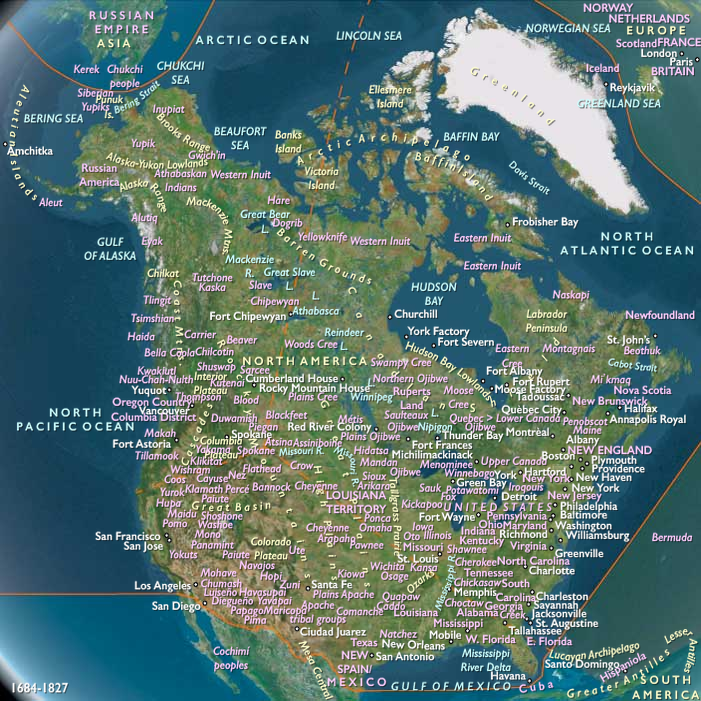
Members of many different native tribes are involved in the Western Confederacy.
The confederacy is sometimes known as the "Miami Confederacy" because U.S. officials overestimate the influence and numerical strength of the Miami tribe within the confederation.
Because most tribes are not centralized political units at this time, involvement in the confederacy is usually a village rather than a tribal basis.
The confederacy consists of members of the following tribes: Council of Three Fires Iroquois Confederacy Seven Nations of Canada Wabash Confederacy (Wea, Piankashaw, and others) Illini Confederacy Wyandot Mississaugas Menominee Shawnee Lenape Miami Kickapoo Kaskaskia Chickamauga/Lower Cherokee Upper Muscogee.
Locations
People
Groups
- Three Fires, Council of
- Iroquois (Haudenosaunee, also known as the League of Peace and Power, Five Nations, or Six Nations)
- Muscogee, or Creek, people (Amerind tribe)
- Wyandot, or Wendat, or Huron people (Amerind tribe)
- Kickapoo people (Amerind tribe)
- Miami (Amerind tribe)
- Illinois confederacy, or Illiniwek
- Lenape or Lenni-Lenape (later named Delaware Indians by Europeans)
- Menominee (Amerind tribe)
- Mississaugas (Amerind tribe)
- Kaskaskia (Amerind tribe)
- Shawnees, or Shawanos (Amerind tribe)
- Wabash Confederacy
- Seven Nations of Canada
- Britain, Kingdom of Great
- Chickamauga Cherokee
- United States of America (US, USA) (Philadelphia PA)
- Western Confederacy
Topics
Commodoties
Subjects
Regions
Subregions
Related Events
Showing 10 events out of 24620 total
Years: 1786 - 1786
September
Locations
People
Groups
- Three Fires, Council of
- Iroquois (Haudenosaunee, also known as the League of Peace and Power, Five Nations, or Six Nations)
- Muscogee, or Creek, people (Amerind tribe)
- Wyandot, or Wendat, or Huron people (Amerind tribe)
- Kickapoo people (Amerind tribe)
- Miami (Amerind tribe)
- Illinois confederacy, or Illiniwek
- Lenape or Lenni-Lenape (later named Delaware Indians by Europeans)
- Menominee (Amerind tribe)
- Mississaugas (Amerind tribe)
- Kaskaskia (Amerind tribe)
- Shawnees, or Shawanos (Amerind tribe)
- Wabash Confederacy
- Seven Nations of Canada
- Britain, Kingdom of Great
- Chickamauga Cherokee
- United States of America (US, USA) (Philadelphia PA)
- Western Confederacy
Topics
Commodoties
Subjects
Regions
Subregions