
Filters:
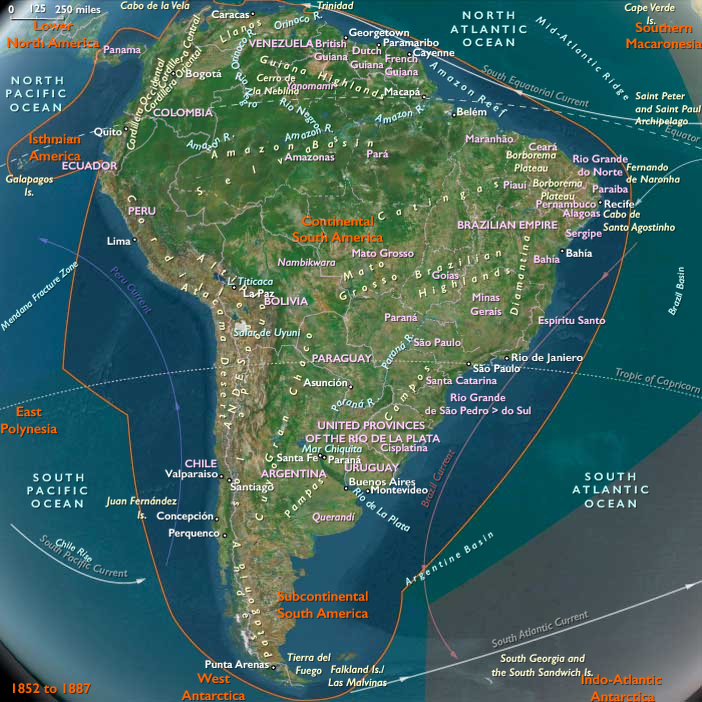
Ending the slave trade in Brazil has …
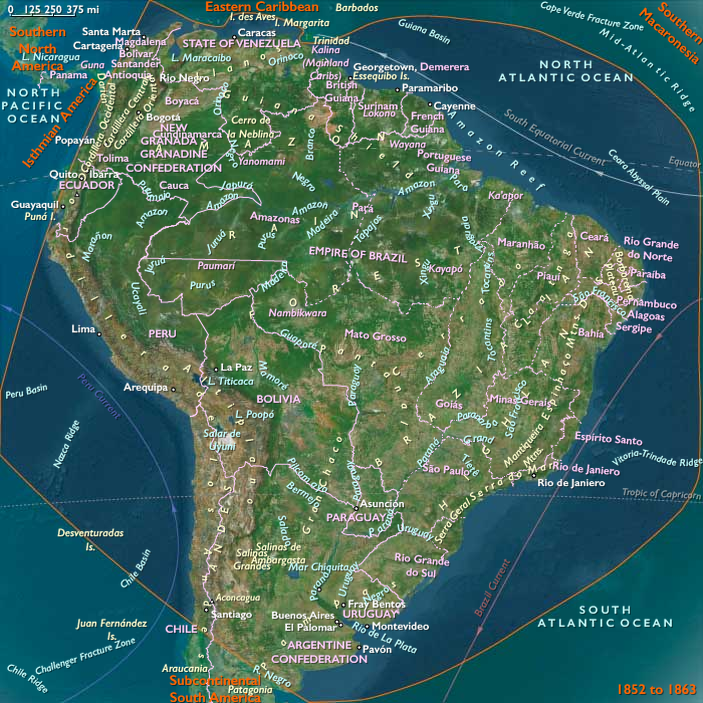
Years: 1851 - 1863
Ending the slave trade in Brazil has a number of consequences.
First, because labor needs increase in Rio de Janeiro and Sao Paulo as the world demand for coffee rises, Northeastern planters sell their surplus slaves to Southern growers.
In addition, Parliament passes laws encouraging European immigration, as well as the Land Law of 1850.
Second, ending the slave trade frees capital that can then be used for investment in transport and industrial enterprises.
Third, it ensures that Britain does not interfere in Brazil's military intervention to end the rule in Buenos Aires of Juan Manuel de Rosas (president of Argentina, 1829-33, 1835-52).
Locations
People
Groups
- Brazil, Indigenous people in
- Guaraní (Amerind tribe)
- Portuguese people
- Britain (United Kingdom of Great Britain and Ireland)
- Brazilian Empire
- Argentina (Argentine Republic)
Topics
- Cabanagem
- Ragamuffin War
- Sabinada Revolt
- Balaiada Rebellion
- Minas Gerais Rebellion in Brazil
- Sao Paulo Rebellion in Brazil
Commodoties
Subjects
Regions
Subregions
Years: 1851 - 1863
Locations
People
Groups
- Brazil, Indigenous people in
- Guaraní (Amerind tribe)
- Portuguese people
- Britain (United Kingdom of Great Britain and Ireland)
- Brazilian Empire
- Argentina (Argentine Republic)
Topics
- Cabanagem
- Ragamuffin War
- Sabinada Revolt
- Balaiada Rebellion
- Minas Gerais Rebellion in Brazil
- Sao Paulo Rebellion in Brazil
Commodoties
Subjects
Regions
Subregions