
Alp Arslan's victory at Manzikert in 1071 …
Years: 1080 - 1080
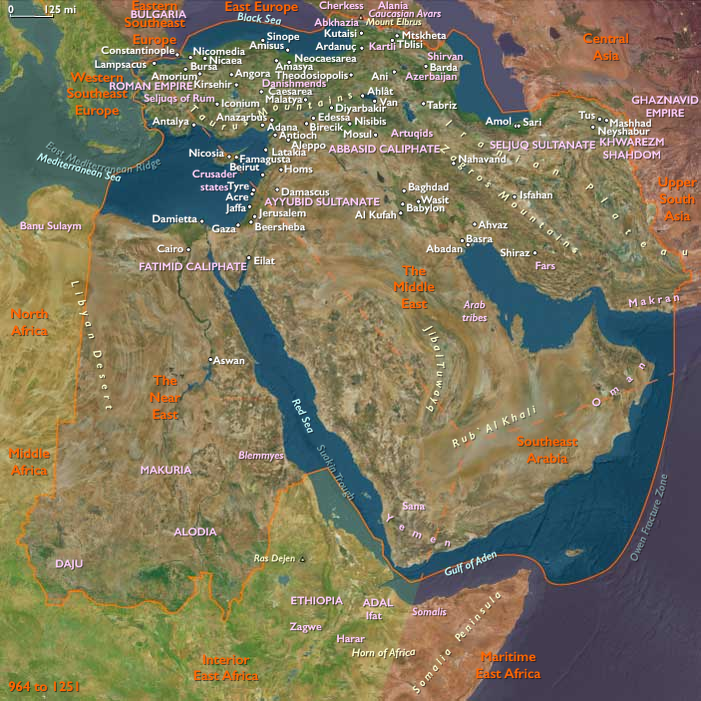
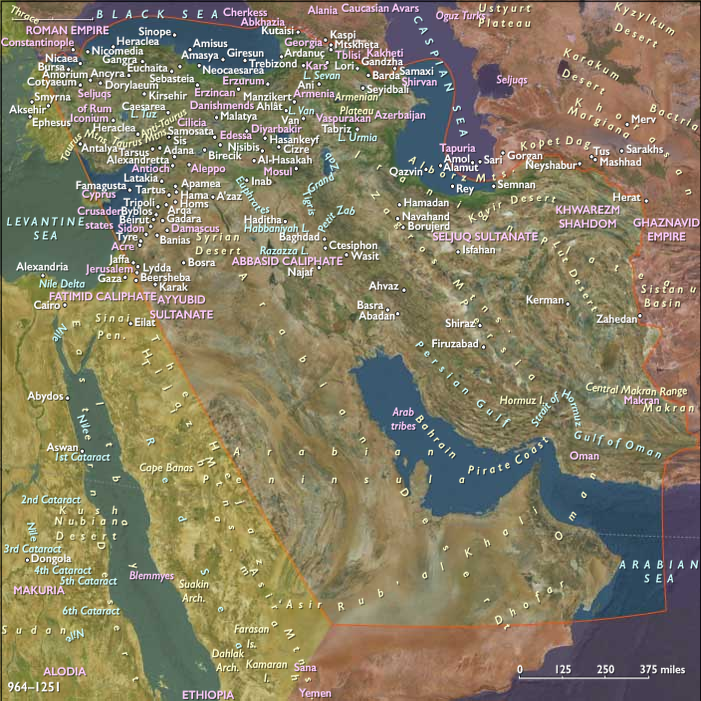
Alp Arslan's victory at Manzikert in 1071 had been followed up by a Turkish conquest of Anatolia.
This campaign has been the work of independent Turkmen armies, such as that of Atsiz ibn Uvaq, and not of the Seljuq army.
As a result, the Sultanate of Rum, as Qutalmïsh calls his new state, does not acknowledge the authority of the House of Seljuq.
The activities of Qutalmïsh have attracted the concern of Malik-Shah, who has attempted unsuccessfully to dislodge his kinsman on several occasions.
However, after making Nicaea his capital and renaming it Iznik, Qutalmïsh in about 1080 assumes the title “sultan” in defiance of Malik-Shah, an event generally accepted as marking the beginning of independent Seljuq rule in Anatolia-known as Rüm (“Rome”—i.e., the eastern Roman Empire).
The heart of the empire's military and economic strength, which the Arabs had never mastered, is now under Turkish rule.
Locations
People
Groups
- Persian people
- Armenian people
- Oghuz Turks
- Greeks, Medieval (Byzantines)
- Islam
- Armeniac Theme
- Muslims, Sunni
- Abbasid Caliphate (Baghdad)
- Mazyadid (Al-Mazeedi) state of Iraq
- Ghaznavids
- Turkmen people
- Fatimid Caliphate
- 'Uqaylid Dynasty of Mosul
- Georgia, (Bagratid) Kingdom of
- Mirdasid dynasty
- Armenia, Principalities of
- Seljuq Empire (Isfahan)
- Christians, Eastern Orthodox
- Roman Empire, Eastern: Doukid dynasty
- Rum, Sultanate of
Topics
Commodoties
Subjects
Regions
Subregions
Years: 1080 - 1080
Locations
People
Groups
- Persian people
- Armenian people
- Oghuz Turks
- Greeks, Medieval (Byzantines)
- Islam
- Armeniac Theme
- Muslims, Sunni
- Abbasid Caliphate (Baghdad)
- Mazyadid (Al-Mazeedi) state of Iraq
- Ghaznavids
- Turkmen people
- Fatimid Caliphate
- 'Uqaylid Dynasty of Mosul
- Georgia, (Bagratid) Kingdom of
- Mirdasid dynasty
- Armenia, Principalities of
- Seljuq Empire (Isfahan)
- Christians, Eastern Orthodox
- Roman Empire, Eastern: Doukid dynasty
- Rum, Sultanate of
Topics
Commodoties
Subjects
Regions
Subregions