
Washington had expected to be attacked after …
Years: 1754 - 1754
June
Washington had expected to be attacked after retiring from Jumonville.
Tanacharison attempts to convince the Delaware, Shawnee and the Seneca to join the Virginians at Great Meadows.
With about one hundred and fifty Virginians at Great Meadows, they had begun to construct a fort, which had been completed on June 3.
The fort, which Washington names Fort Necessity, is a circular stockade made of seven-foot-high (two point one meters) upright logs covered with bark and skins built around a little hut that contains ammunition and provisions.
The rest of the Virginia Regiment arrived at Great Meadows on June 9.
One hundred British regulars under the command of James Mackay arrive a few days later, but instead of making camp with the Virginians they camp separately outside the fort.
Washington has heard that there are five hundred poorly-supplied French troops at Fort Duquesne, and thus he had led the three hundred Virginians out of Great Meadows on June 16 to widen the road for those who would follow to an advanced position at Red Stone Creek.
Washington meets on June 18 with Tanacharison, who tells him that he has been unable to convince the other chiefs to assist Washington and says that he will also be unable to help the Virginians.
Although Washington has lost native support, making his troops more vulnerable to attack, he continues to widen the road towards Red Stone Creek.
After a council of war on June 28, Washington orders the withdrawal to Great Meadows.
This same day, six hundred French and one hundred natives leave Fort Duquesne led by Louis Coulon de Villiers, the older brother of the slain Jumonville.
The Virginians have to abandon most of their supplies in order to keep ahead of the French/Canadian force.
Tanacharison attempts to convince the Delaware, Shawnee and the Seneca to join the Virginians at Great Meadows.
With about one hundred and fifty Virginians at Great Meadows, they had begun to construct a fort, which had been completed on June 3.
The fort, which Washington names Fort Necessity, is a circular stockade made of seven-foot-high (two point one meters) upright logs covered with bark and skins built around a little hut that contains ammunition and provisions.
The rest of the Virginia Regiment arrived at Great Meadows on June 9.
One hundred British regulars under the command of James Mackay arrive a few days later, but instead of making camp with the Virginians they camp separately outside the fort.
Washington has heard that there are five hundred poorly-supplied French troops at Fort Duquesne, and thus he had led the three hundred Virginians out of Great Meadows on June 16 to widen the road for those who would follow to an advanced position at Red Stone Creek.
Washington meets on June 18 with Tanacharison, who tells him that he has been unable to convince the other chiefs to assist Washington and says that he will also be unable to help the Virginians.
Although Washington has lost native support, making his troops more vulnerable to attack, he continues to widen the road towards Red Stone Creek.
After a council of war on June 28, Washington orders the withdrawal to Great Meadows.
This same day, six hundred French and one hundred natives leave Fort Duquesne led by Louis Coulon de Villiers, the older brother of the slain Jumonville.
The Virginians have to abandon most of their supplies in order to keep ahead of the French/Canadian force.
Locations
People
- Christopher Gist
- George Washington
- Joseph Coulon de Villiers, Sieur de Jumonville
- Louis Coulon de Villiers
- Tanacharison
- Robert Dinwiddie
Groups
- Lenape or Lenni-Lenape (later named Delaware Indians by Europeans)
- Seneca (Amerind tribe)
- New France (French Colony)
- Shawnees, or Shawanos (Amerind tribe)
- France, (Bourbon) Kingdom of
- Ohio Country
- Pennsylvania, Province of (English Colony)
- Maryland, Province of (English Colony)
- Virginia (English Crown Colony)
- Britain, Kingdom of Great
- Ohio Company
- Mingo (Seneca-Cayuga Tribe of Oklahoma)
Topics
- Colonization of the Americas, French
- Colonization of the Americas, British
- French and Indian War
- Jumonville Glen, Battle of
Commodoties
Subjects
Regions
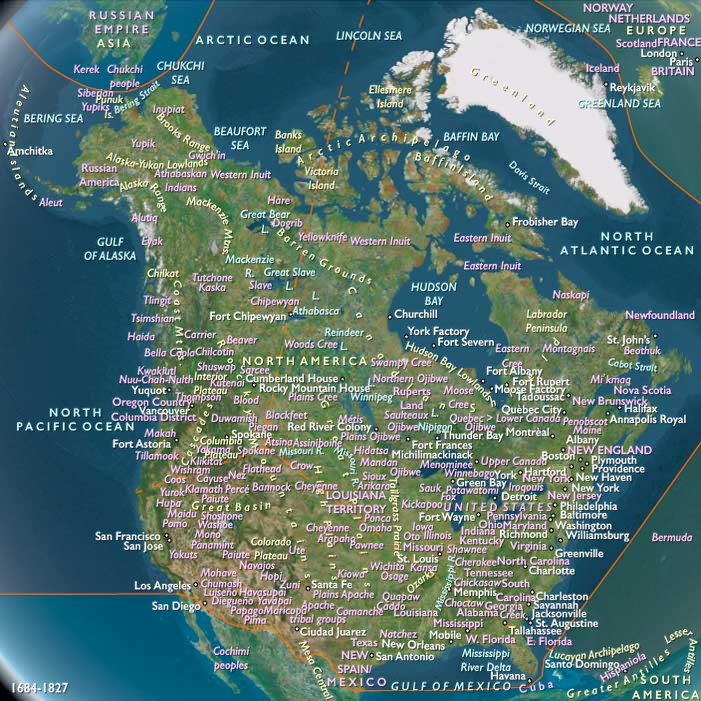
Subregions
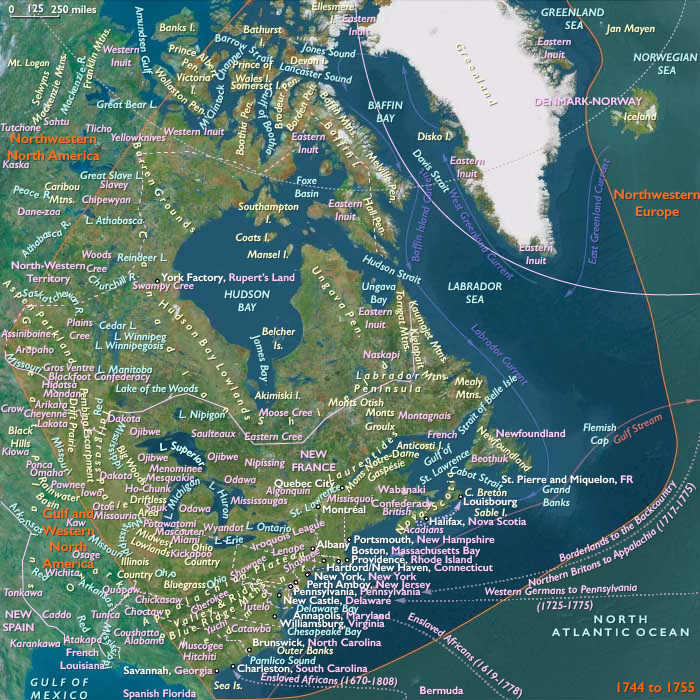
Related Events
Showing 10 events out of 26905 total
Years: 1754 - 1754
June
Locations
People
- Christopher Gist
- George Washington
- Joseph Coulon de Villiers, Sieur de Jumonville
- Louis Coulon de Villiers
- Tanacharison
- Robert Dinwiddie
Groups
- Lenape or Lenni-Lenape (later named Delaware Indians by Europeans)
- Seneca (Amerind tribe)
- New France (French Colony)
- Shawnees, or Shawanos (Amerind tribe)
- France, (Bourbon) Kingdom of
- Ohio Country
- Pennsylvania, Province of (English Colony)
- Maryland, Province of (English Colony)
- Virginia (English Crown Colony)
- Britain, Kingdom of Great
- Ohio Company
- Mingo (Seneca-Cayuga Tribe of Oklahoma)
Topics
- Colonization of the Americas, French
- Colonization of the Americas, British
- French and Indian War
- Jumonville Glen, Battle of
Commodoties
Subjects
Regions
Subregions