
Almost all the pepper that the Dutch …
Years: 1741 - 1741
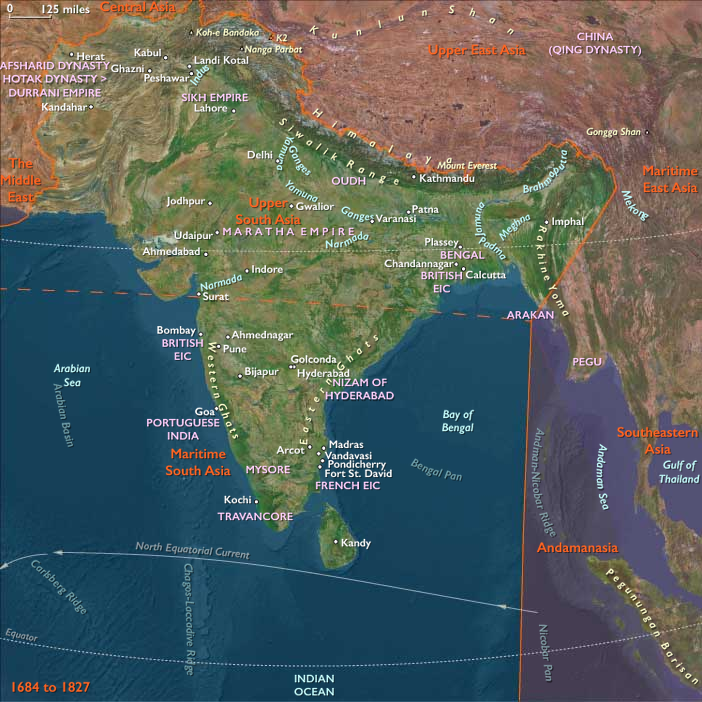
Almost all the pepper that the Dutch import into their country comes from the kingdom of Kayamkulam.
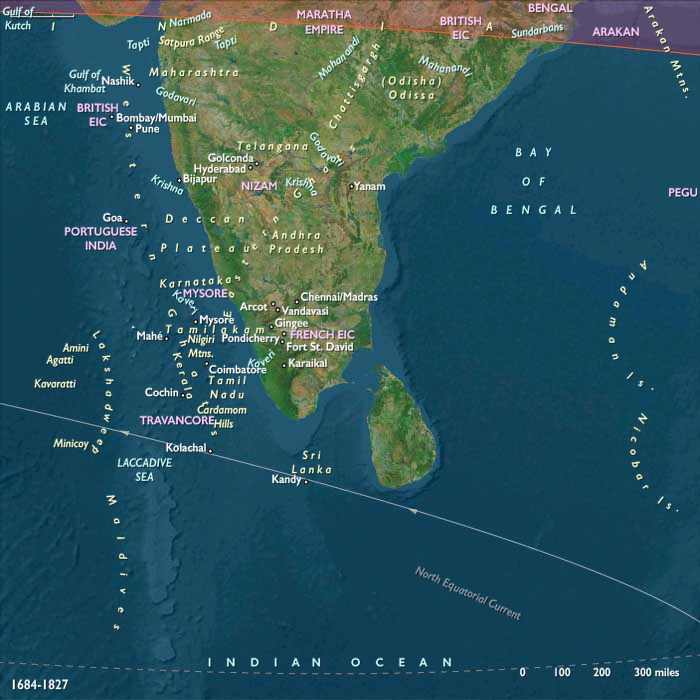
The Maharajah of Travancore, Marthanda Varma, having realized that the Rajah of Kayamkulam was involved in certain conspiracies against him, has become bent on destroying Kayamkulam and annexing the kingdom.
This endangers Dutch interests, who fear the British will gain the rights to the pepper trade from them, thus ending the Dutch monopoly.
With this in view, the Dutch Governor writes to Marthanda Varma, asking him to end aggressions against Kayamkulam, to which the Maharajah responds by asking him not to interfere in matters that do not concern him.
The Governor then meets the Maharajah in person and threatens war on the basis that they are a "superior" power.
The interview is closed by a scornful remark from the Maharajah that if the "superior" power should attack them "there were forests in Travancore into which he and his people could retire in safety" and that he had himself been planning to invade Europe with the help of his fishermen.
This last interview ends, thus, in tension and the Governor decides to attack Travancore.
Marthanda Varma in a series of battles annexes the kingdoms of Attingal, Quilon, and Kayamkulam.
When he starts his campaign against the Kottarakara and other allies of the Dutch East India Company, the Dutch Governor, Van Imhoff, meets Varma to protest against his policy towards their allies, but the meeting serves only to aggravate the situation.
The Dutch in 1741 install a princess of the Elayadathu Swarupam as the ruler of Kottarakara in defiance of the demands of Marthanda Varma.
The Travancore army inflicts a crushing defeat upon the combined Kottarakara-Dutch armies and annexes the kingdom, forcing the Dutch to retreat to Cochin.
Following this, Marthanda Varma captures all of the Dutch forts in the area.
The battle of Colachel begins when a force of Dutch marines under the leadership of a Flemish commander, Captain Eustachius De Lannoy (also spelled D'lennoy) are sent to Travancore to secure a trading post from the Raja.
They land with artillery in Kulachal, a small but important coastal town, and capture the territory up to Padmanabhapuram, the capital of Travancore.
The arrival of the Raja's army from the north forces the Dutch to take up defensive positions in Kulachal, where they are attacked and defeated by the Travancore Nair Army.
The key element of the Raja's army is his personal guard, known as the Travancore Nair Brigade or locally known as the Nair Pattalam.
Captain de Lannoy and twenty-four other Dutchmen are taken prisoners, while the rest of the Dutchmen either retreat to their ships or are killed.
Donadi, de Lannoy’s lieutenant, is also captured.
The Dutch prisoners express their willingness to serve the Maharaja of Travancore.
De Lannoy is entrusted with the job of training a regiment of the army in European tactics of war and discipline.
Captain de Lannoy performs this task to the entire satisfaction of Marthanda Varma and the Maharaja appoints him as one of his Generals.
Donadi also is given a high military post.
A direct outcome of the event at Kulachal is the takeover of the black pepper trade by the state of Travancore.
This development is to have serious repercussions upon the Dutch and the trading world of Kerala at large.
Locations
People
Groups
- Tamil people
- Dutch people
- Nair
- Onattukara (Kayankulam)
- Dutch East India Company (Vereenigde Oostindische Compagnie or VOC in Dutch, literally "United East Indies Company")
- East India Company, British (United Company of Merchants of England Trading to the East Indies)
- Travancore, Kingdom of
Topics
Commodoties
Subjects
Regions
Subregions
Years: 1741 - 1741
Locations
People
Groups
- Tamil people
- Dutch people
- Nair
- Onattukara (Kayankulam)
- Dutch East India Company (Vereenigde Oostindische Compagnie or VOC in Dutch, literally "United East Indies Company")
- East India Company, British (United Company of Merchants of England Trading to the East Indies)
- Travancore, Kingdom of
Topics
Commodoties
Subjects
Regions
Subregions