
Filters:
English and Dutch merchants challenge the Portuguese …
Years: 1540 - 1683
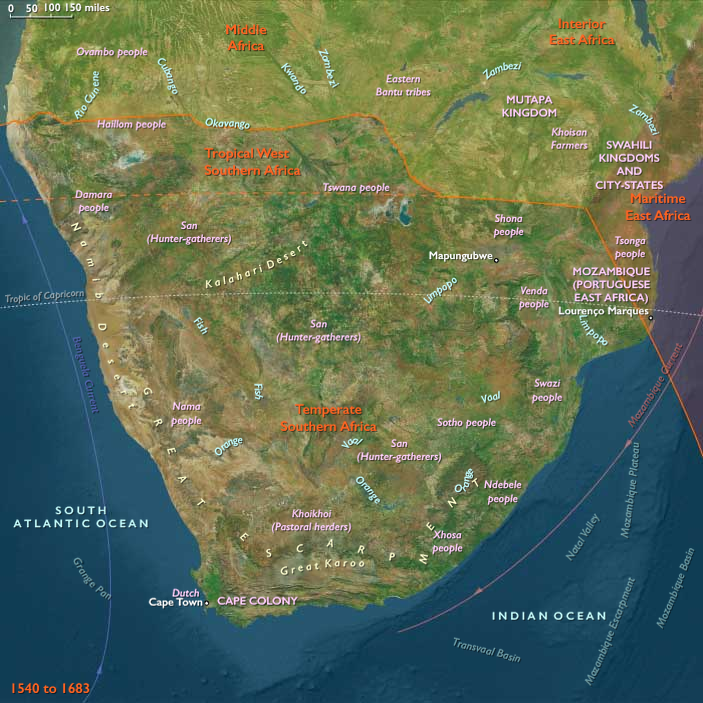
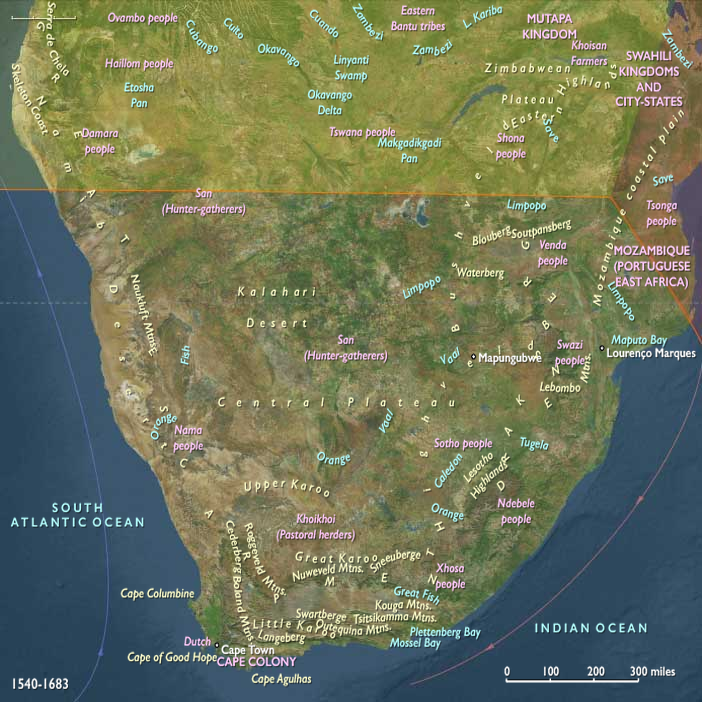
English and Dutch merchants challenge the Portuguese monopoly in West Africa and Asia at the end of the sixteenth century and in the early seventeenth century, and see the Cape peninsula as a source of fresh water, meat, and timber for masts, all of which they can obtain through trade with the local Khoikhoi.
The English government refuses its mariners' requests that it annex land here and establish a base, but in 1652 the Dutch East India Company (Verenigde Oostindische Compagnie—VOC) establishes a supply station in Table Bay on the Cape peninsula, instructing its station commander, Jan van Riebeeck, and his eighty company employees to build a fort and to obtain supplies of foodstuffs for the Dutch fleets.
The English government refuses its mariners' requests that it annex land here and establish a base, but in 1652 the Dutch East India Company (Verenigde Oostindische Compagnie—VOC) establishes a supply station in Table Bay on the Cape peninsula, instructing its station commander, Jan van Riebeeck, and his eighty company employees to build a fort and to obtain supplies of foodstuffs for the Dutch fleets.
Locations
People
Groups
- Bantu peoples
- Khoikhoi
- San (Bushmen)
- Dutch people
- Sotho (Basotho or Basuto) people
- Tswana people
- Portuguese people
- Nguni people
- English people
- East India Company, British (The Company of Merchants of London Trading into the East Indies)
- Dutch East India Company (Vereenigde Oostindische Compagnie or VOC in Dutch, literally "United East Indies Company")
- Dutch East India Company (Vereenigde Oostindische Compagnie or VOC in Dutch, literally "United East Indies Company")
Topics
Commodoties
Subjects
Regions
Subregions
Related Events
Showing 1 events out of 1 total
Years: 1540 - 1683
Locations
People
Groups
- Bantu peoples
- Khoikhoi
- San (Bushmen)
- Dutch people
- Sotho (Basotho or Basuto) people
- Tswana people
- Portuguese people
- Nguni people
- English people
- East India Company, British (The Company of Merchants of London Trading into the East Indies)
- Dutch East India Company (Vereenigde Oostindische Compagnie or VOC in Dutch, literally "United East Indies Company")
- Dutch East India Company (Vereenigde Oostindische Compagnie or VOC in Dutch, literally "United East Indies Company")
Topics
Commodoties
Subjects
Regions
Subregions