
Algirdas deposes Jaunitis in 1345, from which …
Years: 1345 - 1345
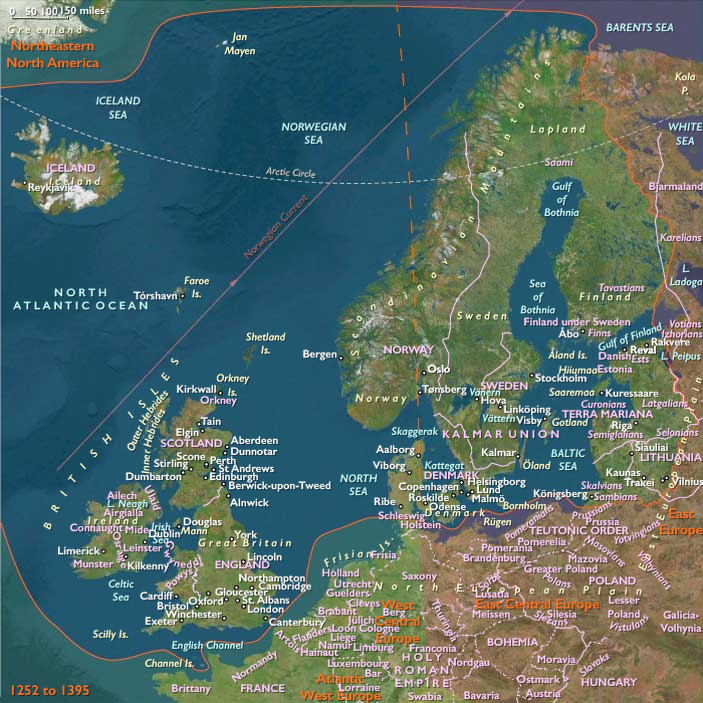
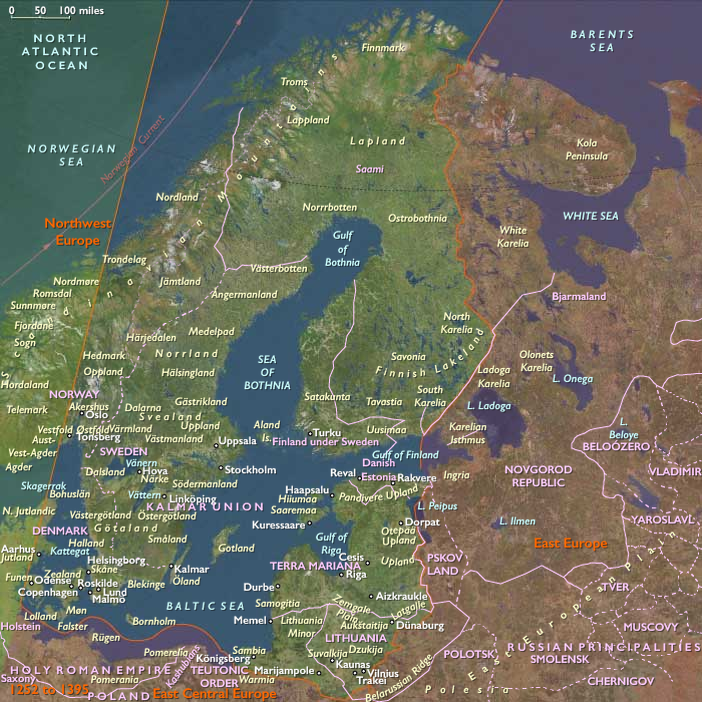
Algirdas deposes Jaunitis in 1345, from which time he and a younger brother, Kestutis, reign jointly; the former ruling the western lands from Vilnius, and …
Locations
People
Groups
Subjects
Regions
Subregions
Related Events
Filter results
Showing 10 events out of 44401 total
The Siamese dynasty in this area vanquishes Sukhothai in this year.
In the Indonesian Archipelago, the Majapahit Empire is in the midst of a golden age under the leadership of Gajah Mada, who remains a famous figure in Indonesia.
Ink wash painting, also known as literati painting, is an East Asian type of brush painting that uses black ink—the same as used in East Asian calligraphy, in various concentrations.
For centuries, this most prestigious form of Chinese art has been practiced by highly educated scholar gentlemen or literati.
Names used in the cultures concerned include: in Chinese shuǐ mò huà, in Japanese sumi-e or suibokuga, in Korean sumukhwa, and in Vietnamese tranh thủy mặc.
Mokuan, one among many Japanese monk-painters who go to China for extended periods and thus become the direct inheritors of Chan painting traditions, prominently features portrayals of the free and uncommitted Chan saints: eccentrics such as Putai (Pu-tai), Hanshan (Han-shan), and Shide (Shih-te).
He is one of the first artists in Japan to use the newly introduced suiboku style.
Mokuan dies in 1345.
The Yuan dynasty in China is seeing the first seeds of a resistance that will lead to its downfall.
The Ilkhanate has already fragmented into several kingdoms struggling to place their puppet emperors over the shell of an old state.
The Chagatai Khanate is in the midst of a civil war and one year from falling to rebellion.
The Golden Horde to the north is besieging Genoese colonies along the coast of the Black Sea.
It is thought that Jani Beg's army catapulted infected corpses into Kaffa in an attempt to use the Black Death to weaken the defenders.
Infected Genoese sailors subsequently sail from Kaffa to Genoa, introducing the Black Death into Europe.
Jani Beg had commanded a massive Tatar force that attacked the Crimean port city of Kaffa in 1343.
The siege had been lifted by an Italian relief force in February.
In 1345, Jani Beg again besieges Kaffa; however, his assault is again unsuccessful due to an outbreak of the Black Plague among his troops.
Estonian rulers also manage to crush the St. George's Night Uprising in 1345 after a two-year struggle.
The Grand Duchy of Lithuania changes hands from Jaunutis to his brother Algirdas in a relatively bloodless shift of power, and Lithuania continues its skirmishes with its northern, Estonian neighbor.
…the latter ruling the east from Kaunas.
Constantinople, though powerful, is in a state of decline, with an ongoing civil war between emperors John V Palaiologos and John VI Kantakouzenos, although in 1345, the tide begins to turn toward the latter.
The Zealot commune in Thessalonica enters a more radical phase.
Stefan Uroš IV Dušan of Serbia proclaims himself Tsar of the new Serbian Empire and continues his efforts at expansion, quickly conquering Albania and other surrounding areas within the year.
Turks clash with Greeks, Serbs, and Cypriots at sea and in the islands of Chios and Imbros.
The Empire's precarious situation at this time is evidenced by the fact that they do not have enough soldiers to protect their own borders, but hire mercenaries from the Serbs and the Ottoman Turks.
The Ottoman Turks, having establishing their Muslim principality in northern Anatolia, continue moving westward, crossing into Thrace in Europe by 1345 at the invitation of self-procaimed emperor John IV Kantakouzenos, who requires their assistance to support his rebellion against the regency for fourteen-year-old Emperor John V Palaiologos.
Orhan now moves against his major Turkmen neighbors to the south.
Taking advantage of internal conflicts, Orhan annexes Karasi in 1345 and gains control of the area between the Gulf of Edremit and Kapidagi (Cyzicus), reaching the Sea of Marmara.
He thus puts himself in a position to end the lucrative monopoly enjoyed by the city of Aydin, that of providing mercenary troops to competing imperial factions in Thrace and at Constantinople.
The expansion also enables the Ottomans to replace Aydin as the principal ally of the emperor John VI Kantakouzenos, from whom Orhan secures the right to ravage Thrace.
The consequent entry of Ottoman troops into Europe gives them a direct opportunity to see the possibilities for conquest offered by imperial Greek decadence.
