
Alfred, a learned layman, encourages learning, employs …
Years: 891 - 891
Alfred, a learned layman, encourages learning, employs court scholars, and begins personally translating several books into English.
These include Pope Gregory I's Pastoral Care, Saint Augustine's Soliloquies, Orosius's Seven Books of History against the Pagans, Boethius's Consolation of Philosophy, and (possibly) the Ecclesiastical History of the Venerable Bede, adding to each of these (except Soliloquies) his own commentary.
In his efforts to ensure that his countrymen have the opportunity to become literate, Alfred relies upon the bishops of the Anglo-Saxon church both to teach and to seek out students.
Between the restoration of London and the resumption of large scale Danish attacks in the early 890s, Alfred's reign is rather uneventful.
The relative peace of the late 880s had been marred by the death of Alfred's sister, Æthelswith, who died in 888 en route to Rome.
In the same year, the Archbishop of Canterbury, Æthelred, had also passed away.
Guthrum, or Athelstan by his baptismal name, Alfred's former enemy and king of East Anglia, died one year later and was buried in Hadleigh, Suffolk.
Guthrum's passing marks a change in the political sphere Alfred deals with, creating a power vacuum that in the following years will stir up other power–hungry warlords eager to take his place.
The quiet years of Alfred's life are coming to a close, and war is on the horizon.
Locations
People
Groups
- Saxons
- Anglo-Saxons
- Christianity, Chalcedonian
- Wessex, English Kingdom of
- Mercia, Kingdom of
- Britain, Medieval
- Papal States (Republic of St. Peter)
- Vikings
- Danes (Scandinavians)
- East Anglia, (Danish) Kingdom of
Topics
Commodoties
Subjects
Regions
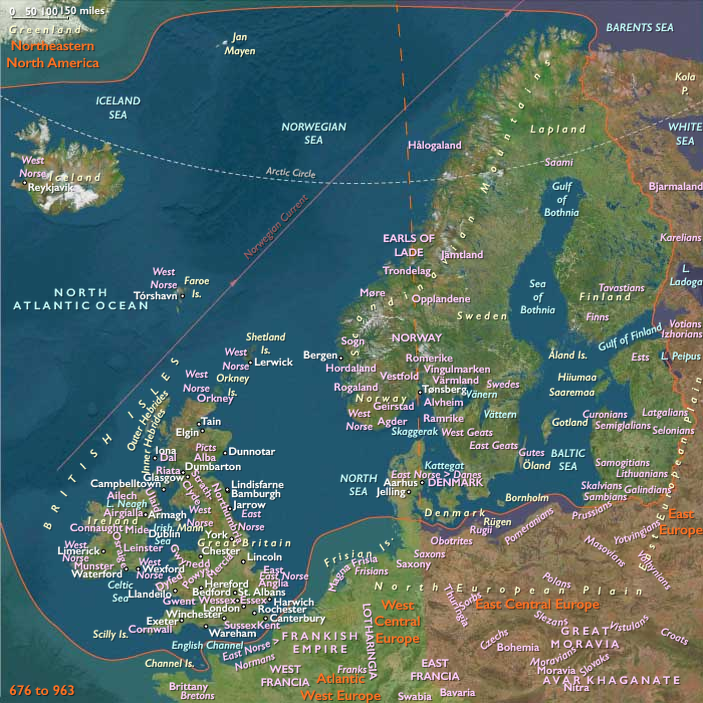
Subregions
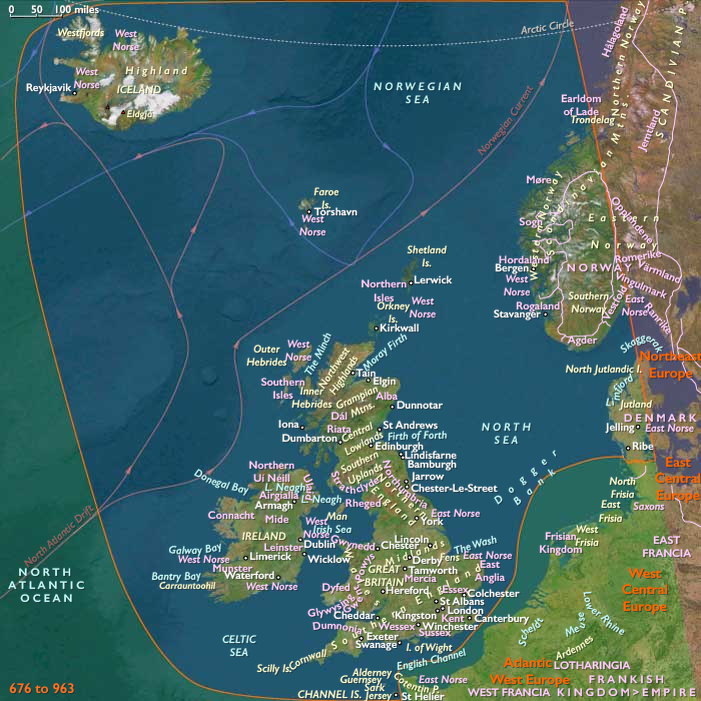
Related Events
Showing 10 events out of 53695 total
Years: 891 - 891
Locations
People
Groups
- Saxons
- Anglo-Saxons
- Christianity, Chalcedonian
- Wessex, English Kingdom of
- Mercia, Kingdom of
- Britain, Medieval
- Papal States (Republic of St. Peter)
- Vikings
- Danes (Scandinavians)
- East Anglia, (Danish) Kingdom of
Topics
Commodoties
Subjects
Regions
Subregions