
Atlantic Southwest Europe (820 – 963 CE): …
Years: 820 - 963
Atlantic Southwest Europe (820 – 963 CE): Asturias–León Frontiers, Portucale Marches, and the Atlantic Pilgrim Sea
Geographic and Environmental Context
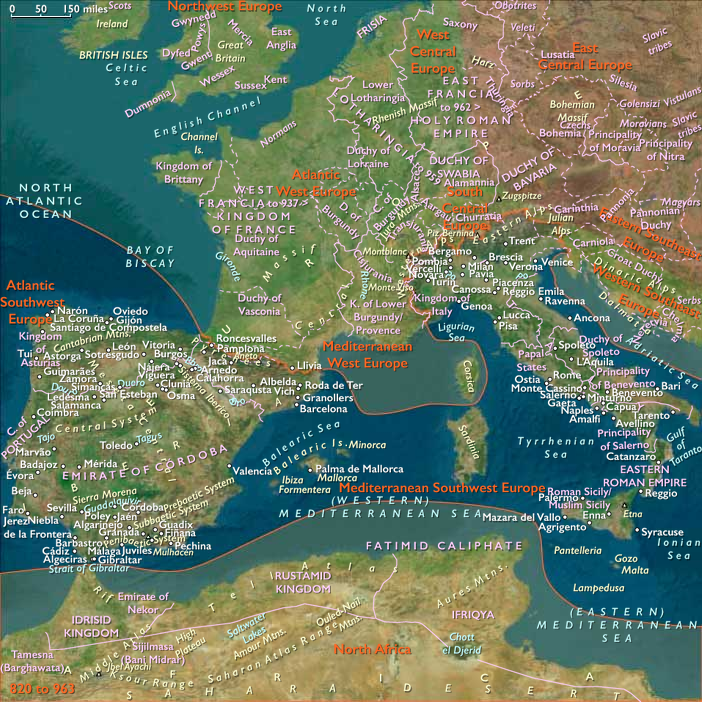
Atlantic Southwest Europe includes northern Spain and central to northern Portugal, including Lisbon.
-
Core landscapes: the Cantabrian and Galician coasts, the Minho–Douro and upper Mondego basins, the Asturian and Galician ranges, and the inland plateaus feeding the Duero.
-
Urban nodes and strongholds: Oviedo, León, Burgos (founded 884), Porto (reoccupied 868), Braga, Coimbra (taken 878; frontier thereafter), and Lisbon (an al-Andalus port within the subregion’s southern rim).
-
The Bay of Biscay and Atlantic river mouths tied interior cereals and stock to maritime routes toward Aquitaine, Brittany, and the English Channel.
Climate and Environmental Shifts
-
A cool–temperate maritime regime with high rainfall along the Cantabrian–Galician arc supported oak–chestnut woodlands, pastures, and vines.
-
Toward the mid-10th century, the onset of the Medieval Warm Period modestly lengthened growing seasons, aiding vineyards on sunny slopes and transhumant meadows inland.
-
River floods on the Minho and Douro enriched lowland fields but dictated transport calendars.
Societies and Political Developments
-
Asturias → León: Under Alfonso II (791–842), Ramiro I (842–850), Ordoño I (850–866), and Alfonso III (866–910), the Asturian monarchy expanded east and south, founding and refortifying castillos along the Duero. In 910, the court shifted to León, inaugurating the Kingdom of León.
-
Piaculine Marches & Castile: The County of Castile coalesced on the eastern Duero marches; by the 930s–950s Fernán González consolidated comital autonomy, anchoring new fort lines from Burgos into the upper Ebro.
-
Galicia: Integrated within León, with powerful monasteries and magnates shaping the Atlantic façade.
-
Kingdom of Pamplona (Navarre) and the County of Barcelona (just beyond the subregion) influenced cross-Pyrenean diplomacy and trade that reached these Atlantic provinces.
-
Portucale (County of Porto): Vímara Peres reoccupied Porto (868), initiating repopulation (repoblación) between Minho–Douro; Coimbra fell to León (878), then remained a vulnerable march.
-
Lisbon: Within our geographic frame but under Umayyad (and after 929, Córdoban caliphal) rule—an Islamic entrepôt facing the Tagus estuary and Atlantic lanes.
Economy and Trade
-
Agrarian base: rye, wheat, barley, and millets on the plateaus; vineyards on south-facing terraces; chestnut and oak mast feeding swine; dairying in Atlantic hills.
-
Stock & salt: coastal saltworks (Aveiro, Vigo rías) and river fisheries provisioned towns and monasteries; wool and hides moved inland–coast.
-
Maritime exchange: cabotage from Gijón, A Coruña, Porto, and the Tagus linked to Bordeaux, Bayonne, Nantes, and Rouen; Lisbon’s Andalusi merchants connected Atlantic traffic to Córdoba and Seville.
-
Pilgrim economy: after the discovery of St. James’ relics at Compostela (c. 820, in Alfonso II’s time), a nascent Camino network drew pilgrims, alms, and artisans across the Pyrenees, stimulating markets from Oviedo to Santiago.
Subsistence and Technology
-
Heavy plow and ard mixed use: heavier soils of the Duero loess took the carruca where teams and seigneurial fields existed; lighter tools persisted in hill farms.
-
Water-mills multiplied on Atlantic streams; terracing and dry-stone retaining walls expanded vine and horti-culture.
-
Shipcraft: clinker-built coasters and river barges served bays and estuaries; riverine craft moved grain and timber down the Minho and Douro.
Movement and Interaction Corridors
-
Cantabrian coastal road (the later Camino del Norte) and emerging Camino spurs toward Santiago de Compostela funneled people and goods.
-
Duero line of fortresses and bridge-fords structured inland resettlement and tolling.
-
Atlantic lanes linked Porto–Lisbon with Aquitaine and Brittany; overland links ran through Astorga–León–Burgos toward the Ebro and Pyrenees.
Belief and Symbolism
-
Latin Christianity structured kingship and repopulation: churches and monasteries (e.g., Celanova, Samos) endowed with lands and tolls; charters (cartas pueblas) framed settlement rights.
-
The cult of Santiago transformed Galicia into a pan-European sacred destination; reliquaries, way-crosses, and hospitalia marked routes.
-
In Lisbon and Islamic marches: mosques, qāḍī courts, and Arabic chancery served Andalusi authority; Mozarab Christians preserved Latin rite under Islamic law.
Adaptation and Resilience
-
Frontier layering—fortified ridges, river crossings, and monastic estates—absorbed raids and stabilized repopulation.
-
Mixed agro-pastoral portfolios (grain + vines + chestnut + stock + fisheries) buffered climate variability.
-
Route redundancy (coastal Camino, interior Duero tracks, sea lanes) kept exchange flowing despite warfare.
Long-Term Significance
By 963 CE, Atlantic Southwest Europe had become a two-frontier commonwealth:
-
A Christian Asturias–León heartland pushing fort lines to the Duero with Castile and Portucale as dynamic marches, energized by the Compostela cult;
-
An Andalusi Lisbon–Tagus outpost knitting the Atlantic to Córdoba.
These institutions—marcher lordship, monastic landholding, and Atlantic pilgrimage/trade—forged the economic and sacred geographies that would power the great expansions of the later 10th–11th centuries.
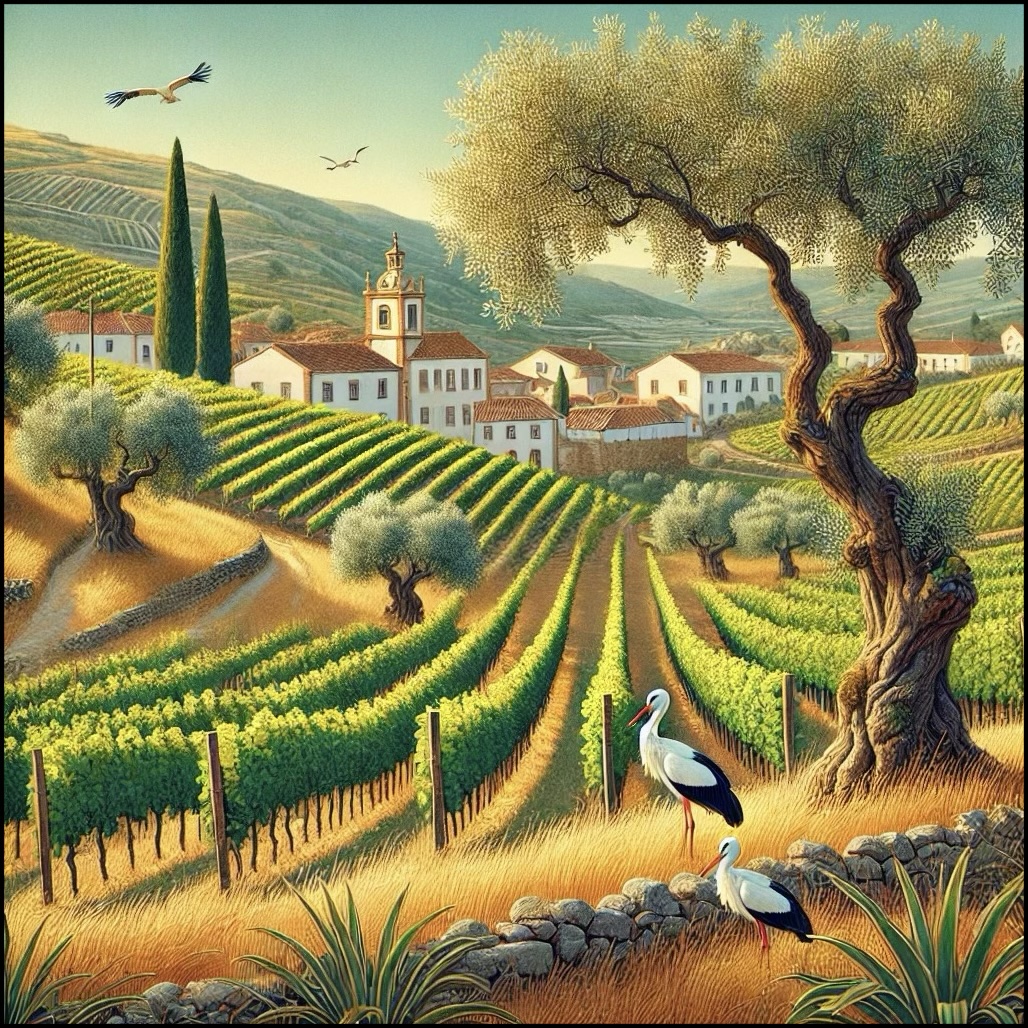
Atlantic Southwest Europe (with civilization) ©2024-26 Electric Prism, Inc. All rights reserved.
People
- Alfonso II of Asturias
- Alfonso III of Asturias
- Fernán González
- Ordoño I of Asturias
- Ramiro I of Asturias
- Vímara Peres
Groups
- Galicia, Kingdom of
- Christianity, Chalcedonian
- Muslims, Sunni
- Mozarabs
- Portuguese people
- Navarre, Kingdom of
- Asturias, Kingdom of
- Portugal, (first) County of
- León, Kingdom of
- Córdoba, (Umayyad) Caliphate of
Topics
Commodoties
- Weapons
- Hides and feathers
- Domestic animals
- Grains and produce
- Textiles
- Fibers
- Ceramics
- Strategic metals
- Salt
- Beer, wine, and spirits
- Manufactured goods
Subjects
- Commerce
- Architecture
- Watercraft
- Painting and Drawing
- Labor and Service
- Conflict
- Faith
- Government
- Technology
- Metallurgy
Regions
Subregions

Related Events
Showing 10 events out of 54673 total
Years: 820 - 963
Atlantic Southwest Europe (with civilization) ©2024-26 Electric Prism, Inc. All rights reserved.
People
- Alfonso II of Asturias
- Alfonso III of Asturias
- Fernán González
- Ordoño I of Asturias
- Ramiro I of Asturias
- Vímara Peres
Groups
- Galicia, Kingdom of
- Christianity, Chalcedonian
- Muslims, Sunni
- Mozarabs
- Portuguese people
- Navarre, Kingdom of
- Asturias, Kingdom of
- Portugal, (first) County of
- León, Kingdom of
- Córdoba, (Umayyad) Caliphate of
Topics
Commodoties
- Weapons
- Hides and feathers
- Domestic animals
- Grains and produce
- Textiles
- Fibers
- Ceramics
- Strategic metals
- Salt
- Beer, wine, and spirits
- Manufactured goods
Subjects
- Commerce
- Architecture
- Watercraft
- Painting and Drawing
- Labor and Service
- Conflict
- Faith
- Government
- Technology
- Metallurgy
Regions
Subregions