
Alexis Simon Belle was born in Paris, …
Years: 1699 - 1699
Alexis Simon Belle was born in Paris, the second child and only son of Jean-Baptiste Belle (born before 1642, died 1703), also a painter, and of Anne his wife (died 1705).
Belle's birth and baptism are recorded in the parish register of the church of Saint-Sulpice, Paris, and quoted in Eugène Piot's Le Cabinet de l'amateur for the years 1861 and 1862.
Belle had studied first under his father, and had continued his training in the studio of François de Troy (1645/46-1730), a painter at the court of King James II in exile at Saint-Germain-en-Laye.
He began to produce work at Saint-Germain in the year 1698.
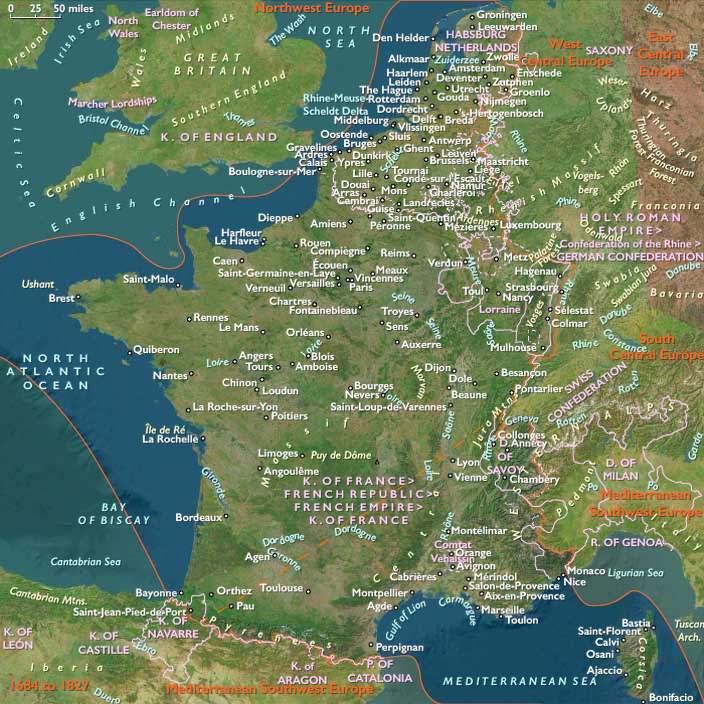
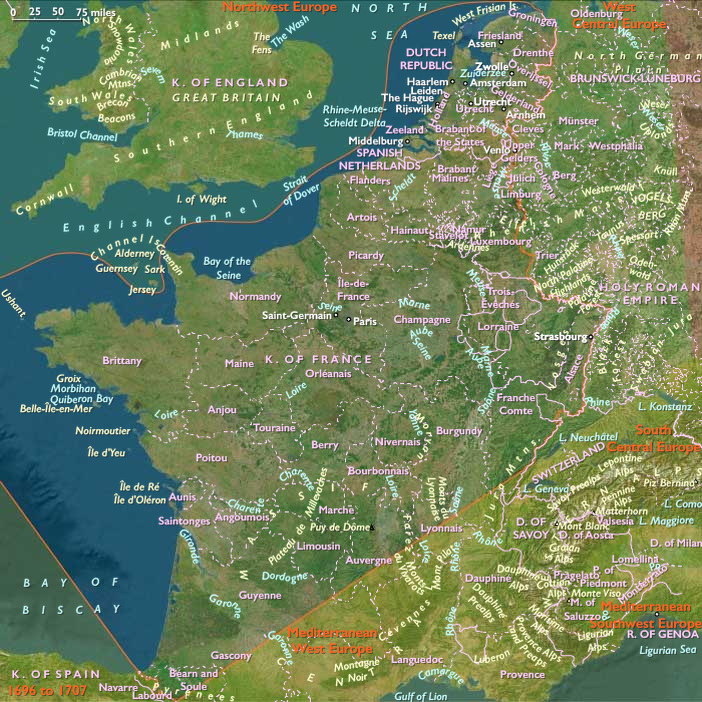
This is a period of peace between France and Great Britain, and Jacobites can cross the English Channel carrying portraits of James Edward Stuart (who at his father's death in 1701 will become the Jacobite claimant to the British throne) and his sister Princess Louisa Maria.
Troy is at this James II's only court painter and needs the help of Belle, his best student, to produce all the portraits ordered from him.
One of his earliest works in this sphere is an allegorical portrait of Prince James Francis Edward Stuart and his sister Princess Louisa Maria Theresa, showing the prince as a guardian angel leading his sister under the gaze of cherubim (1699), now in the Royal Collection.
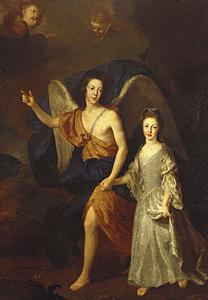
Photograph of portrait in oils of James Francis Edward Stuart and Louisa Maria Teresa Stuart by Alexis Simon Belle, circa 1699 (http://www.royalcollection.org.uk)
Locations
People
Groups
Topics
Subjects
Regions
Subregions
Related Events
Showing 10 events out of 28948 total
Years: 1699 - 1699
Photograph of portrait in oils of James Francis Edward Stuart and Louisa Maria Teresa Stuart by Alexis Simon Belle, circa 1699 (http://www.royalcollection.org.uk)
Locations
People
Groups
Topics
Subjects
Regions
Subregions