
Alexander von Humboldt has devoted his talents …
Years: 1799 - 1799
Alexander von Humboldt has devoted his talents to the purpose of preparing himself as a scientific explorer.
With this emphasis, he has studied commerce and foreign languages at Hamburg, geology at Technische Universität Bergakademie Freiberg under A. G. Werner, anatomy at Jena under J. C. Loder and astronomy and the use of scientific instruments under F. X. von Zach and J. G. Köhler.
His researches into the vegetation of the mines of Freiberg had led to the publication, in 1793, of his Florae Fribergensis Specimen.
Long experimentation on muscular irritability, then recently discovered by Luigi Galvani, are contained in his Versuche über die gereizte Muskel- und Nervenfaser (Berlin, 1797) (Experiments on the Frayed Muscle and Nerve Fibres), enriched in the French translation with notes by Blumenbach.
In 1794, Humboldt had gained admission to the famous Weimar coterie and had contributed (June 7, 1795) to Schiller's new periodical, Die Horen, a philosophical allegory entitled Die Lebenskraft, oder der rhodische Genius.
In 1792 and 1797 he was in Vienna; in 1795 he had made a geological and botanical tour through Switzerland and Italy.
He had obtained in the meantime official employment by appointment as assessor of mines at Berlin, February 29, 1792.
Although this service to the state is regarded by him as only an apprenticeship to the service of science, he has fulfilled its duties with such conspicuous ability that not only has he risen rapidly to the highest post in his department, but he has also been entrusted with several important diplomatic missions.
The death of his mother, on November 19, 1796, and a consequent large inheritance, sets him free to follow the bent of his genius, and severing his official connections, he waits for an opportunity to fulfill his long-cherished dream of travel.
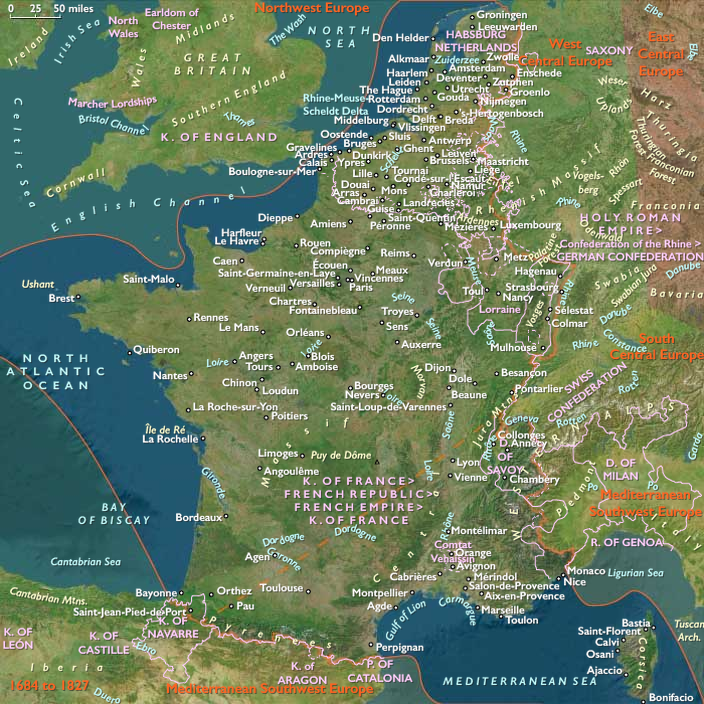
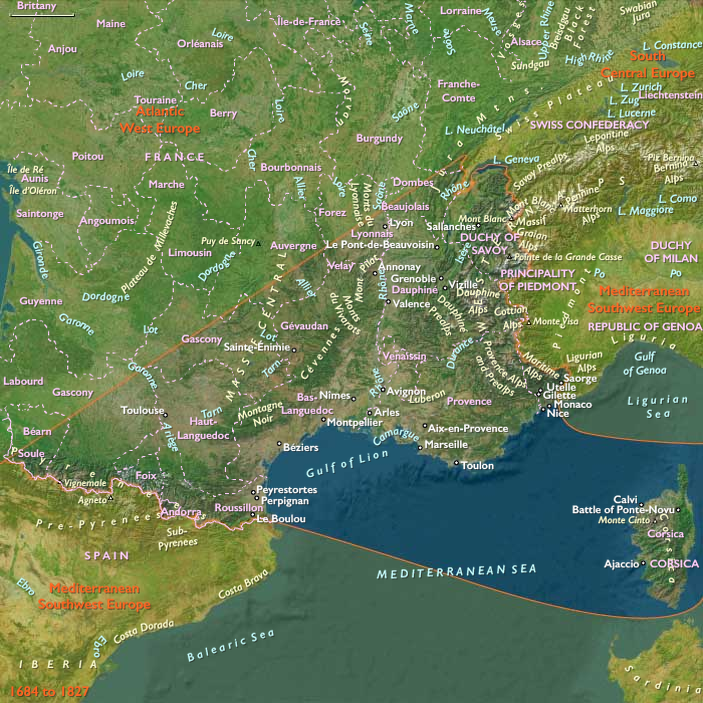
In 1799, after obtaining permission from the Spanish government, Humboldt and the French botanist Aime Bonpland sail from Marseille to Spanish colonial lands in South America.
Locations
People
Groups
Subjects
Regions
Subregions
Years: 1799 - 1799
Locations
People
Groups
Subjects
Regions
Subregions