
Alexander Selkirk, engaged at an early period …
Years: 1708 - 1708
Alexander Selkirk, engaged at an early period in buccaneer expeditions to the South Seas, had joined the expedition of famed privateer and explorer William Dampier in 1703.
Selkirk, the son of a shoemaker and tanner in Lower Largo, Fife, Scotland, was born in 1676, and displayed a quarrelsome and unruly disposition in his youth.
Dampier was captain of the St. George, while Selkirk served on the galley Cinque Ports, the St. George's companion, as a sailing master serving under Thomas Stradling.
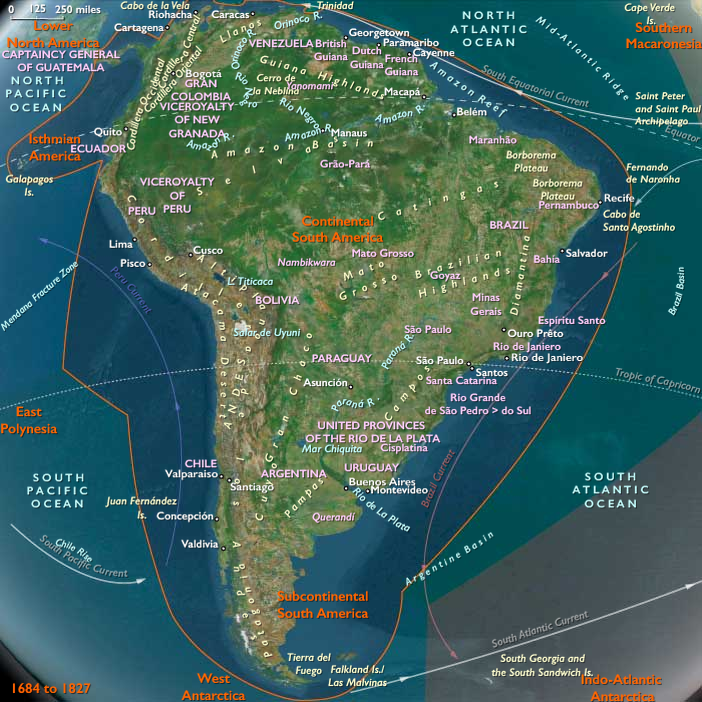
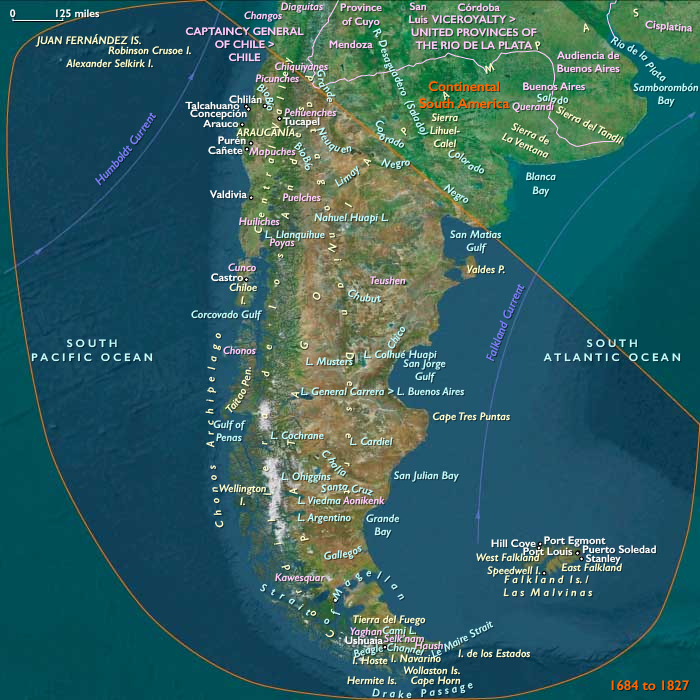
The ships had parted ways because of a dispute between Stradling and Dampier, after which the Cinque Ports had been brought by Stradling in 1703 to an island that is today known as Robinson Crusoe Island in the uninhabited archipelago of Juan Fernández off the coast of Chile for a mid-expedition restocking of supplies and fresh water.
Selkirk by this time had grave concerns about the seaworthiness of this vessel and had tried to persuade some of his crewmates to desert with him, remaining on the island; he was counting on an impending visit by another ship.
No one else had agreed to come along with him.
Stradling declared that he would grant him his wish and leave him alone on Juan Fernández.
Selkirk promptly regretted his decision, chasing and calling after the boat, to no avail.
Selkirk was to live the next four years and four months without any human company.
The Cinque Ports had indeed later foundered off the coast of what is present-day Colombia.
Stradling and half a dozen of the crew had survived the loss of their ship, but were made prisoners by the Spanish, as the War of the Spanish Succession is going on, England and the Netherlands being in conflict with France and Spain over who was to be King of Spain.
Sent to Lima in Peru, they had endured a harsh imprisonment there.
Selkirk, hearing strange sounds from inland, which he feared were dangerous beasts, had remained at first along the shoreline, eating shellfish, scanning the ocean daily for rescue, and suffering all the while from loneliness, misery and remorse.
Hordes of raucous sea lions, gathering on the beach for the mating season, had eventually driven him to the island's interior.
Once there, his way of life had taken a turn for the better, as more foods were now available.
Feral goats—introduced by earlier sailors—provide him with meat and milk and wild turnips, cabbage, and black pepper berries offer him variety and spice.
Although rats attack him at night, he is able, by domesticating and living near feral cats, to sleep soundly and in safety.
Selkirk has proved resourceful in using equipment from the ship as well as materials that are native to the island.
He has built two huts out of pimento trees.
He uses his musket to hunt goats and his knife to clean their carcasses.
As his gunpowder dwindles, he has to chase prey on foot.
During one such chase he had been badly injured when he tumbled from a cliff, lying unconscious for about a day. (His prey had cushioned his fall, sparing him a broken back.)
He reads from the Bible frequently, finding it a comfort to him in his condition and a mainstay for his English.
When Selkirk's clothes wear out, he makes new garments from goatskin using a nail for sewing.
The lessons he had learned as a child from his father, a tanner, help him greatly during his stay on the island.
When his shoes became unusable, he had no need to make new ones, since his toughened, callused feet make protection unnecessary.
He forges a new knife out of barrel rings left on the beach.
Two vessels had arrived and departed, but both were Spanish.
As a Scotsman and privateer, he risked a terrible fate if captured and therefore he hid himself.
At one point, his Spanish pursuers had urinated at the bottom of a tree he was hiding in, but did not discover him.
Locations
People
Groups
Topics
Commodoties
Subjects
Regions
Subregions
Years: 1708 - 1708
Locations
People
Groups
Topics
Commodoties
Subjects
Regions
Subregions