
Alexander finds himself attacked by the forces …
Years: 913 - 913
Alexander finds himself attacked by the forces of Al-Muqtadir of the Abbasid Caliphate in the East, and provokes a war with Simeon I of Bulgaria by refusing to send the traditional tribute on his accession.
According to John Kinnamos, the tzykanion, a kind of polo adopted by the Empire from Sassanid Persia, was played by two teams on horseback, equipped with long sticks topped by nets, with which they tried to push an apple-sized leather ball into the opposite team's goal: mounted lacrosse.
The Great Palace of Constantinople features a tzykanisterion, first built by Emperor Theodosius II (r. 408–450) on the southeastern part of the palace precinct.
It was demolished by Basil I in order to erect the Nea Ekklesia church in its place, and rebuilt in larger size further east, connected to the Nea with two galleries.
Aside from Constantinople and Trebizond, other cities of the Empire also feature tzykanisteria, most notably Sparta, Ephesus, and Athens, an indication of a thriving urban aristocracy.
These are also used as places of public tortures and executions, as it is historically recorded for the tzykanisteria of Constantinople and Ephesus.
The sport is very popular among the Empire’s nobility: Emperor Basil I (r. 867–886) excelled at it; Emperor Alexander dies of exhaustion after a game of tzykanion on June 6, 913, allegedly fulfilling his brother's prophesy that he would reign for thirteen months.
The sources are uniformly hostile towards Alexander, who is depicted as lazy, lecherous, and malignant, including the rumor that he planned to castrate the young Constantine VII in order to exclude him from the succession.
At least that charge did not come to pass, but Alexander leaves his successor a hostile regent (Nicholas Mystikos) and the beginning of a long war against Bulgaria.
The sources also accuse the Emperor of idolatry, including making pagan sacrifices to the golden statue of a boar in the Hippodrome in hope of curing his impotence.
The Doukas family, first prominent in the ninth century, suffers a setback when Constantine Doukas, son of General Andronikos Doukas, loses his life attempting to become emperor in 913.
Locations
People
- Al-Muqtadir
- Alexander
- Constantine Doukas
- Constantine VII
- Himerios
- Nicholas Mystikos
- Patriarch Euthymius I of Constantiople
- Simeon I of Bulgaria
- Zoe Karbonopsina
Groups
- Polytheism (“paganism”)
- Christians, Eastern (Diophysite, or “Nestorian”) (Church of the East)
- Greeks, Medieval (Byzantines)
- Islam
- Bulgarians (South Slavs)
- Roman Empire, Eastern: Macedonian dynasty
- Abbasid Caliphate (Baghdad)
- Bulgarian Empire (First)
Topics
Commodoties
Subjects
- Commerce
- Architecture
- Engineering
- Labor and Service
- Conflict
- Mayhem
- Games and Sports
- Faith
- Government
- Technology
Regions
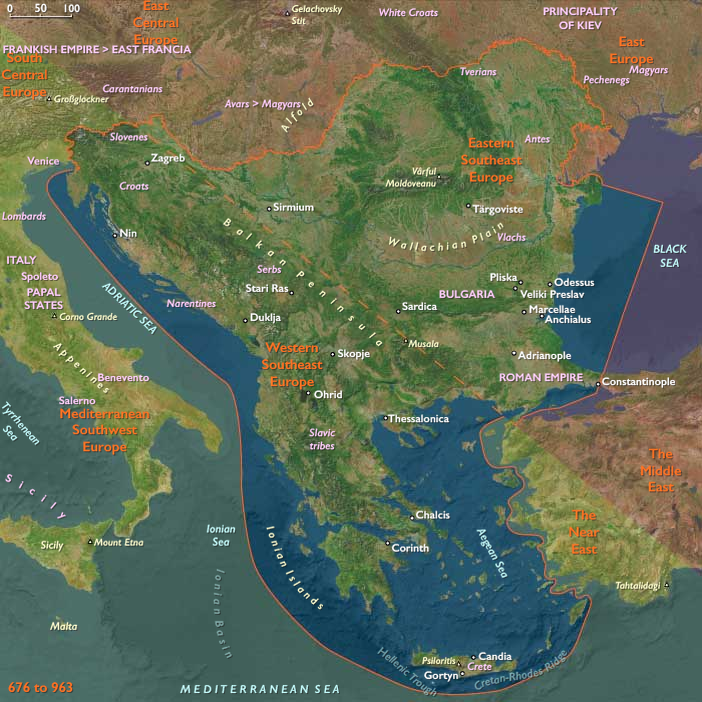
Subregions
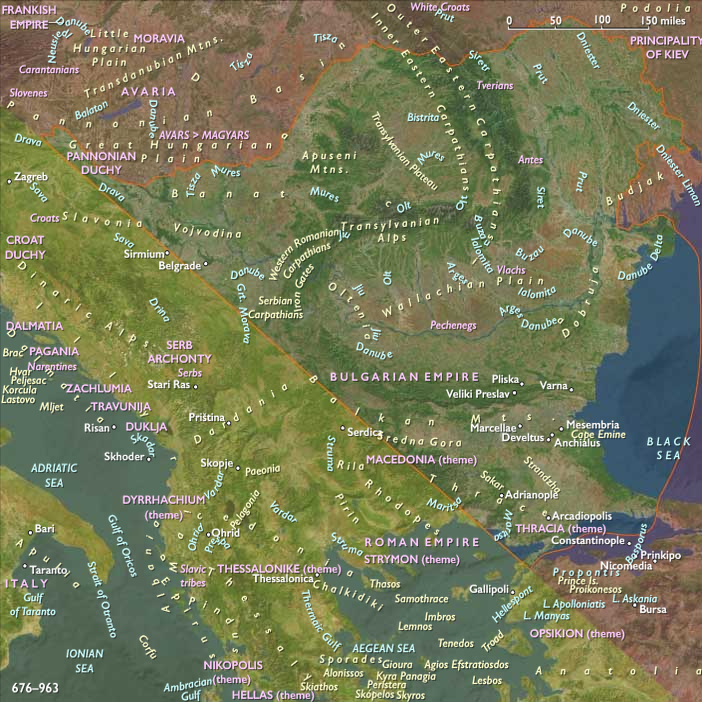
Years: 913 - 913
Locations
People
- Al-Muqtadir
- Alexander
- Constantine Doukas
- Constantine VII
- Himerios
- Nicholas Mystikos
- Patriarch Euthymius I of Constantiople
- Simeon I of Bulgaria
- Zoe Karbonopsina
Groups
- Polytheism (“paganism”)
- Christians, Eastern (Diophysite, or “Nestorian”) (Church of the East)
- Greeks, Medieval (Byzantines)
- Islam
- Bulgarians (South Slavs)
- Roman Empire, Eastern: Macedonian dynasty
- Abbasid Caliphate (Baghdad)
- Bulgarian Empire (First)
Topics
Commodoties
Subjects
- Commerce
- Architecture
- Engineering
- Labor and Service
- Conflict
- Mayhem
- Games and Sports
- Faith
- Government
- Technology
Regions
Subregions