
The Breton Resistance to Norman Expansion and …
Years: 933 - 933
The Breton Resistance to Norman Expansion and the Flight of Alan II Wrybeard (933–935)
As William Longsword of Normandy expands his domain westward into Brittany in 933, Breton leaders, particularly Alan II Wrybeard, Duke of Brittany, and Judicael Berenger, Count of Rennes, lead a resistance movement against Norman rule. However, their efforts are short-lived, ending with Alan fleeing to England and Judicael Berenger seeking reconciliation with the Normans.
Breton Resistance Against the Normans (933–935)
- The Norman annexation of Avranches and the Cotentin in 933 under William Longsword severely weakens Brittany, which had already suffered from decades of Viking incursions and noble infighting.
- Alan II Wrybeard (son of Count Mathuedoï of Poher) and Judicael Berenger of Rennes attempt to mobilize Breton forces against the Norman advance.
- The Bretons engage in skirmishes with the Normans, but their forces lack the strength and unity to mount an effective resistance.
The Collapse of the Breton Resistance (c. 935)
- The Normans, better organized and supported by West Francia, quickly overpower the Breton resistance.
- Alan II Wrybeard, seeing no path to victory, flees to England, seeking refuge with King Æthelstan, who had supported previous Breton exiles during Viking invasions of Brittany.
- Judicael Berenger of Rennes, realizing continued resistance is futile, seeks reconciliation with William Longsword, effectively submitting to Norman rule in order to retain his lands and influence.
Consequences of the Breton Defeat
-
Normandy Strengthens Its Hold Over Western Francia
- William Longsword further consolidates Norman rule in the west, making Normandy the dominant power in northern France.
-
Brittany Remains in Disarray
- With Alan II in exile and Judicael Berenger submitting to the Normans, Brittany loses its independence, becoming a fragmented and weakened region.
- Viking influence in Brittany remains strong, with Norman control extending deeper into Breton lands.
-
The Beginning of Norman-Breton Rivalry
- Although Brittany is temporarily subdued, Breton leaders will later return to reclaim their homeland, setting the stage for future conflicts between Brittany and Normandy.
Conclusion: Brittany Falls, but Resistance Will Continue
The defeat of the Breton resistance (c. 935) marks the temporary end of an independent Brittany, as Normandy extends its reach westward. However, Alan II Wrybeard’s flight to England ensures that Breton leadership survives in exile, setting the stage for his eventual return and the restoration of Brittany in later years.
Locations
People
Groups
- Breton people
- Vikings
- Francia Occidentalis (West Francia, or France), Kingdom of
- Normandy, Duchy of
- England, (Anglo-Saxon) Kingdom of
Topics
Commodoties
Subjects
Regions
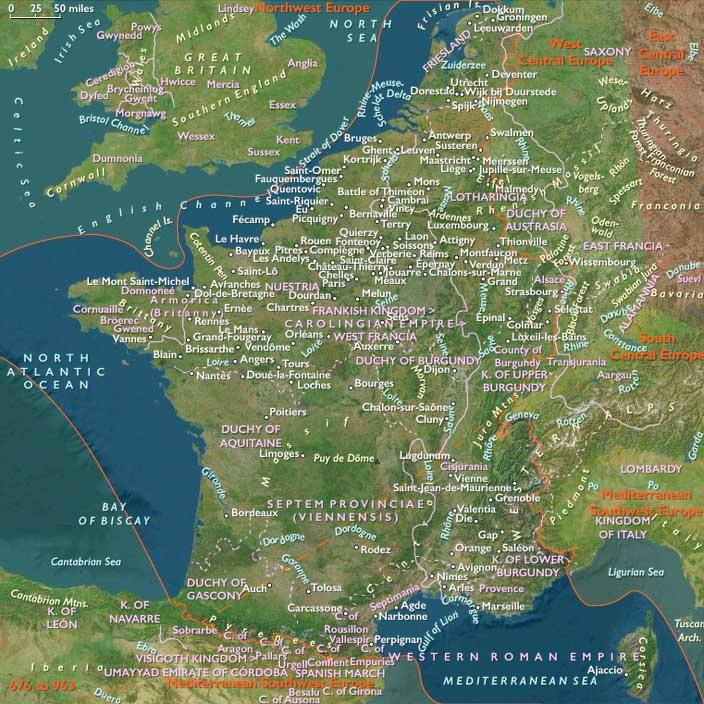
Subregions
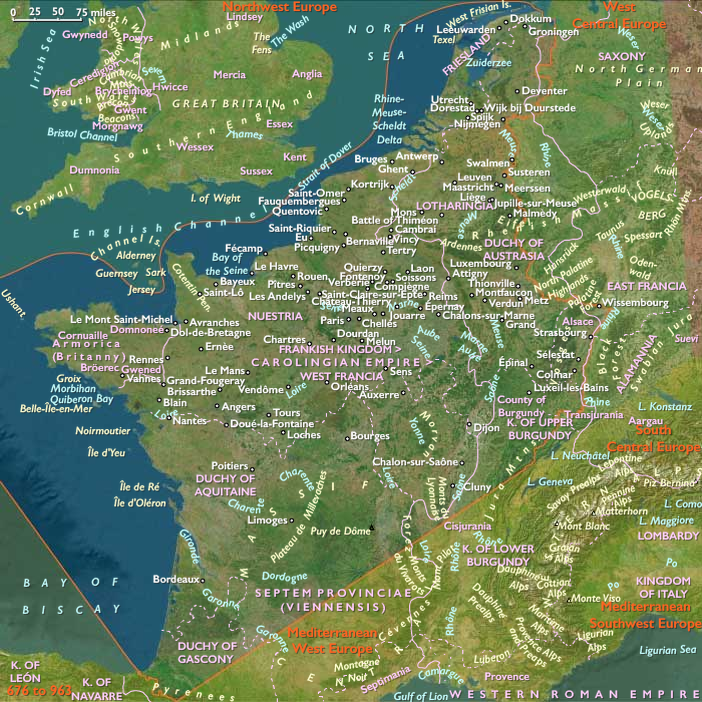
Related Events
Showing 10 events out of 53156 total
Years: 933 - 933
Locations
People
Groups
- Breton people
- Vikings
- Francia Occidentalis (West Francia, or France), Kingdom of
- Normandy, Duchy of
- England, (Anglo-Saxon) Kingdom of
Topics
Commodoties
Subjects
Regions
Subregions