
Al-Mutanabbi, born in the town of Kufah …
Years: 957 - 957
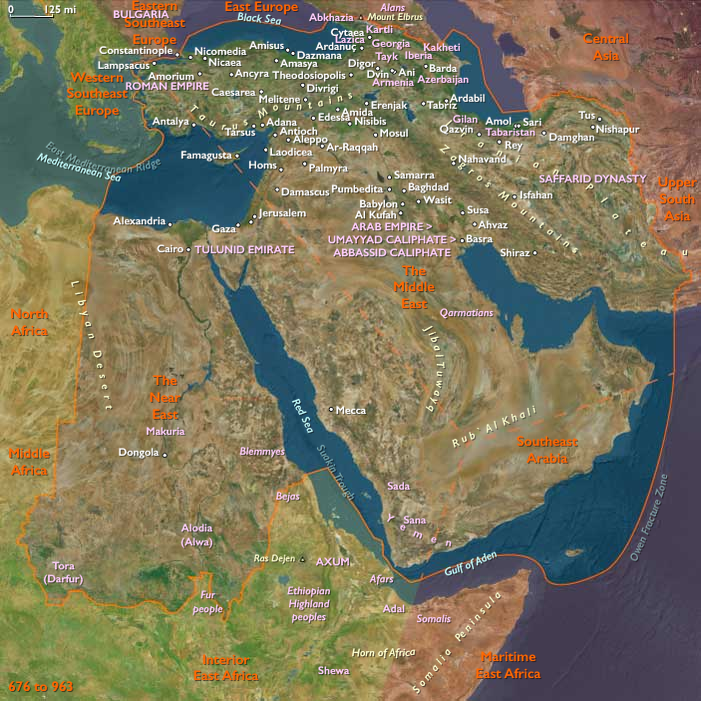
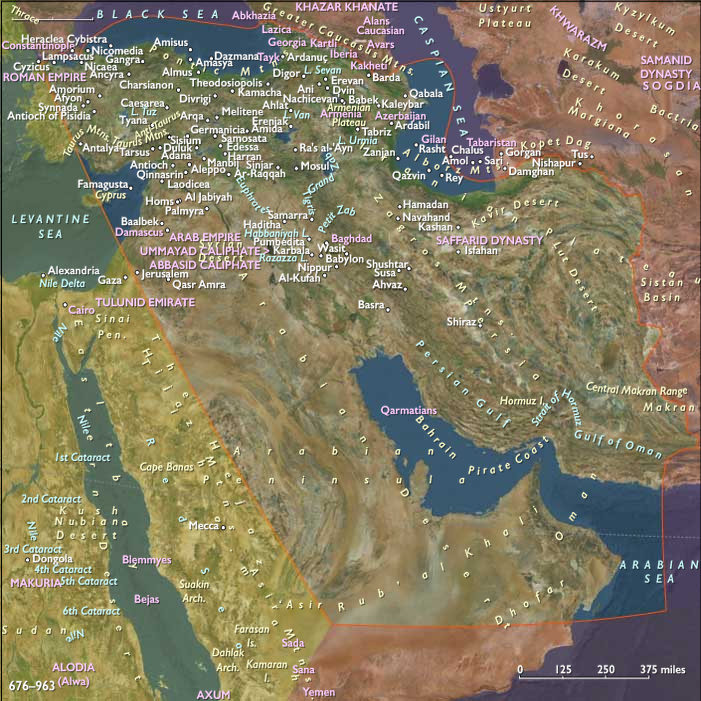
Al-Mutanabbi, born in the town of Kufah in Iraq in 915, is the son of a water carrier who claims noble and ancient southern Arabian descent.
Owing to his poetic talent, and claiming predecession of the prophet Saleh, al-Mutanabbi had received an education in Damascus, Syria.
When Shi'ite Qarmatians sacked Al-Kufah in 924, he had joined them and lived among the Bedouin, learning their doctrines and dialect.
Claiming to be a prophet--hence the name al-Mutanabbi ("The Would-be Prophet") he had led a Qarmatian revolt in Syria in 932.
After its suppression and two years of imprisonment, he had recanted in 935 and become a wandering poet.
It is during this period that he began to write his first known poems.
Al-Mutanabbi lives at the time when the Abbasid Caliphate had started coming apart, many of the states in the Islamic world becoming politically and militarily independent from Abbasid authority.
Chief among those states is the Emirate of Aleppo.
Al-Mutanabbi began to write panegyrics in the tradition established by the poets Abu Tammam and al-Buhturi.
In 948, he had attached himself to Sayf al-Dawla, the Hamdanid poet-prince of northern Syria.
Sayf al-Daula is greatly concerned with fighting the Constantinople’s Empire in Asia Minor, where Al-Mutanabbi has fought alongside him.
During his nine years stay at Sayf al-Daula's court, Al-Mutanabbi has versified his greatest and most famous poems, writing in praise of his patron panegyrics that rank as masterpieces of Arabic poetry.
During his stay in Aleppo, great rivalry has occurred between Al-Mutanabbi and many scholars and poets in Sayf al-Daula's court, one of these being Abu Firas al-Hamdani, Sayf al-Daula's cousin.
In addition, Al-Mutanabbi has lost Sayf al-Daula's favor because of his political ambition to be Wāli.
The latter part of this period has been clouded with intrigues and jealousies that culminate in al-Mutanabbi's leaving of Syria for Egypt, now ruled in name by the Ikhshidids.
Locations
People
Groups
- Arab people
- Bedouin
- Christianity, Chalcedonian
- Islam
- Egypt in the Middle Ages
- Roman Empire, Eastern: Macedonian dynasty
- Hamdanid Dynasty
- Aleppo, Hamdanid Emirate of
Topics
Commodoties
Subjects
Regions
Subregions
Related Events
Showing 10 events out of 23 total
Years: 957 - 957
Locations
People
Groups
- Arab people
- Bedouin
- Christianity, Chalcedonian
- Islam
- Egypt in the Middle Ages
- Roman Empire, Eastern: Macedonian dynasty
- Hamdanid Dynasty
- Aleppo, Hamdanid Emirate of
Topics
Commodoties
Subjects
Regions
Subregions