
Filters:
Akragas, another Doric city, has meanwhile taken …
Years: 483BCE - 483BCE
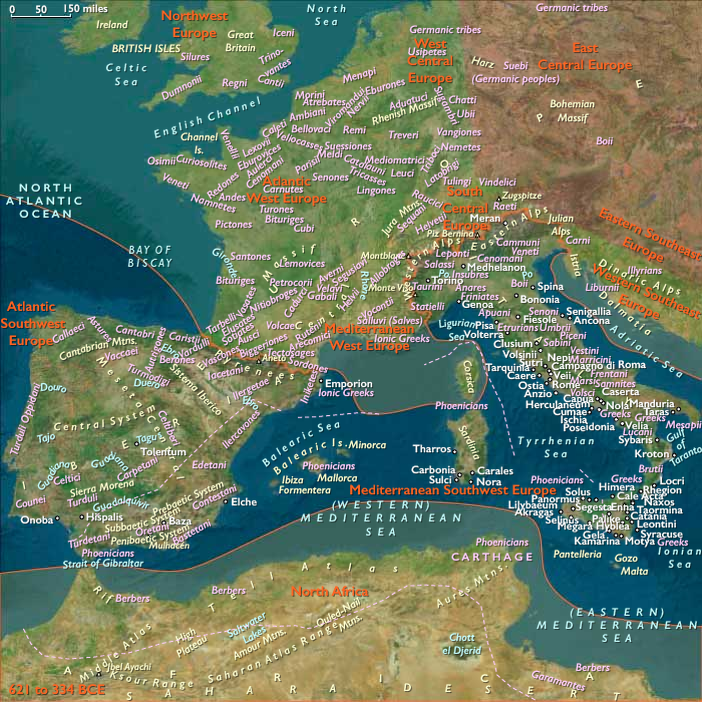
Akragas, another Doric city, has meanwhile taken over neighboring Sican and Sicel lands under the tyrant Theron.
To forestall any conflicts between Akragas and Syracuse, Gelo and Theron have married into each other’s families, thus creating a united front against the Sicels and Ionian Greeks of Sicily.
Locations
People
Groups
- Sicani
- Sicels
- Ionians
- Dorians
- Elymians
- Greece, classical
- Sicily, classical
- Italy, classical
- Carthage, Kingdom of
- Rhegium, Greek city-state of
- Syracuse, Corinthian city-state of
- Himera, (Dorian-Ionian Greek) city-state of
- Akragas (Dorian Greek) city-state of
Topics
- Younger Subboreal Period
- Iron Age Europe
- Phoenician colonization
- Greek colonization
- Iron Age Cold Epoch
- Classical antiquity
Commodoties
Subjects
Regions
Subregions
Related Events
Showing 9 events out of 9 total
Years: 483BCE - 483BCE
Locations
People
Groups
- Sicani
- Sicels
- Ionians
- Dorians
- Elymians
- Greece, classical
- Sicily, classical
- Italy, classical
- Carthage, Kingdom of
- Rhegium, Greek city-state of
- Syracuse, Corinthian city-state of
- Himera, (Dorian-Ionian Greek) city-state of
- Akragas (Dorian Greek) city-state of
Topics
- Younger Subboreal Period
- Iron Age Europe
- Phoenician colonization
- Greek colonization
- Iron Age Cold Epoch
- Classical antiquity
Commodoties
Subjects
Regions
Subregions