
Akbar initiates construction in 1562 on a …
Years: 1562 - 1562
Akbar initiates construction in 1562 on a magnificent tomb for his father Humayun.
The first garden-tomb on the Indian subcontinent, featuring such Persian-inspired elements as arched entryways and bulbous domes, Humayun’s Tomb is generally considered the first great monument of Mughal architecture.
Its Char Bagh garden, typical of Persian gardens but never seen before in India, is divided into four sections by two intersecting streams.
In this case, as with many subsequent Char Baghs (the Taj Mahal being an exception) the Tomb is placed directly in the center.
This four panel configuration—the word Char is Persian for four and the word Bagh is Persian for the word garden—is intended to represent paradise.
Composed of red sandstone, the principal Mughal building material in the sixteenth century, and embellished with marble inlay, Humayun’s Tomb represents a leap in Mughal architecture, and together with its accomplished Char Bagh it sets a precedent for subsequent Mughal architecture.
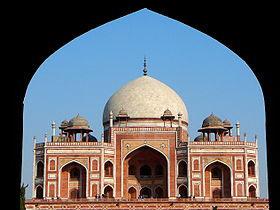
Humayun's Tomb, Delhi (Photo by Ekabhishek, 2009)
Locations
People
Groups
Topics
Subjects
Regions
Subregions

Related Events
Showing 10 events out of 35823 total
Years: 1562 - 1562
Humayun's Tomb, Delhi (Photo by Ekabhishek, 2009)
Locations
People
Groups
Topics
Subjects
Regions
Subregions