
Filters:
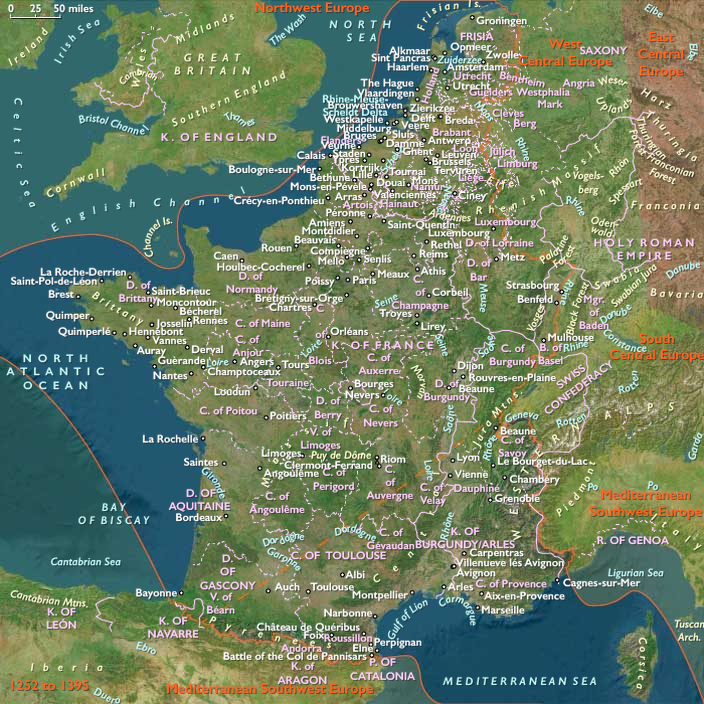
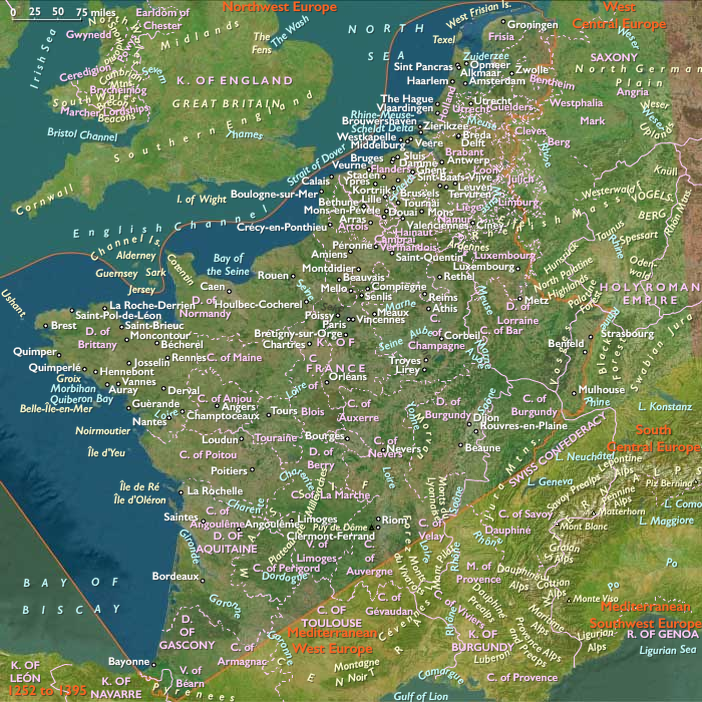
The Battle of Mons-en-Pévèle (August 17, 1304): …
Years: 1304 - 1304
August
The Battle of Mons-en-Pévèle (August 17, 1304): A Hard-Fought Draw
- Philip IV personally led his forces into battle at Mons-en-Pévèle, facing a formidable Flemish army.
- The battle was brutal and inconclusive:
- The Flemish inflicted heavy casualties, showing their continued military strength.
- However, the French held the battlefield, forcing the Flemish to withdraw.
- Both sides claimed victory:
- The Flemish had proven their resilience, but
- Philip IV had reasserted royal authority, preventing a complete Flemish triumph.
Aftermath: The Fall of Guy of Namur and the Weakening of Flemish Resistance
- Following his defeat at Zierikzee and Mons-en-Pévèle, Guy of Namur was recaptured and sent back to prison, where he soon died.
- His father, Count Guy of Dampierre, was already a prisoner of Philip IV.
- Although Flanders remained defiant, the rebellion had been weakened, and peace negotiations followed in 1305.
The Balance of Power After 1304
- While Flanders remained resistant to French rule, Philip IV had avenged the 1302 humiliation, stabilizing France’s military and political standing.
- The Flemish cities maintained autonomy, but the war demonstrated that the French Crown, despite setbacks, remained a dominant force.
- The conflict foreshadowed future struggles between France and Flanders, culminating in later revolts and conflicts with Burgundy in the 14th and 15th centuries.
Philip IV’s military resilience in 1304 ensured that France remained a leading power in medieval Europe, despite the heavy cost of the Flemish war.
Locations
People
Groups
- Flanders, County of
- France, (Capetian) Kingdom of
- Utrecht, Bishopric of
- Hainaut, County of
- Holland, County of
- Brabant, Duchy of
Topics
Commodoties
Subjects
Regions
Subregions
Related Events
Showing 1 events out of 1 total
Years: 1304 - 1304
August
Locations
People
Groups
- Flanders, County of
- France, (Capetian) Kingdom of
- Utrecht, Bishopric of
- Hainaut, County of
- Holland, County of
- Brabant, Duchy of
Topics
Commodoties
Subjects
Regions
Subregions