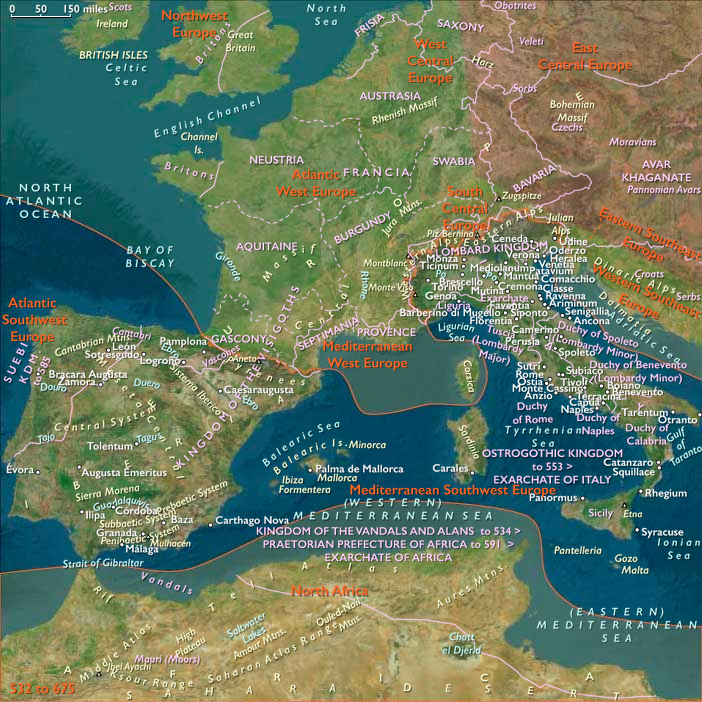
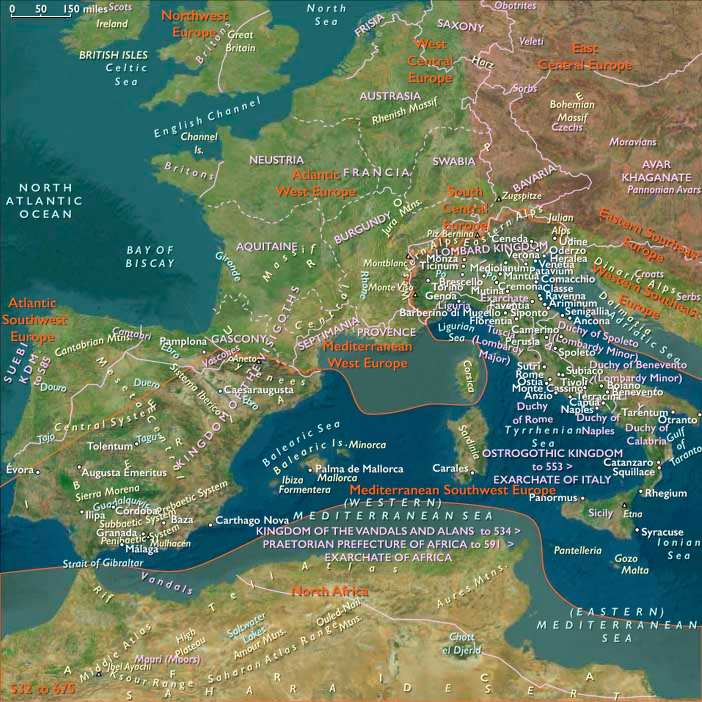
East Central Europe (604–615 CE): Increasing Avar Power, Strengthening of Bohemia and Moravia, and Expanding Slavic Influence
Between 604 and 615 CE, East Central Europe—encompassing Poland, Czechia, Slovakia, Hungary, and those portions of Germany and Austria lying east of 10°E and north of a line stretching from roughly 48.2°N at 10°E southeastward to the Austro-Slovenian border near 46.7°N, 15.4°E—continued to witness significant geopolitical shifts. The Avar Khaganate further solidified its dominant position, intensifying both military campaigns and diplomatic maneuvers, particularly towards the Byzantine frontier and the developing West Slavic entities. Meanwhile, early state structures in Bohemia and Moravia became increasingly organized and culturally distinct, firmly establishing these territories as pivotal regional entities. Bavarian diplomatic and trade interactions continued to provide critical connections between Frankish, Slavic, and Avar spheres, reinforcing the region's economic importance.
Political and Military Developments
Intensified Avar Military Pressure
-
Under strong central leadership, the Avar Khaganate increased military and diplomatic activities, conducting frequent raids and exerting pressure over surrounding regions, including Moravian, Bohemian, and Bavarian territories.
-
Avar military actions, particularly toward Byzantine territories in the Balkans, indirectly influenced regional stability in East Central Europe, prompting defensive coalitions and stronger political consolidation among neighboring entities.
Consolidation of Bohemian and Moravian Leadership
-
Both Bohemia and Moravia solidified tribal leadership and political hierarchies, organizing increasingly effective defenses and governance structures to counter the threat posed by Avar incursions.
-
Early political entities began clearly emerging, laying firm foundations for future medieval duchies, characterized by centralized leadership, fortified settlements, and regional alliances.
Bavarian Diplomatic and Economic Influence
-
Bavaria (Baiuvarii) continued to mediate diplomatically and economically between the Frankish West, Avar East, and emerging Slavic powers. This pivotal role bolstered Bavarian economic strength and diplomatic prominence.
Economic and Technological Developments
Growth of Regional Trade
-
Trade networks through Bavaria, Bohemia, and Moravia flourished, connecting Avar-controlled territories, Byzantine markets, and Frankish lands. Trade goods included agricultural products, ironwork, luxury items, textiles, and regional craft products.
Development of Defensive Infrastructure
-
Under increased Avar pressure, Bohemian and Moravian communities significantly strengthened fortifications, hillforts, and defensive settlements, reflecting growing political organization, technological capability, and centralized leadership.
Cultural and Artistic Developments
Further Cultural Differentiation in Bohemia and Moravia
-
Distinct West Slavic cultural identities continued to solidify, clearly expressed in pottery, jewelry styles, burial rituals, and settlement architecture, distinguishing Bohemian and Moravian traditions from those of neighboring Slavic groups.
Avar Artistic and Cultural Influence
-
The Avar Khaganate further disseminated Central Asian artistic styles throughout East Central Europe, notably influencing regional metalworking, jewelry, weaponry, and ceramics, leaving a lasting cultural imprint.
Settlement and Urban Development
Fortified Bohemian and Moravian Centers
Continuity of Avar-Controlled Settlements
-
Avar-controlled urban centers—such as Augusta Vindelicorum (Augsburg), Vindobona, and Aquincum—remained essential administrative, military, and commercial hubs, benefiting from stable governance and extensive trade connections.
Social and Religious Developments
Emergence of Stable Hierarchies in Bohemia and Moravia
Avar Socio-Political Stability
-
The Avar social structure, emphasizing centralized authority and military hierarchy, provided ongoing regional stability, strengthening their dominance across extensive territories.
Long-Term Consequences and Historical Significance
The era 604–615 CE marked another critical juncture for East Central Europe, defined by increased Avar dominance, the continued consolidation of Bohemian and Moravian leadership, and growing Bavarian diplomatic and economic influence. These developments significantly shaped the region's geopolitical framework, laying lasting foundations for medieval states and defining cultural identities. The patterns established during this period influenced future interactions among Avars, Bavarians, and emerging Slavic powers, deeply affecting East Central Europe's historical trajectory.