
Some Māori had begun a strategy of …
Years: 1881 - 1881
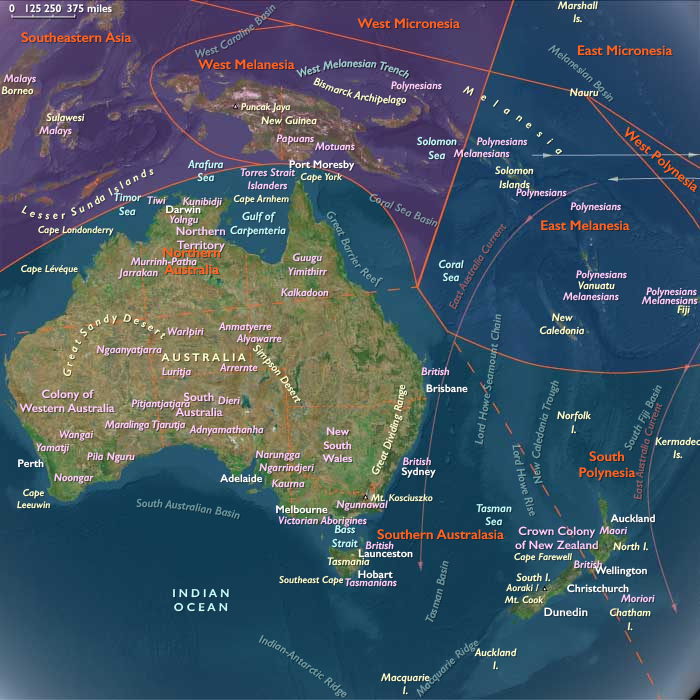
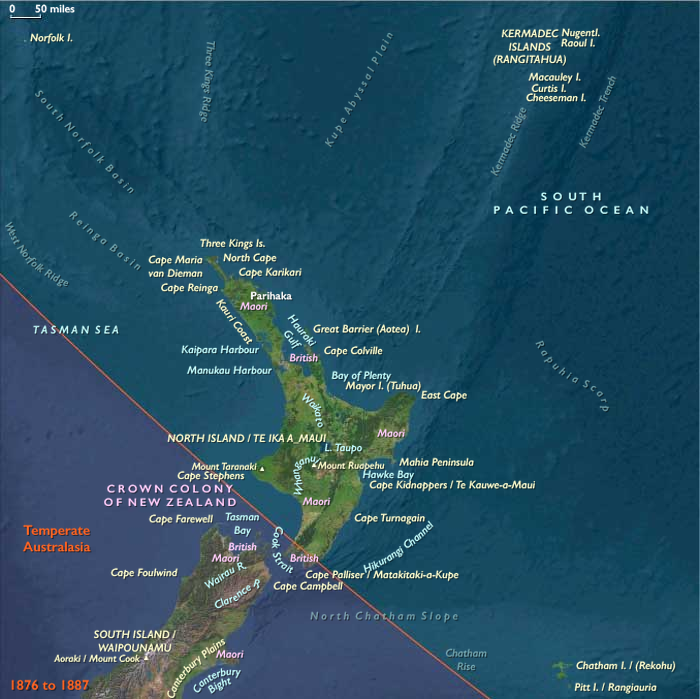
Some Māori had begun a strategy of passive resistance after the wars, most famously at Parihaka in Taranaki.
Others continued co-operating with Pākehā.
For example, tourism ventures had been established by Te Arawa around Rotorua.
Resisting and co-operating iwi both find that the Pākehā desire for land remains.
In the last decades of the century, most iwi lose substantial amounts of land through the activities of the Native Land Court.
This had been set up to give Māori land European-style titles and to establish exactly who owned it.
Due to its Eurocentric rules, the high fees, its location remote from the lands in question, and unfair practices by many Pākehā land agents, its main effect is to directly or indirectly separate Māori from their land.
Locations
Groups
Topics
Commodoties
Subjects
Regions
Subregions
Related Events
Showing 10 events out of 11414 total
Years: 1881 - 1881
Locations
Groups
Topics
Commodoties
Subjects
Regions
Subregions