
The cities of Cleves, Mark, Jülich, Berg, …
Years: 1614 - 1614
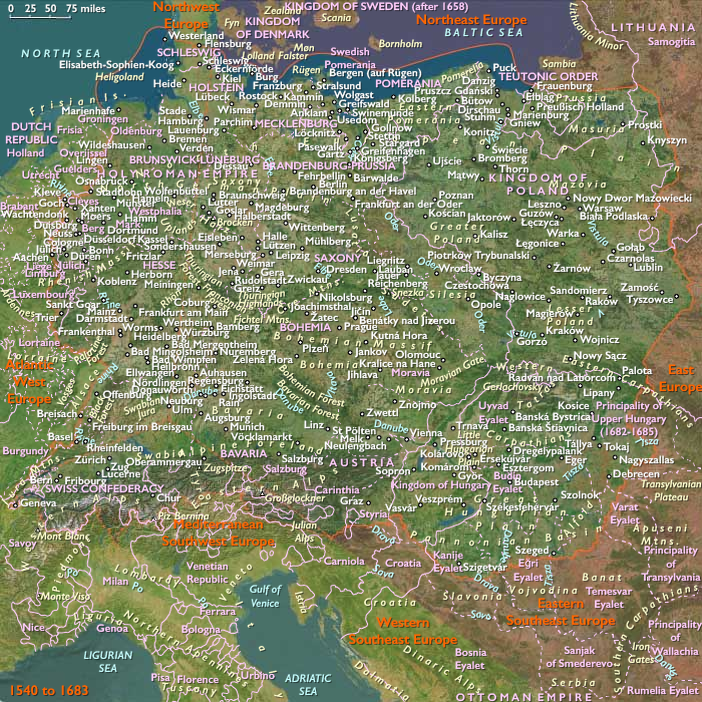
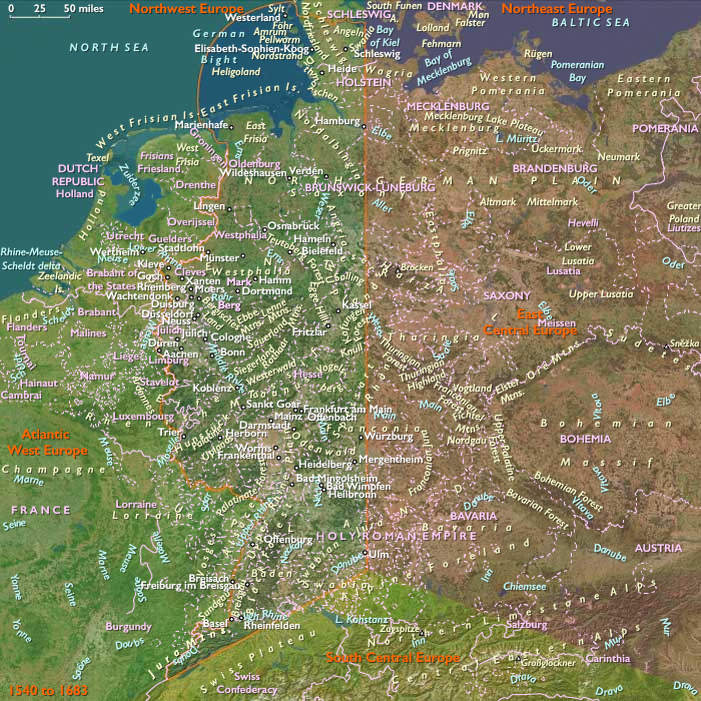
The cities of Cleves, Mark, Jülich, Berg, and Ravensburg, after the month-long War of the Jülich Succession, had rejected the Dortmund Recess since the accord had been developed without the consent of all five cities.
Overall, the five cities prefer to be represented by one prince rather than two.
The Dortmund Recess is ultimately replaced by the Treaty of Xanten, signed on November 14, 1614, and ending the Julich-Cleves War, today recognized as a precursor to the Thirty Years' War.
Locations
People
Groups
- Passau, Bishopric of
- Eichstätt, Prince-Bishopric of
- Mainz, Electoral Archbishopric of
- Augsburg, Prince-Bishopric of
- Speyer, Prince-Bishopric of
- Christians, Roman Catholic
- Constance, Bishopric of
- Austria, Archduchy of
- Würzburg, Bishopric of
- Trier, Electoral Archbishop of
- Ulm, Free Imperial City of
- Bohemia, Kingdom of
- Kempten in the Allgäu, Imperial Ducal Abbey (Free City) of
- Nuremberg, Free Imperial City of
- Strasbourg, Imperial Free City of
- Salzburg, Archbishopric of
- Cologne, Electorate of
- Palatinate, Electoral (Wittelsbach)
- Worms, Bishopric of
- Brandenburg, (Hohenzollern) Margravate of
- Württemberg, Duchy of
- Regensburg (Ratisbon), Imperial Free City of
- Palatinate-Neuburg
- Bavaria, Wittelsbach Duchy of
- Baden-Durlach, Margravate of
- Protestantism
- Hungary, Royal
- Hungary, Kingdom of
- Baden-Rodenheim, Margravate of
- Anhalt-Köthen, Principality of
- Anhalt-Zerbst, Principality of
- Anhalt-Plotzkau, Principality of
- Anhalt-Dessau, Principality of
- Anhalt-Bernburg, Principality of
- Protestant League (League of Evangelical Union)
- Catholic League, the (German)
- Habsburg Monarchy, or Empire
Topics
- Protestant Reformation
- Counter-Reformation (also Catholic Reformation or Catholic Revival)
- Jülich Succession, War of the
Commodoties
Subjects
Regions
Subregions
Related Events
Showing 10 events out of 33237 total
Years: 1614 - 1614
Locations
People
Groups
- Passau, Bishopric of
- Eichstätt, Prince-Bishopric of
- Mainz, Electoral Archbishopric of
- Augsburg, Prince-Bishopric of
- Speyer, Prince-Bishopric of
- Christians, Roman Catholic
- Constance, Bishopric of
- Austria, Archduchy of
- Würzburg, Bishopric of
- Trier, Electoral Archbishop of
- Ulm, Free Imperial City of
- Bohemia, Kingdom of
- Kempten in the Allgäu, Imperial Ducal Abbey (Free City) of
- Nuremberg, Free Imperial City of
- Strasbourg, Imperial Free City of
- Salzburg, Archbishopric of
- Cologne, Electorate of
- Palatinate, Electoral (Wittelsbach)
- Worms, Bishopric of
- Brandenburg, (Hohenzollern) Margravate of
- Württemberg, Duchy of
- Regensburg (Ratisbon), Imperial Free City of
- Palatinate-Neuburg
- Bavaria, Wittelsbach Duchy of
- Baden-Durlach, Margravate of
- Protestantism
- Hungary, Royal
- Hungary, Kingdom of
- Baden-Rodenheim, Margravate of
- Anhalt-Köthen, Principality of
- Anhalt-Zerbst, Principality of
- Anhalt-Plotzkau, Principality of
- Anhalt-Dessau, Principality of
- Anhalt-Bernburg, Principality of
- Protestant League (League of Evangelical Union)
- Catholic League, the (German)
- Habsburg Monarchy, or Empire
Topics
- Protestant Reformation
- Counter-Reformation (also Catholic Reformation or Catholic Revival)
- Jülich Succession, War of the
Commodoties
Subjects
Regions
Subregions