
The federalist forces largely prevail in writing …
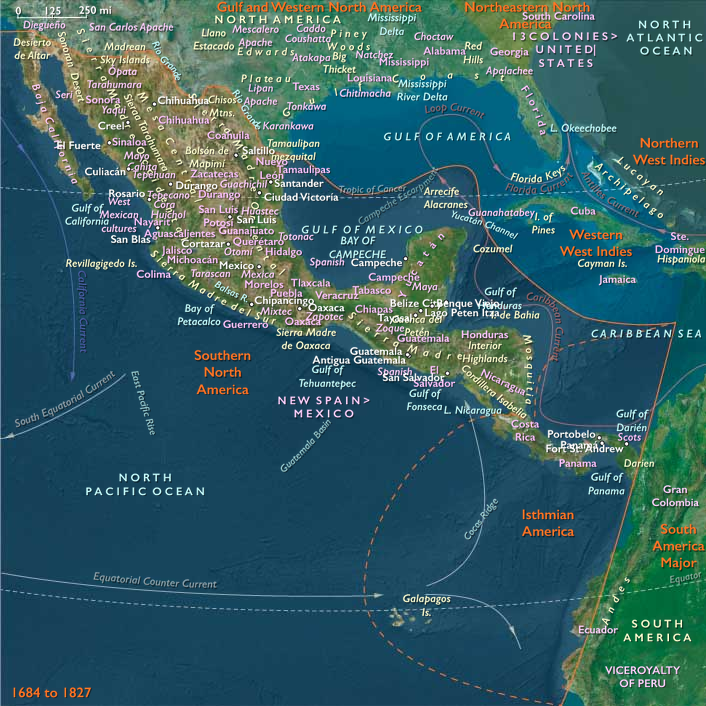
Years: 1684 - 1827
The federalist forces largely prevail in writing the new constitution, but the centralists win three major concessions.
The constitution of 1824, which is strongly influenced by the United States constitution and Mexico's legislative relationship with Spain since 1810, establishes the United Mexican States (Estados Unidos Mexicanos) as a federal republic composed of nineteen states and four territories.
Power is distributed among executive, legislative, and judicial branches of government.
Legislative power is wielded by the Senate and the Chamber of Deputies, while executive power is exercised by a president and a vice president elected by the state legislatures for four-year terms.
In spite of the liberal outlook of the constitution, certain traditional privileges are maintained: Roman Catholicism remains the official religion, the fueros are retained by the military and clergy, and in national emergencies the president can exercise unlimited powers.
Locations
People
- Agustín de Iturbide
- Antonio López de Santa Anna
- Ferdinand VII of Spain
- Guadalupe Victoria
- Juan Ruiz de Apodaca, 1st Count of Venadito
- Nicolás Bravo Rueda
- Pedro Celestino Negrete
- Vicente Guerrero
Groups
- Christians, Roman Catholic
- Inquisition, Spanish
- New Spain, Viceroyalty of
- Guatemala, Captaincy General of (Spanish Colony)
- Spain, Bourbon Kingdom (first restoration) of
- Guatemala, Republic of
- Central America, United Provinces of
Topics
- Colonization of the Americas, Spanish
- Napoleonic Wars
- Trienio Liberal (Spanish Civil War of 1820-23)
Subjects
Regions
Subregions
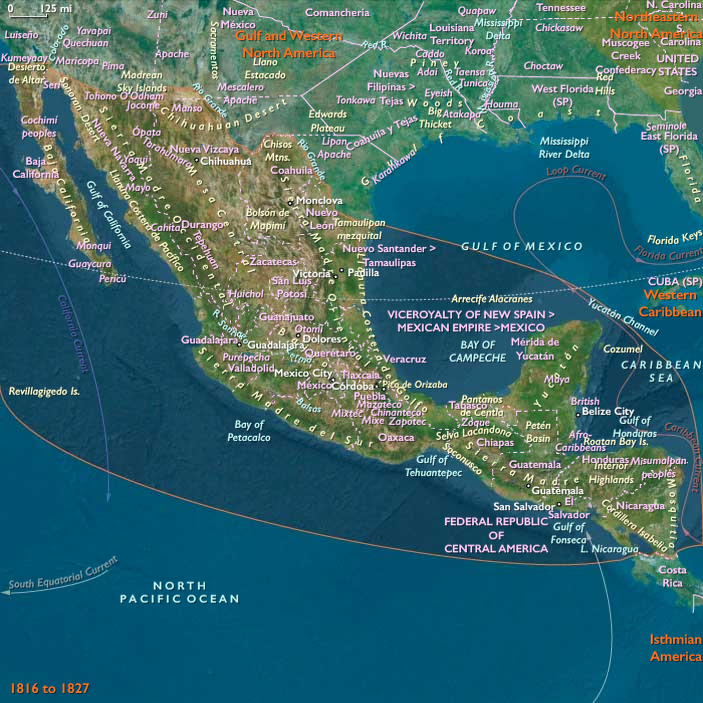
Years: 1684 - 1827
Locations
People
- Agustín de Iturbide
- Antonio López de Santa Anna
- Ferdinand VII of Spain
- Guadalupe Victoria
- Juan Ruiz de Apodaca, 1st Count of Venadito
- Nicolás Bravo Rueda
- Pedro Celestino Negrete
- Vicente Guerrero
Groups
- Christians, Roman Catholic
- Inquisition, Spanish
- New Spain, Viceroyalty of
- Guatemala, Captaincy General of (Spanish Colony)
- Spain, Bourbon Kingdom (first restoration) of
- Guatemala, Republic of
- Central America, United Provinces of
Topics
- Colonization of the Americas, Spanish
- Napoleonic Wars
- Trienio Liberal (Spanish Civil War of 1820-23)
Subjects
Regions
Subregions