
The Romans had added Western Numidia to …
Years: 47BCE - 47BCE
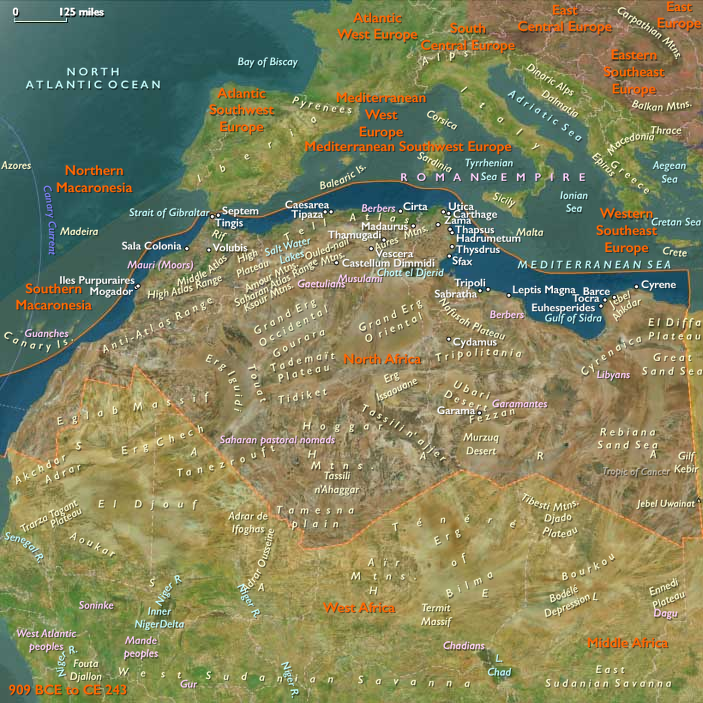
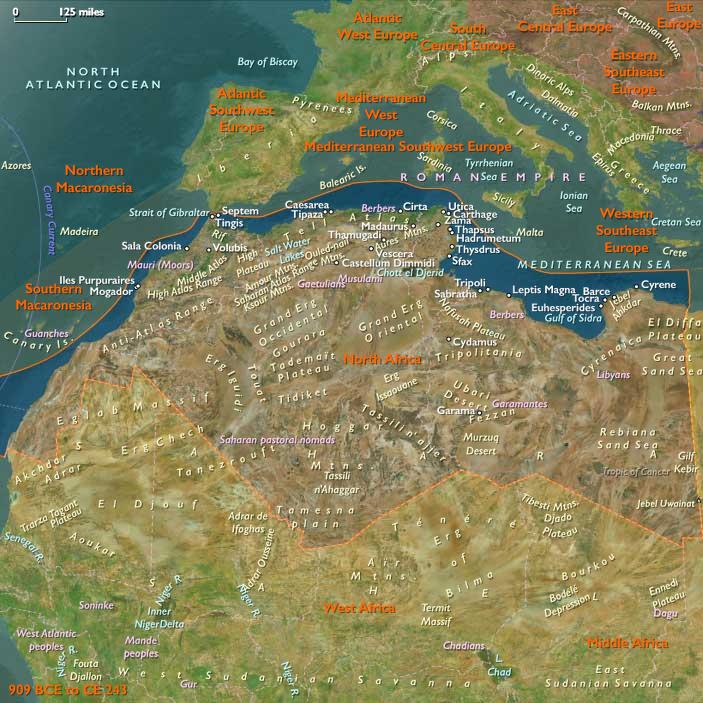
The Romans had added Western Numidia to the lands of Bocchus, king of Mauretania, after the death of Jugurtha in 104 BCE, while the remainder (excluding Cyrene and its locality) had continued to be governed by native princes until the civil war between Caesar and Pompey.
Cato the Younger, who has held several posts during the civil war between Pompey and Caesar, had fled to Africa upon Pompey's defeat at Pharsalus and become governor of Utica.
Locations
People
Groups
Topics
- Classical antiquity
- Roman Age Optimum
- Roman Republic, Crisis of the
- Roman Civil War, Great, or Caesar's Civil War
Commodoties
Subjects
Regions
Subregions
Related Events
Showing 10 events out of 62480 total
Years: 47BCE - 47BCE
Locations
People
Groups
Topics
- Classical antiquity
- Roman Age Optimum
- Roman Republic, Crisis of the
- Roman Civil War, Great, or Caesar's Civil War
Commodoties
Subjects
Regions
Subregions