
The Treaty of Viterbo of 1267 had …
Years: 1273 - 1273
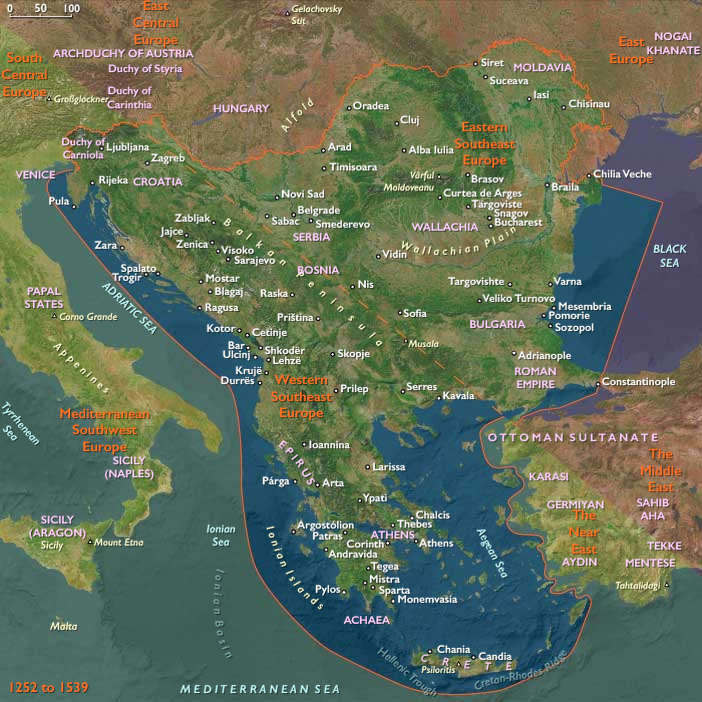
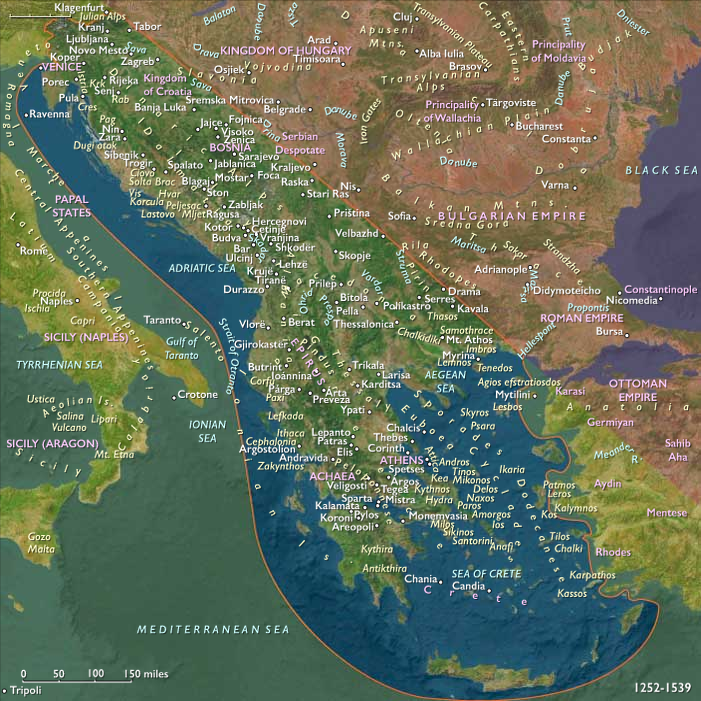
The Treaty of Viterbo of 1267 had been signed after the Angevin forces in 1266 defeated the Hohenstaufen forces of Manfred of Sicily in the Battle of Benevento, with Charles of Anjou acquiring rights on Manfred's dominions in Albania, together with rights he gained in the Latin dominions in the Despotate of Epirus and in the Morea.
Michael II, upon hearing the news of Manfred's death in the battle of Benevento, had conspired and managed to kill Manfred's governor Philippe Chinard, with the help of Chinard's wife, but he could not capture Manfred's domains.
Local noblemen and commanders had refused to surrender Manfred's domains in Albania to Michael II.
They had given the same negative response to Charles' envoy, Gazo Chinard, in 1267, when following the articles of the Treaty of Viterbo, he had asked for them to surrender Manfred's dominions in Albania.
Charles had returned his attention to Albania after the failure of the Eighth Crusade He began contacting local Albanian leaders through local catholic clergy.
Two local catholic priests, namely John from Durrës and Nicola from Arbanon, had acted as negotiators between Charles of Anjou and the local noblemen, making several trips between Albania and Italy in 1271 and eventually succeeding in their mission.
A delegation of Albanian noblemen and citizens from Durrës had made their way to Charles' court on February 21, 1272.
Charles had signed a treaty with them and was proclaimed King of Albania "by common consent of the bishops, counts, barons, soldiers and citizens" promising to protect them and to honor the privileges they had from Constantinople.
The treaty declared the union between the Kingdom of Albania (Latin: Regnum Albanie) with the Kingdom of Sicily under King Charles of Anjou (Carolus I, dei gratia rex Siciliae et Albaniae).
He had appointed Gazzo Chinardo as his Vicar-General and hopes to take up his expedition against Constantinople again.
He sends huge provisions throughout 1272 and 1273 to the towns of Durrës and Vlorë.
This alarms the Eastern Emperor, who begins sending letters to local Albanian nobles, trying to convince them to stop their support for Charles of Anjou and to switch sides.
The Albanian nobles send those letter to Charles who praises them for their loyalty.
Now, Michael VIII's hopes of stopping the advance of Charles are laid on the influence of Pope Gregory X. Gregory has high hopes of reconciling Europe, unifying the Greek and Latin churches, and launching a new crusade: to that end, he announces the Council of Lyon, to be held in 1274, and works to arrange the election of an Emperor, so he orders Charles to stop his operations.
Locations
People
Groups
- Albanians
- Christians, Roman Catholic
- Christians, Eastern Orthodox
- Epirus, Despotate of
- Achaea, Principality of
- Naples, Angevin Kingdom of
- Anjou, Possessions of Charles of
- Albania, Kingdom of
Topics
Commodoties
Subjects
Regions
Subregions
Years: 1273 - 1273
Locations
People
Groups
- Albanians
- Christians, Roman Catholic
- Christians, Eastern Orthodox
- Epirus, Despotate of
- Achaea, Principality of
- Naples, Angevin Kingdom of
- Anjou, Possessions of Charles of
- Albania, Kingdom of
Topics
Commodoties
Subjects
Regions
Subregions