
Afonso V’s Return to Portugal and the …
Years: 1477 - 1477
Afonso V’s Return to Portugal and the Brief Abdication Crisis (1477)
After his failure to gain French military support for his claim to the Castilian throne, Afonso V of Portugal decided to return home in October 1477. Upon his arrival, he discovered that his son, Prince John (future John II), had proclaimed himself king in his absence.
Afonso V’s Diplomatic Failure in France
- Following the defeat of Portuguese ambitions in Castile, Afonso V traveled to France in 1477 seeking aid from King Louis XI to revive his claim to the Castilian throne.
- Louis XI, known as "the Universal Spider" for his cunning diplomacy, refused to support Afonso, unwilling to engage in a prolonged Iberian conflict.
- Disheartened and politically isolated, Afonso abandoned his claim to Castile and decided to return to Portugal.
John II’s Self-Proclamation as King (1477)
- While Afonso V was abroad, Prince John took control of the kingdom, frustrated by his father’s failed war policies.
- John proclaimed himself king, taking advantage of his father’s absence to consolidate royal authority.
- However, unlike typical power struggles, this was not an outright coup—John’s actions were more of a precautionary measure to maintain stability in Portugal.
Afonso V’s Return and Reconciliation (October 1477)
- When Afonso V returned to Portugal, rather than resisting, John welcomed him back and immediately returned the crown to him.
- This peaceful transition avoided a potential civil conflict between father and son.
- However, Afonso V, exhausted by years of war and diplomacy, had lost his will to rule.
Afonso V’s Abdication and John II’s Final Ascension (1477–1481)
- In November 1477, just a month after his return, Afonso V announced his decision to retire to a monastery, though he remained nominally king.
- From that point onward, John II effectively ruled Portugal, preparing for his formal reign.
- In 1481, Afonso V died, and John II officially became King of Portugal, ushering in an era of strong royal centralization and maritime expansion.
Conclusion: A Peaceful Succession
- Unlike other father-son struggles for power in medieval Europe, the transition from Afonso V to John II was relatively smooth.
- John II’s temporary self-proclamation in 1477 reflected his ambition and desire to reform the monarchy, which he would later ruthlessly consolidate during his reign (1481–1495).
- Afonso V’s failed Castilian campaign and diplomatic setbacks marked the end of Portugal’s ambitions in Spain, allowing the kingdom to focus entirely on maritime exploration and trade expansion.
Thus, Afonso V’s peaceful transition of power to John II set the stage for Portugal’s golden age of exploration, led by a determined and authoritative new king.
Locations
People
- Afonso V of Portugal
- Enrique de Guzmán
- Ferdinand II of Aragon
- Isabella I of Castile
- Joanna la Beltraneja
- John II of Portugal
- Louis XI of France
- Pope Sixtus IV
- Rodrigo Ponce de Leon
Groups
- Papal States (Republic of St. Peter)
- Navarre, Kingdom of
- Christians, Roman Catholic
- Aragón, Kingdom of
- Aragon, Crown of
- Castile, Crown of
- France, (Valois) Kingdom of
- Portugal, Avizan (Joannine) Kingdom of
Topics
Commodoties
Subjects
Regions
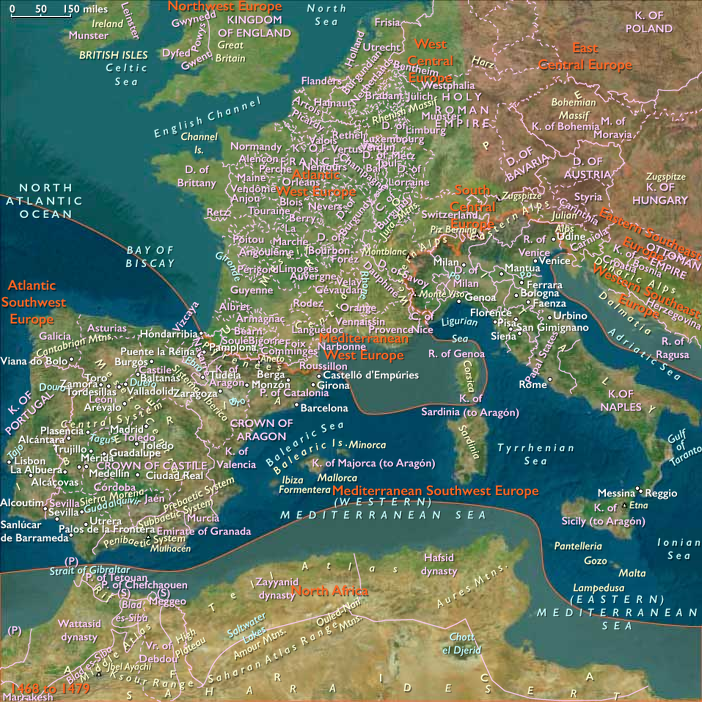
Subregions
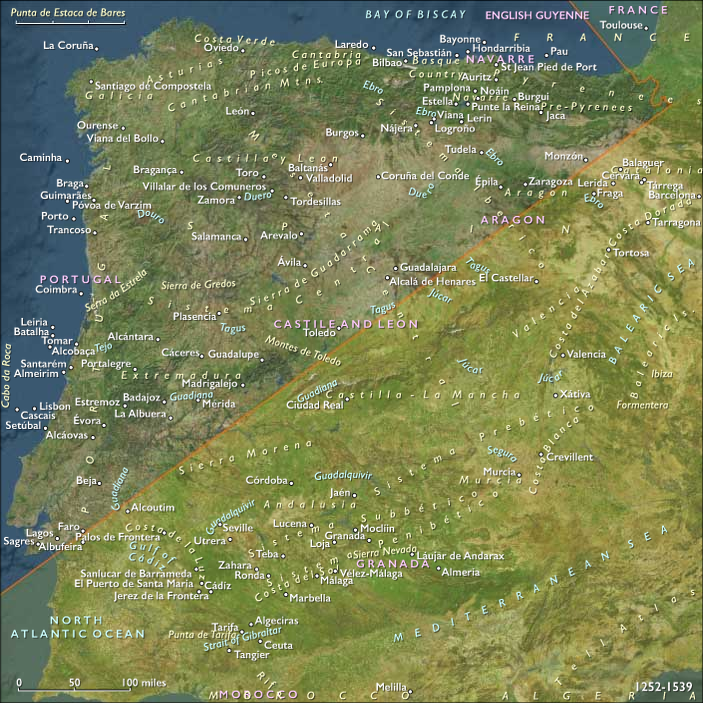
Related Events
Showing 10 events out of 40760 total
Years: 1477 - 1477
Locations
People
- Afonso V of Portugal
- Enrique de Guzmán
- Ferdinand II of Aragon
- Isabella I of Castile
- Joanna la Beltraneja
- John II of Portugal
- Louis XI of France
- Pope Sixtus IV
- Rodrigo Ponce de Leon
Groups
- Papal States (Republic of St. Peter)
- Navarre, Kingdom of
- Christians, Roman Catholic
- Aragón, Kingdom of
- Aragon, Crown of
- Castile, Crown of
- France, (Valois) Kingdom of
- Portugal, Avizan (Joannine) Kingdom of
Topics
Commodoties
Subjects
Regions
Subregions