
The Egyptians capture Faisal after he fails …
Years: 1836 - 1836
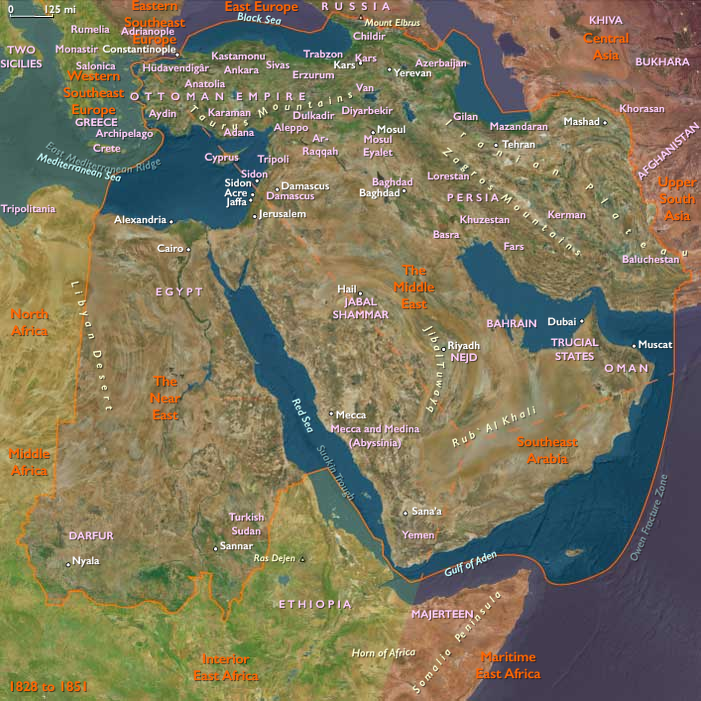
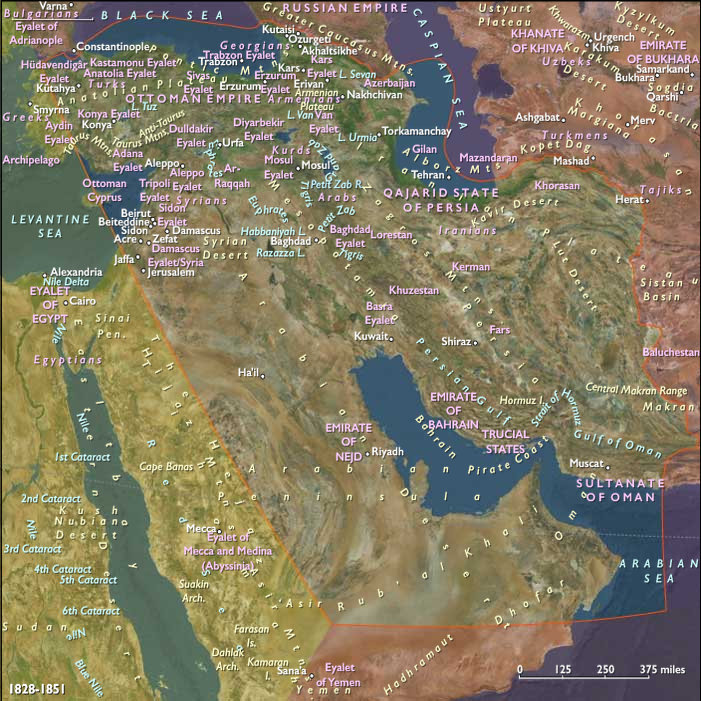
The Egyptians capture Faisal after he fails to reach an accord with Khurshid Pasha in 1836, and send him to Cairo for a second period of incarceration.
The second Saudi period, compared to the First Saudi State, is to be marked by less territorial expansion and less religious zeal, although the Saudi leaders continue to go by the title of Imam and still employ Wahhabist religious scholars.
It will also be marked by severe internal conflicts within the Saudi family, eventually leading to the dynasty's downfall in 1891.
Faisal ibn Turki, who will eventually return to power, will be remembered as one of the greatest of all Saudi leaders, and although the infighting among his four sons will eventually destroy the state, this branch of the family, which includes the present King of Saudi Arabia, is still technically referred to as the Al Faisal (House of Faisal).
Locations
People
Groups
- Ottoman Empire
- Al-Hasa, Ottoman eyalet of
- Wahhabism
- Egypt, (Ottoman) Viceroyalty of
- Nejd, Emirate of
Topics
Subjects
Regions
Subregions
Related Events
Showing 10 events out of 18452 total
Years: 1836 - 1836
Locations
People
Groups
- Ottoman Empire
- Al-Hasa, Ottoman eyalet of
- Wahhabism
- Egypt, (Ottoman) Viceroyalty of
- Nejd, Emirate of
Topics
Subjects
Regions
Subregions