
Pizarro had left Panama on March 10, …
Years: 1526 - 1526
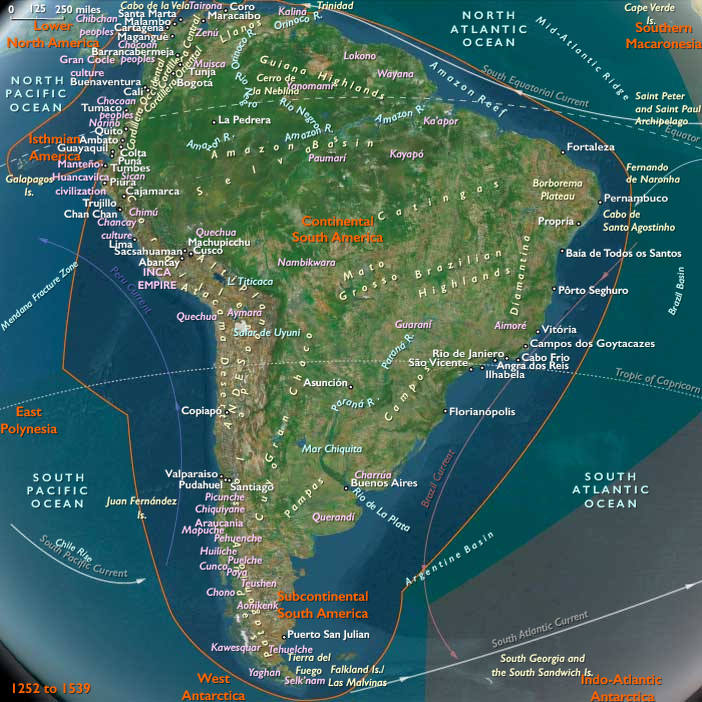
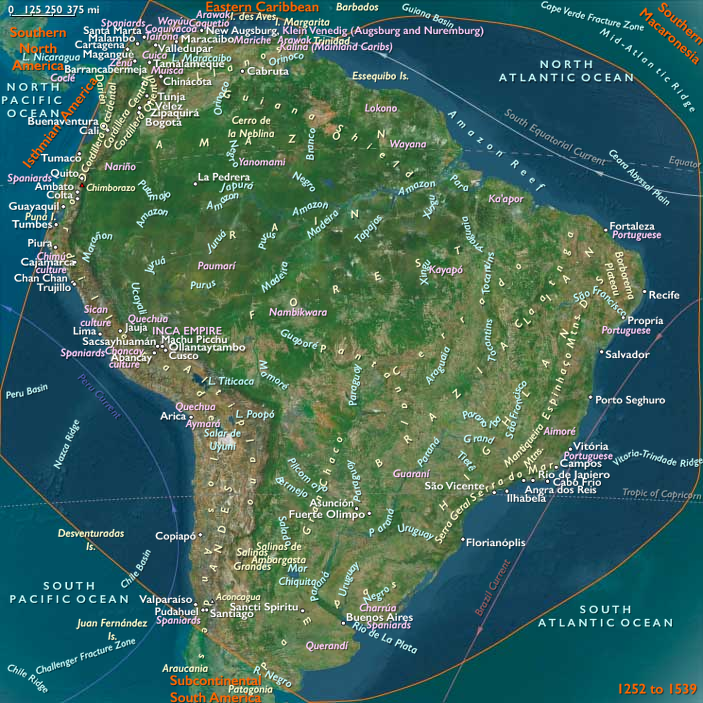
Pizarro had left Panama on March 10, 1526, after all preparations were ready, with two ships carrying one hundred and sixty men and several horses, reaching as far as the Colombian San Juan River.
The party separates Ssoon after arriving, with Pizarro staying to explore the new and often perilous territory off the swampy Colombian coasts, while the expedition's co-commander, Almagro, is sent back to Panama for reinforcements.
Pizarro's Piloto Mayor (main pilot), Bartolomé Ruiz, continues sailing south and, after crossing the equator, finds and captures a balsa (raft) under sail, with natives from Tumbes.
To everyone's surprise, these carry a load of textiles, ceramic objects, and some much-desired pieces of gold, silver, and emeralds, making Ruiz's findings the central focus of this second expedition, which only serves to pique the conquistadors' interests for more gold and land.
Some of the natives are also taken aboard Ruiz's ship to serve later as interpreters.
He then sets sail north for the San Juan River, arriving to find Pizarro and his men exhausted from the serious difficulties they had faced exploring the new territory.
Soon Almagro also sails into the port with his vessel laden with supplies, and a considerable reinforcement of at least eighty recruited men who had arrived at Panama from Spain with the same expeditionary spirit.
The findings and excellent news from Ruiz along with Almagro's new reinforcements cheers Pizarro and his tired followers.
They now decide to sail back to the territory already explored by Ruiz and, after a difficult voyage due to strong winds and currents, reach Atacames on the Ecuadorian coast.
Here, they find a very large native population recently brought under Inca rule.
Unfortunately for the conquistadores, the warlike spirit of the people they have just encountered seems so defiant and dangerous in numbers that the Spanish decide not to enter the land.
Locations
People
- Diego de Almagro
- Francisco Pizarro
- Hernando de Luque
- Hernán Cortés
- Martín Fernández de Enciso
- Pascual de Andagoya
- Pedro Arias Dávila
- Pedro de los Ríos y Gutiérrez de Aguayo
Groups
Topics
Commodoties
- Weapons
- Gem materials
- Domestic animals
- Textiles
- Ceramics
- Strategic metals
- Slaves
- Sweeteners
- Land
- Tobacco
Subjects
Regions
Subregions
Years: 1526 - 1526
Locations
People
- Diego de Almagro
- Francisco Pizarro
- Hernando de Luque
- Hernán Cortés
- Martín Fernández de Enciso
- Pascual de Andagoya
- Pedro Arias Dávila
- Pedro de los Ríos y Gutiérrez de Aguayo
Groups
Topics
Commodoties
- Weapons
- Gem materials
- Domestic animals
- Textiles
- Ceramics
- Strategic metals
- Slaves
- Sweeteners
- Land
- Tobacco
Subjects
Regions
Subregions