
Mineowners struggling to make a profit in …
Years: 1888 - 1899
Mineowners struggling to make a profit in the early days of the diamond industry had sought, however, to undercut the bargaining strength of the Africans on whom they depended for labor.
In 1872 Kimberley's white claimsholders had persuaded the British colonial administration to introduce a pass law.
This law, the foundation of the twentieth-century South African pass laws, required that all "servants" be in possession of passes that stated whether the holders were legally entitled to work in the city, whether or not they had completed their contractual obligations, and whether they could leave the city.
The aim of this law, written in "color-blind" language but enforced against blacks only, was to limit the mobility of migrant workers, who had frequently changed employers or left the diamond fields in a constant (and usually successful) attempt to bargain wages upward.
Locations
Groups
- Khoikhoi
- Indian people
- Sotho (Basotho or Basuto) people
- Swazi
- Zulu people
- Xhosa people
- Shona people
- Afrikaners
- Boers
- Britain (United Kingdom of Great Britain and Ireland)
- Cape Colony, British
- Zululand
- Zulu, Kingdom of the
- Zimbabwe, Ndebele Kingdom of
- South African Republic (the Transvaal)
- Swaziland, Kingdom of
- Swaziland, Kingdom of
- Natal Colony, British
- Orange Free State, Republic of the (Boer Republic)
- Basutoland
- British South Africa Company (SAC)
- Rhodesia, Company rule in
Topics
Commodoties
Subjects
Regions
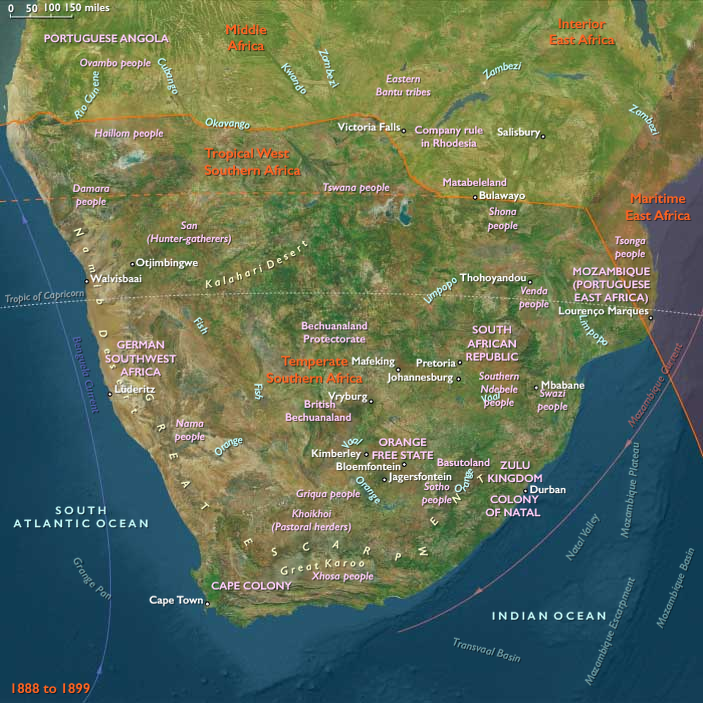
Subregions
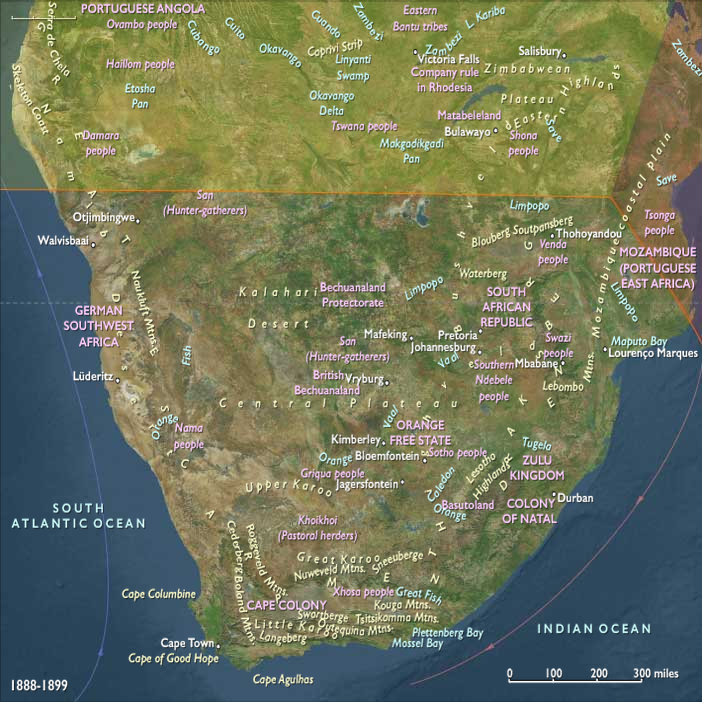
Years: 1888 - 1899
Locations
Groups
- Khoikhoi
- Indian people
- Sotho (Basotho or Basuto) people
- Swazi
- Zulu people
- Xhosa people
- Shona people
- Afrikaners
- Boers
- Britain (United Kingdom of Great Britain and Ireland)
- Cape Colony, British
- Zululand
- Zulu, Kingdom of the
- Zimbabwe, Ndebele Kingdom of
- South African Republic (the Transvaal)
- Swaziland, Kingdom of
- Swaziland, Kingdom of
- Natal Colony, British
- Orange Free State, Republic of the (Boer Republic)
- Basutoland
- British South Africa Company (SAC)
- Rhodesia, Company rule in
Topics
Commodoties
Subjects
Regions
Subregions