
Filters:
Following the ascension of Afonso V …
Years: 1449 - 1449
Following the ascension of Afonso V in 1448, the kingdom of Portugal fell into civil war, as tensions between Infante Peter, Duke of Coimbra, and Afonso, Duke of Braganza, erupted into armed conflict.
The Civil War: The Rival Factions
-
Infante Peter, Duke of Coimbra
- Former regent of Portugal (1439–1448) and uncle of Afonso V.
- Favored strong royal authority, centralization, and continued overseas expansion.
- Supported by Lisbon’s merchants, the lower nobility, and the commoners.
-
Afonso, Duke of Braganza
- Another uncle of Afonso V, representing the old, landowning aristocracy.
- Opposed Peter’s policies, seeking to increase noble privileges.
- Manipulated Afonso V into declaring Peter a traitor based on false accusations.
The First Engagement: Victory for Peter at Penela
- Peter’s forces initially defeated Braganza’s army at Penela, showing that he still commanded strong military support.
- However, Afonso V, siding with Braganza, mobilized a massive royal army of 30,000 troops, determined to eliminate Peter as a political threat.
The Battle of Alfarrobeira (May 20, 1449)
- The two armies met near the Alfarrobeira River, at Alverca, north of Lisbon.
- Peter’s forces were vastly outnumbered but fought fiercely.
- The battle was short, and Peter was killed early on—
- Some sources say he died fighting.
- Others claim he was assassinated by one of his own men.
Aftermath: The Triumph of the House of Braganza
- Afonso V consolidated power under Braganza’s influence, granting the duke new lands, privileges, and political authority.
- The House of Braganza became the most powerful noble family in Portugal, rivaling even the monarchy.
- Portugal shifted towards a government dominated by the aristocracy, slowing the Crown’s ability to centralize authority.
Long-Term Consequences
- Weakened Royal Authority – The monarchy remained under noble control, delaying later reforms.
- Braganza’s Dominance – The House of Braganza amassed vast wealth and influence, eventually challenging the Crown itself.
- A Prelude to Future Conflicts – The battle set a precedent for noble interference in royal affairs, a trend later reversed by King John II (r. 1481–1495).
The Battle of Alfarrobeira (1449) marked a turning point in Portuguese history, securing the aristocracy’s dominance while eliminating one of Portugal’s most capable leaders, Infante Peter.
Locations
People
Groups
Topics
Commodoties
Subjects
Regions
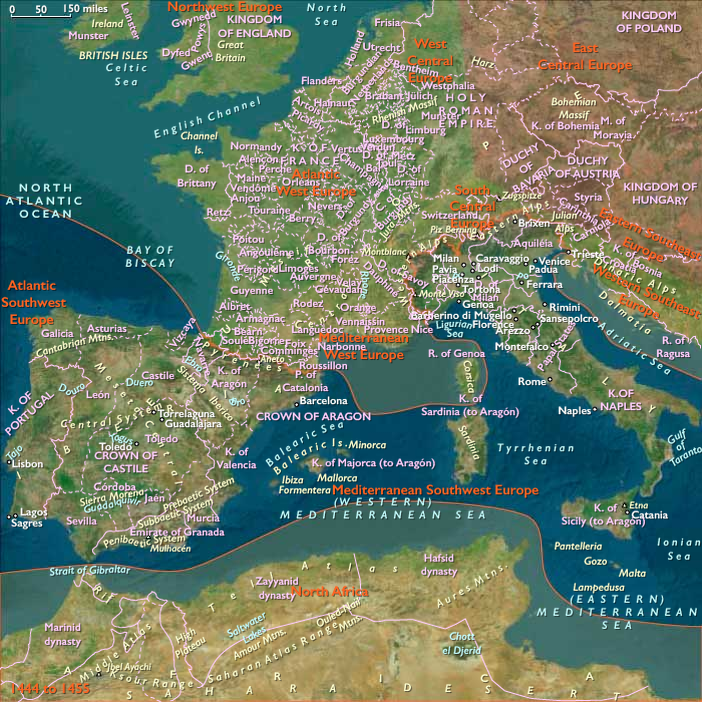
Subregions
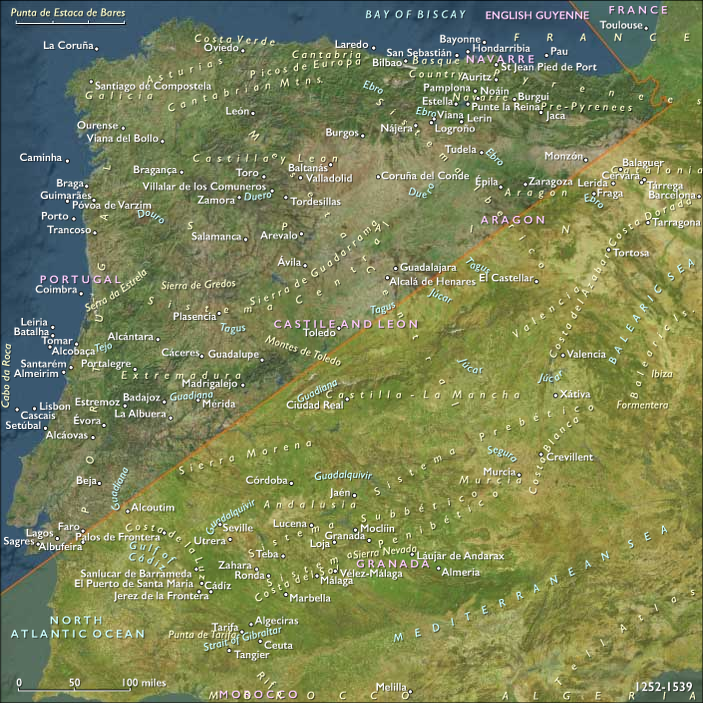
Years: 1449 - 1449
Locations
People
Groups
Topics
Commodoties
Subjects
Regions
Subregions