
The Battle of the Catalaunian Plains (451 …
Years: 451 - 451
July
The Battle of the Catalaunian Plains (451 CE): Rome and the Visigoths Halt Attila
After forcing Attila to withdraw from Aurelianum (Orléans), Flavius Aetius gives chase, pursuing the Hunnic army as it moves eastward. The confrontation occurs at a site commonly identified as near Catalaunum (modern Châlons-en-Champagne), leading to one of the most pivotal battles of Late Antiquity—the Battle of the Catalaunian Plains.
The Clashing Armies
The two sides field massive coalitions:
- The Huns and Their Allies – Led by Attila, this force consists of Hunnic cavalry, along with vassal groups such as the Ostrogoths, Gepids, Rugians, and Scirians.
- The Roman-Visigothic Alliance – Commanded by Aetius and Theodoric I, this coalition includes Roman troops, Visigoths, Franks, Burgundians, and Alans, among others.
Thorismund’s Critical Maneuver
At the very onset of the battle, Thorismund, the eldest son of King Theodoric I, executes a crucial maneuver:
- He leads a Visigothic contingent to capture a summit, securing the left flank of the Ostrogothic and Hunnic forces.
- This high ground provides a tactical advantage, positioning the Visigoths for a later flanking assault.
The Shifting Momentum of Battle
The battle unfolds chaotically, with momentum shifting between the two sides:
- The Huns overwhelm the Alans, breaking through the center of the coalition army.
- The Ostrogoths push back the disorganized Visigoths, especially after King Theodoric I is killed in combat.
- Just as the battle seems lost, Thorismund launches a decisive charge from the summit, flanking both the Ostrogoths and the Huns.
This maneuver shatters the Hunnic formation, forcing Attila’s forces into disarray and retreat.
Attila’s First and Only Defeat
For the first time, Attila suffers a battlefield defeat, retreating to his fortified camp, where he awaits a possible Roman-Visigothic siege. However, Aetius does not press his advantage.
Aetius’ Calculated Restraint
Historians such as Edward Gibbon and Edward Creasy suggest that Aetius' failure to annihilate Attila is deliberate. His reasoning:
- Aetius fears a Visigothic rise as much as a Hunnic victory—if Theodoric had survived and the Visigoths had emerged overwhelmingly dominant, they could have become an even greater long-term threat to Rome.
- With Theodoric dead, the Visigoths must now focus on their own succession crisis instead of expanding unchecked.
- Attila, though defeated, remains a useful counterweight against the Visigoths in future power struggles.
From Aetius' perspective, the best possible outcome has been achieved:
- The Romans and their allies appear victorious.
- Attila is repelled and humiliated.
- The Visigoths are weakened by the death of Theodoric and do not gain overwhelming power in Gaul.
The Aftermath and the Fate of Attila
While the Battle of the Catalaunian Plains halts Attila’s invasion of Gaul, it does not mark the end of his ambitions. The following year (452 CE), he will invade Italy, threatening Rome itself, only to be turned back—this time by famine, disease, and an unusual meeting with Pope Leo I.
Nonetheless, the Battle of the Catalaunian Plains remains a defining moment:
- It is one of the last great victories of the Western Roman Empire.
- It checks the Hunnic advance into Western Europe.
- It cements Aetius’ legacy as Rome’s last great general, though his political downfall will follow soon after.
Though Attila will continue to terrorize the empire, his mystique of invincibility is forever shattered, and within a few years, his empire will crumble after his death in 453 CE.
Locations
People
Groups
- Celts
- Franks
- Alans (Sarmatian tribal grouping)
- Gallia Lugdunensis (Roman province)
- Gallia Belgica (Roman province)
- Goths (East Germanic tribe)
- Huns
- Alamanni (Germanic tribal alliance)
- Gaul, Diocese of
- Hunnic Empire
- Ostrogoths, Realms of the
- Gaul, Praetorian prefecture of
- Roman Empire, Western (Ravenna)
- Visigothic Kingdom of Toulouse
- Burgundians, (second) Kingdom of the
Topics
- Late Antiquity
- Migration Period
- Hun Raids on the Roman Empire
- Fall of the Western Roman Empire
- Visigothic Raids on the Roman Empire, Later
- Migration Period Pessimum
- Catalaunian Plains, Battle of the
Commodoties
Subjects
Regions
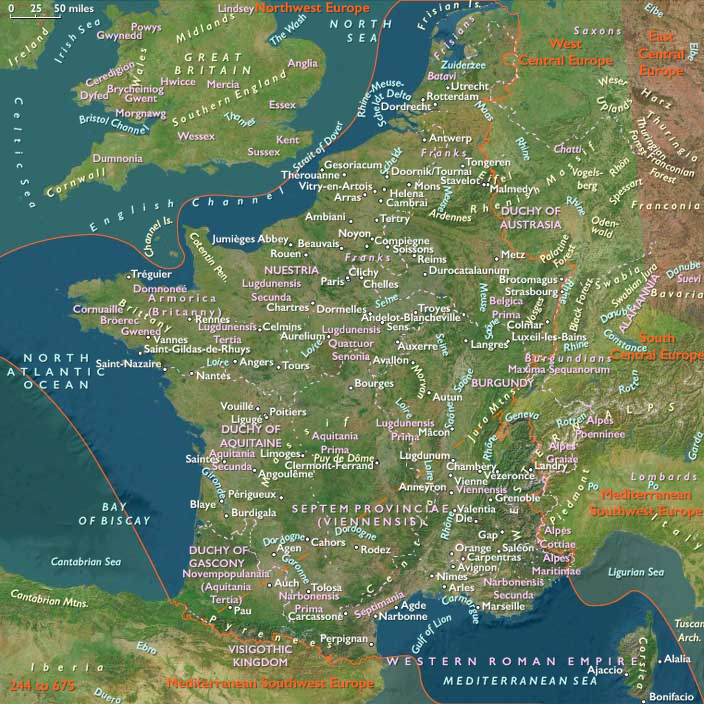
Subregions
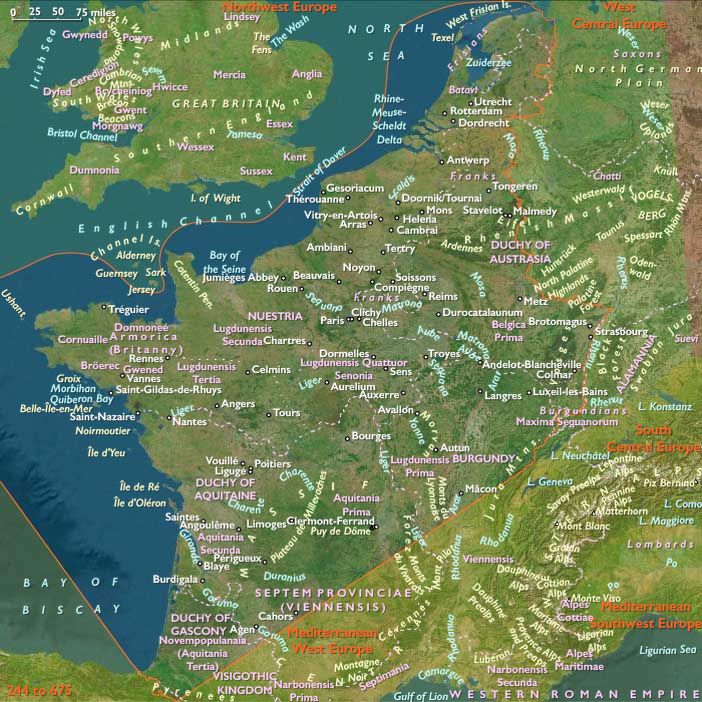
Related Events
Showing 10 events out of 58726 total
Years: 451 - 451
July
Locations
People
Groups
- Celts
- Franks
- Alans (Sarmatian tribal grouping)
- Gallia Lugdunensis (Roman province)
- Gallia Belgica (Roman province)
- Goths (East Germanic tribe)
- Huns
- Alamanni (Germanic tribal alliance)
- Gaul, Diocese of
- Hunnic Empire
- Ostrogoths, Realms of the
- Gaul, Praetorian prefecture of
- Roman Empire, Western (Ravenna)
- Visigothic Kingdom of Toulouse
- Burgundians, (second) Kingdom of the
Topics
- Late Antiquity
- Migration Period
- Hun Raids on the Roman Empire
- Fall of the Western Roman Empire
- Visigothic Raids on the Roman Empire, Later
- Migration Period Pessimum
- Catalaunian Plains, Battle of the
Commodoties
Subjects
Regions
Subregions