
Filters:
Aelia Eudocia, wife of Theodosius II, goes …
Years: 438 - 438
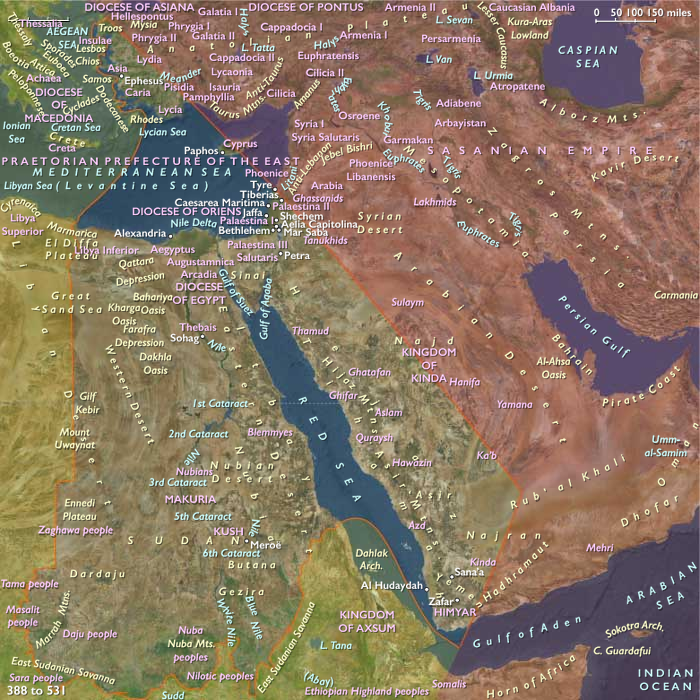
Aelia Eudocia, wife of Theodosius II, goes on a pilgrimage in 438 to Jerusalem, bringing back with her holy relics to prove her faith.
She arranges to remove the ban on Jews' praying at the Temple site, and the heads of the Jewish Community in Galilee issue a call “to the great and mighty people of the Jews” which begins, “Know that the end of the exile of our people has come!”
Locations
People
Groups
- Jews
- East, Diocese of the
- Christianity, Nicene
- East, or Oriens, Praetorian prefecture of
- Roman Empire: Theodosian dynasty (Constantinople)
- Palaestina Secunda (Roman province)
- Palaestina Prima (Roman province)
Topics
Subjects
Regions
Subregions
Related Events
Showing 4 events out of 4 total
Years: 438 - 438
Locations
People
Groups
- Jews
- East, Diocese of the
- Christianity, Nicene
- East, or Oriens, Praetorian prefecture of
- Roman Empire: Theodosian dynasty (Constantinople)
- Palaestina Secunda (Roman province)
- Palaestina Prima (Roman province)
Topics
Subjects
Regions
Subregions