The Regency of …
Years: 641 - 641
The Regency of Aega and His Replacement by Erchinoald (641 CE)
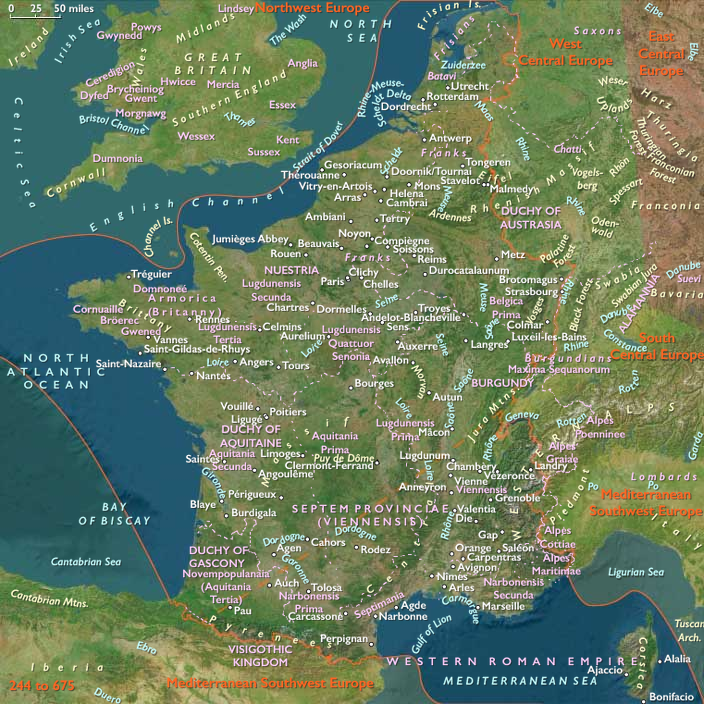
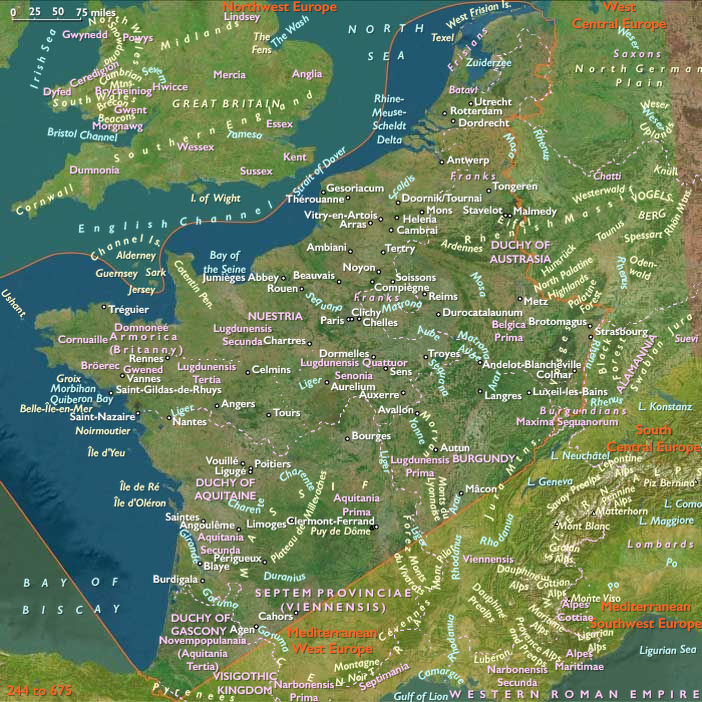
Following the death of Dagobert I in 639 CE, the infant Clovis II inherits Neustria and Burgundy, necessitating a regency to govern in his name. The Mayor of the Palace, Aega, and Queen Mother Nanthild assume control, navigating the political struggles between competing noble factions.
1. Aega’s Role as Mayor of the Neustrian Palace
- Aega becomes Mayor of the Palace of Neustria, serving as one of the chief regents for the young Clovis II.
- He faces opposition from a powerful faction of Neustrian nobles, particularly those led by Burgundofaro of Meaux, who challenge royal authority.
- As regent, Aega attempts to consolidate power, but his position remains precarious due to noble rivalries.
2. Aega’s Death and the Rise of Erchinoald (641 CE)
- Aega dies in 641 CE, leaving a power vacuum in Neustria.
- He is succeeded by Erchinoald, a relative of Dagobert I’s mother, reinforcing a connection to the Merovingian royal family.
- Erchinoald’s appointment strengthens Neustrian aristocratic control, as the Mayors of the Palace continue to grow in power.
3. The Continued Weakening of Merovingian Kingship
- With Erchinoald’s rise, real governance remains in the hands of the nobility, while Clovis II remains a figurehead.
- This transition further demonstrates the increasing dominance of the Mayors of the Palace, setting the stage for the Carolingian takeover in the following century.
Conclusion: The Mayors of the Palace Take Control
The death of Aega in 641 CE and the succession of Erchinoald mark a continuation of the shift in power from Merovingian kings to their mayors. As Clovis II grows, he will remain a puppet of the Neustrian aristocracy, reinforcing the decline of royal authority and the rise of noble governance in the Frankish realm.
Locations
People
Groups
Topics
Subjects
Regions
Subregions
Related Events
Filter results
Showing 10 events out of 56537 total
The process of compiling a written history of Japan begins in the seventh century.
According to the Nihonshoki, from the end of the reign of Empress Suiko to that of Empress Kōgyoku, Soga no Emishi enjoys influence in the court.
After the death of Empress Suiko, Emishi had succeeded in installing Prince Tamura on the throne as Emperor Jomei by citing the will of Empress Suiko.
Although Prince Yamashiro had been another candidate, Emishi murders the uncle who nominated Oe no Ou, paving the way for his favorite.
After the death of Emperor Jomei in 641, Emishi supports Empress Kōgyoku.
His daughter, Soga no Tetsuki no Iratsume, was a wife of Emperor Jomei and bore Emperor Jomei one daughter, Princess Yata.

Emperor Taizong instigates a civil war in the Western Turkic Khaganate by supporting Isbara Yabghu Qaghan.
The Chinese imperial Tang court and the Indian kingdom of Kannauj establish friendly diplomatic relations in 641.
The Rashidun Caliphate in 641 annexes the Thebaid region.
The Muslim Arab conquerors establish on the site of the fallen imperial fortress called Babylon a military camp called al-Fustat.
A city, called Cairo, will soon grow up around the camp.
Caliph Umar had entered Jerusalem and (according to Muslim historians) discovered the Temple Mount in utter decay and disrepair.
He had immediately set about repairing the site, and in 641 designates Jerusalem as the third holiest place in Islam, second only to Mecca and Medina.
Umar had agreed to a demand by the late Christian Patriarch Sophronius not to permit Jews to return to Jerusalem, but he soon allows seventy Tiberian families to settle in the city.
Thus, a small permanent Jewish population returns after a five hundred-year absence to Jerusalem.
The Lombards under king Rothari conquer Genoa and all remaining imperial territories in the lower Po Valley, including …
…Oderzo (Opitergium), a mainland imperial possession in the Veneto.
Political authority is shifted to …
…one of the islands in the Venetian lagoon.
Arechis I, duke of Benevento, had conquered Capua and Venafro in the Campania and areas of the Basilicata and Calabria.
He had failed to take Naples after a siege (his predecessor Zotto had failed likewise), but he took Salerno by the late 620s.
He has spent the last years of his reign establishing good relations with the Roman Catholics of his duchy and making his son his successor.
He dies after a fifty-year reign and is succeeded by his son Aiulf I, who is, however, mentally unstable; his adoptive brothers Radoald and Grimoald, the younger sons of the late Gisulf II of Friuli, are regents for him.
Prince Oswiu of Bernicia conquers Gododdin or "The Old North" as far north as Manaw Gododdin, the narrow coastal region on the south side of the Firth of Forth, on behalf of his half-brother, king Oswald.